

Probably one of the most requested products we’ve gotten in recent years has been an auto tool changer. While the concept seems simple, the actual execution of an ATC system is extremely complex, especially as both the software and hardware must work in concert perfectly to ensure that tool changing is fast, simple and reliable. It’s taken quite a while for us to get to the point at our company to develop the engineering manpower and funding to be able to undertake such a complicated project.
I can safely say that the ATC is by far the most technically challenging product we’ve developed, but we’re excited to share it with the world as one of the most affordable, full featured CNC spindles with an auto tool changer. We believe this paves the road towards not only mechanical and electrical advancement, but also that the development in the user experience and systems design of the software experience takes this type of product to the next level.
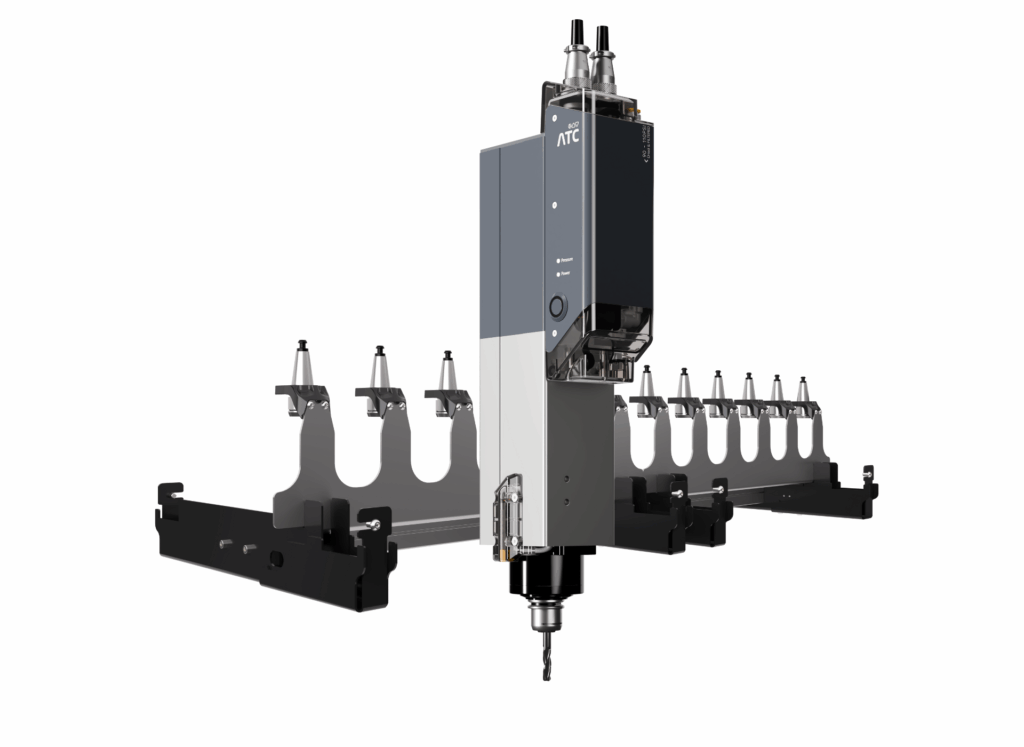
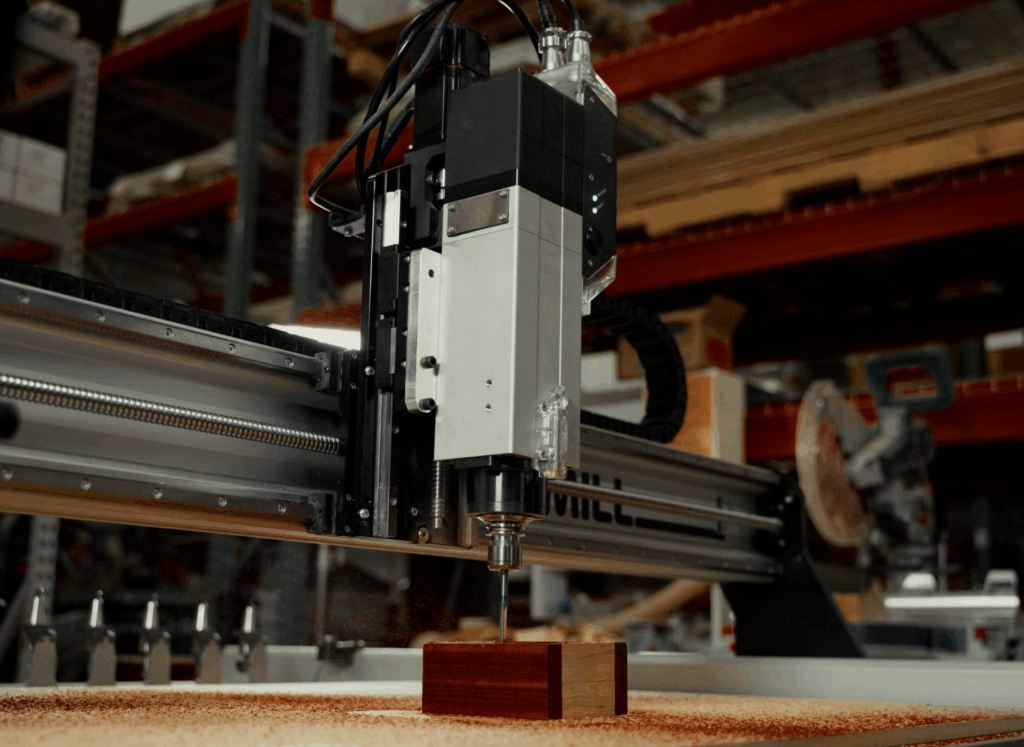
The ATC is a spindle with an integrated auto tool changing functionality which works with gSender to provide a seamless experience in changing tools. Users are able to load and remove tools with a press of a button (manual mode) or by ejecting and loading tools onto a rack.
Who is this for?
The ATC was designed for users that aim to improve their productivity with their CNC machine by automating the tool changing process. We believe that the best fit for this product are users that have experience with their machine and CAM programming, and want to get into small to medium scale production.
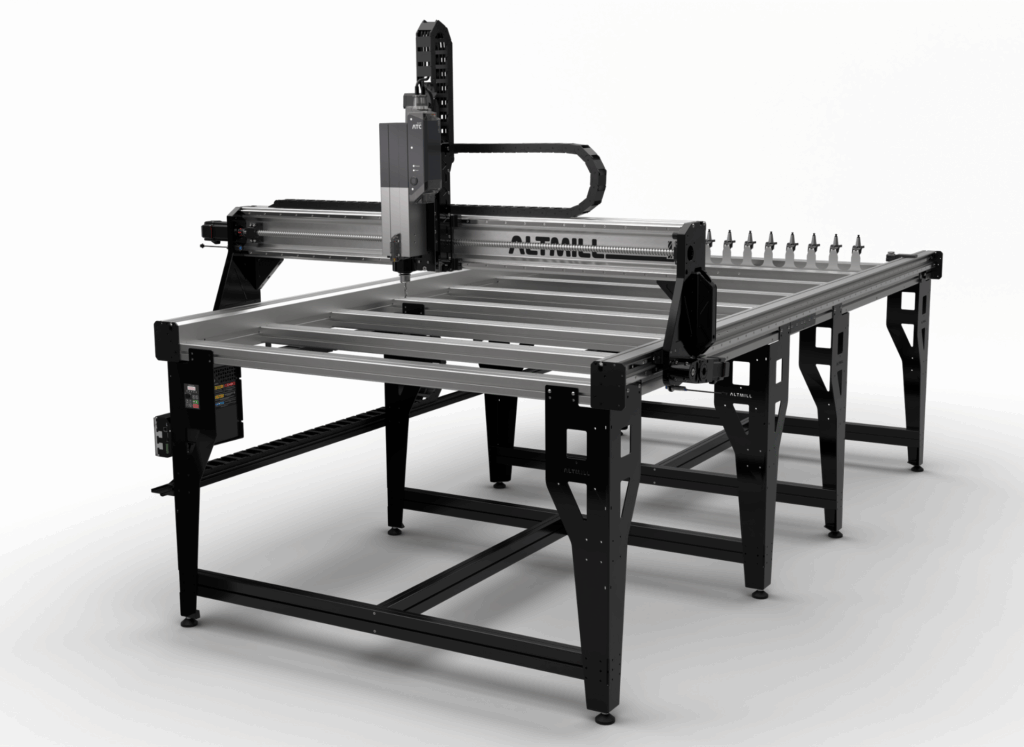
The ATC system is designed to be plug and play with any AltMill system, including the MK1 and MK2 2×4 and 4×4, plus the new AltMill 4×8. This makes it particularly attractive for users that want to get up and running with an ATC system as quickly as possible.
While we know that lower cost, collet-changing based ATC systems exist, we chose to focus on the ATC spindle system instead because we believe that this system will work at the level of reliability and performance that is required to our standards of being able to do hundreds and thousands of toolchanges without error.
We do also acknowledge that this product falls outside of the realm of a price point affordable to the average hobbyist, and we expect our general demographic to be folks that have higher expectations from their machine.
How does it work?
The ATC is essentially a spindle with additional electromechanical systems that allow for the change of tools controlled by the CNC controller. You can almost think of it as a spindle with extra hardware attached.
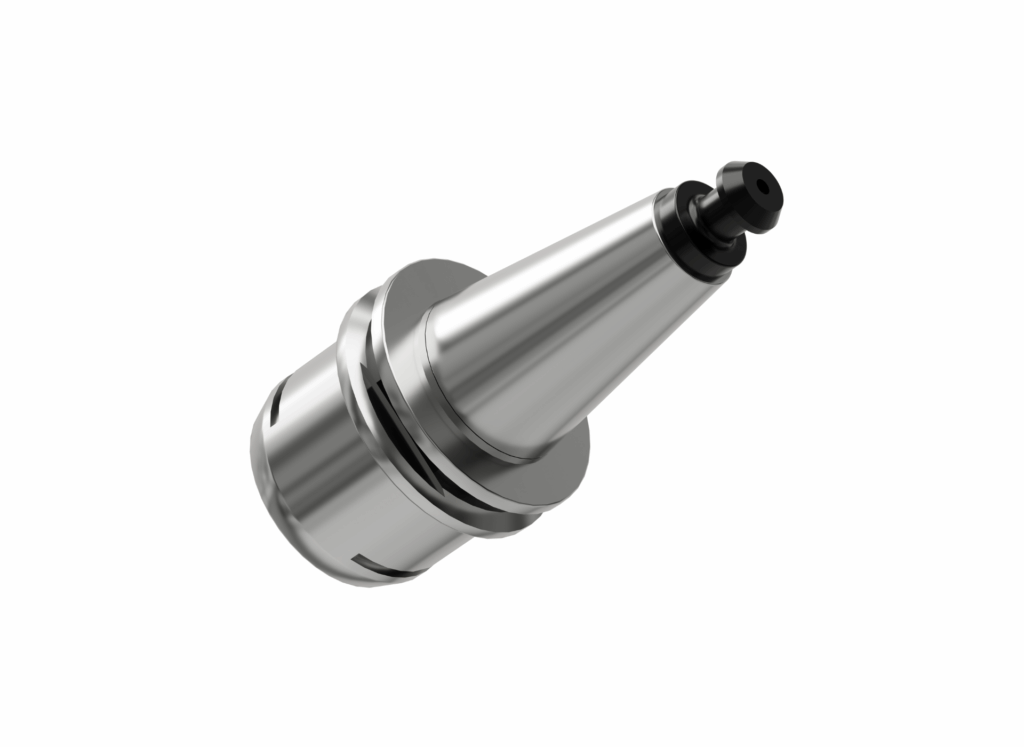
A system of pneumatic solenoids activates a piston which allows the tool to be pulled in or released during a tool change. Each end mill is mounted to a ISO20 tapered tool holder which allows the reliable interface with the spindle. As the ISO20 tool holder is a standardized design, virtually all high quality tool holders will work with the ATC.
Integration with gSender
One of the most important aspects, and what makes our ATC unique compared to nearly all other ATC systems, is the native integration with gSender. This allows functions such as:
- Automatic switching between automatic and manual tool change modes when the tool rack is removed or not detected
- Added safety features and warnings such as low pressure, tool missing and temperature
- Optimized tool loading and loading motion planning
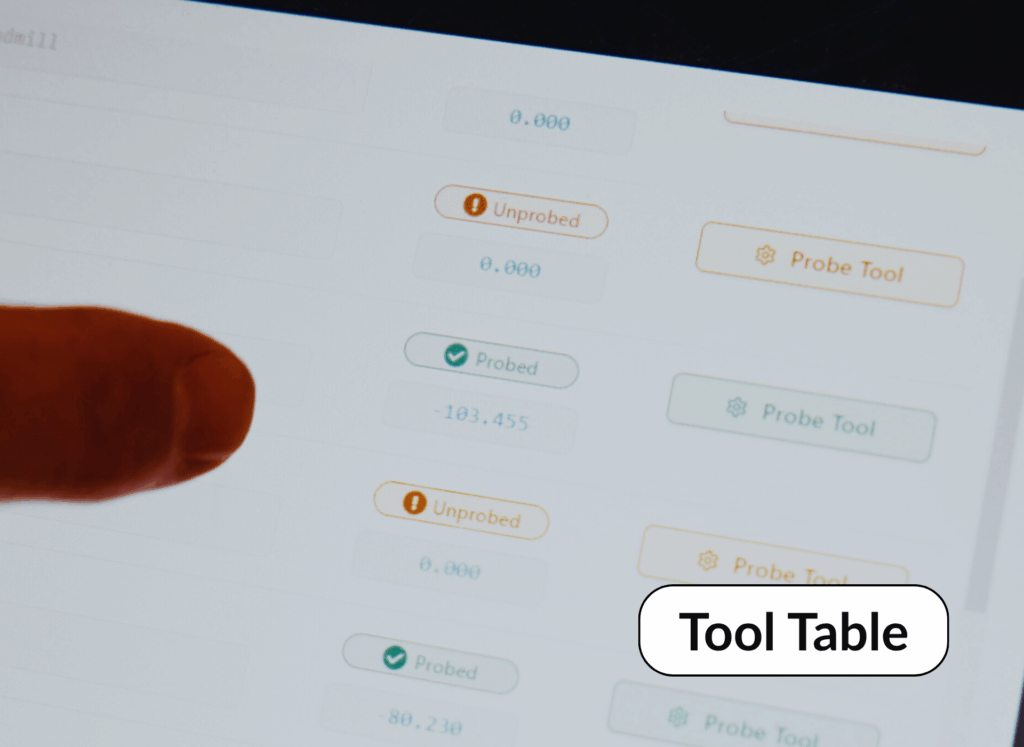
- On-the-fly changes to tool holder position mapping
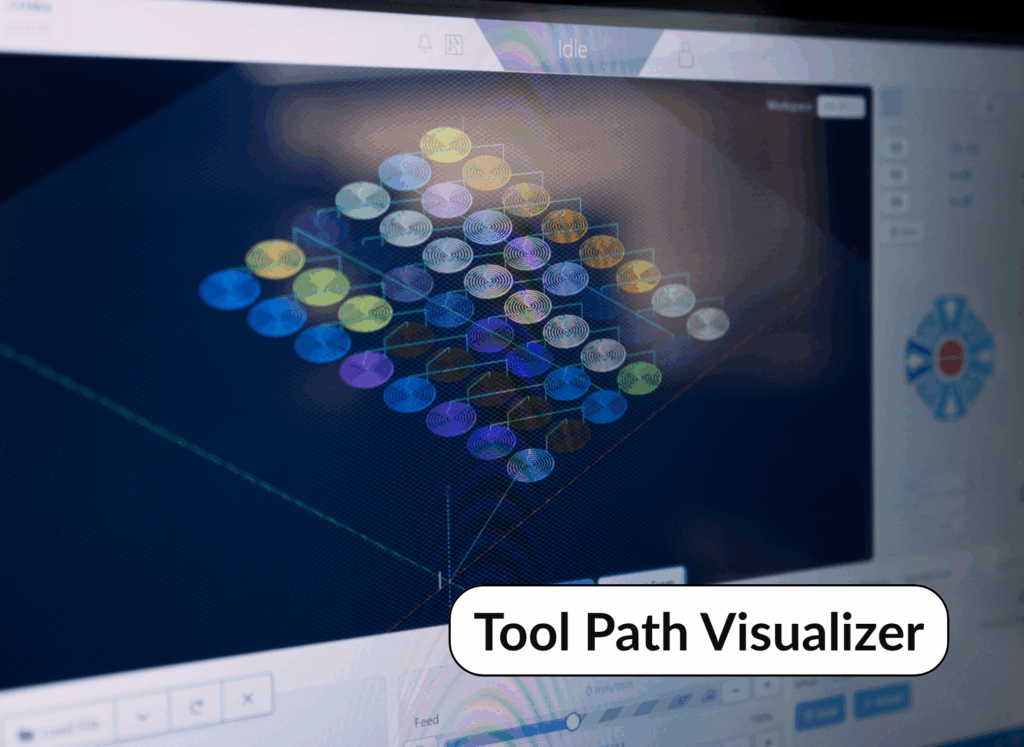
- Colour assignment in the gCode visualizer based on tool
- “Run-from-tool” functionality, which allows users to run toolpaths specific to each tool
…and more.
Engineering the ATC
The ATC comes with a series of unique engineering challenges:
- The use of low pressure air
- To have maximum reliability
- Sensor integration
- Installation and integration
Custom PCB
To integrate all of the communication and sensors into the ATC, we developed a custom PCB board that lives on board the spindle. One of the most notable features includes the LED status button, which shows the status of the spindle based on its colour, as well as allowing the user to use the button for functions like executing a manual tool change.
Quiet Cooling System
Since we first started building spindles, we’ve felt pretty strongly that air cooled spindles are the best choice for the majority of people for these reasons:
- Watercooling relies on an external pump, which adds a significant failure point. A failed or disconnected water pump can cause the motor to overheat and in the worst of cases, the wiring to burn out. Most air cooled spindles on the other hand (although not the ATC specifically) use a mechanically mounted air impeller that drives air through the spindle to provide cooling. The ATC specifically uses an electric cooling fan to do the same job as the impeller, but uses a combination of a temperature sensor and controller to adjust the cooling and turn off the fan automatically.
- Watercooling requires a send and return hose looped through the drag chains, requiring not only hoses but larger drag chains as well. This adds additional cost and set up complexity.
By using a separate electric cooling fan, we are still able to get very low levels of noise, as the fan runs at a lower RPM in comparison to a mechanical air impeller. Additionally, since we can turn the fan on and off as needed, this impacts the overall noise of the spindle as well. It should be noted that the fan will primarily turn on when the spindle is running and cutting, where the sound of the spindle is masked by the sound of cutting anyway.

Installation and integration
As with all of our accessories, the ease of installation and the focus on a tool to be as plug and play as possible is critical for adoption. From our research, third party ATCs, while many exist, come with a large barrier to entry as the installation process varies significantly based on the type of machine, controller, and tool rack system the user chooses. Given the cost and difficultly of development, we’ve seen a split between ATC manufacturers and CNC manufacturers, where one company handles the resources and integration and the other builds the machine. This means the ATC manufacturers need to work out how to make their systems compatible with CNC machines they didn’t develop in the first place, which makes it more difficult to make it operate as a streamlined and optimized system.
In this ATC project, we have the opportunity to design the machine, mounting, wire management, air management, and software all as a cohesive system.
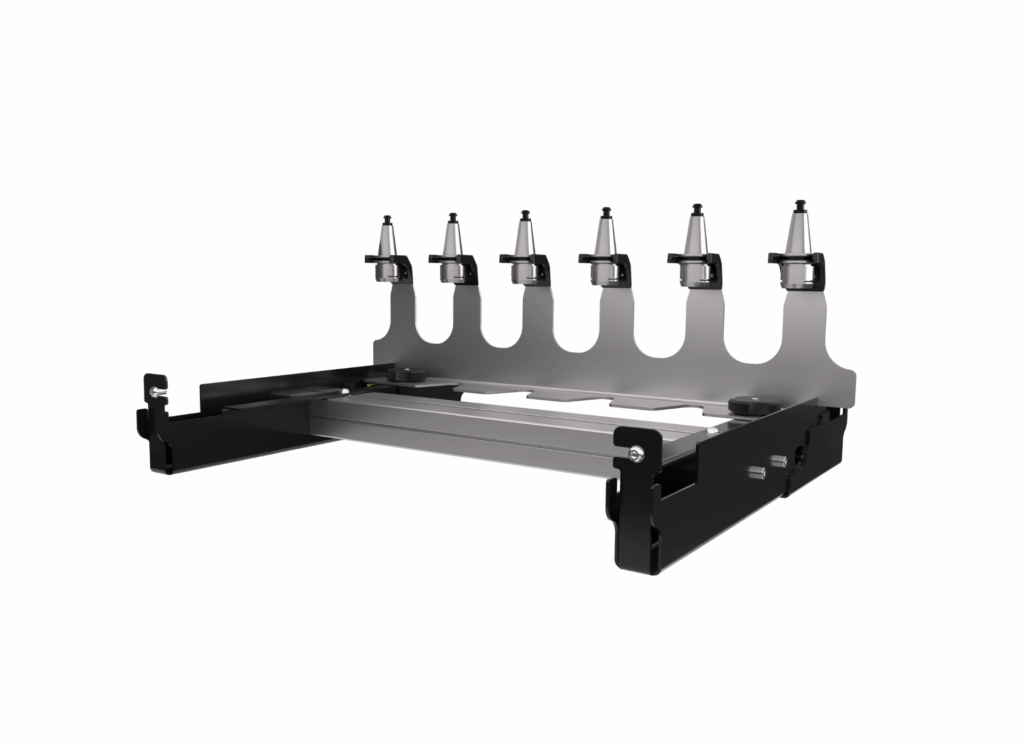
One of our key accomplishments in this project was also to build a toolrack that was flexible, easy to install, and easy to remove. Given that installing and having an active toolrack reduces the working area slightly, we also wanted to optimize its footprint as well. One important feature is the ease of removing and replacing the toolrack. When users want to use the full area of their machine, users can remove their rack in seconds with two hand screws. In this mode, the ATC can be used manually, where users can press the button on the spindle to release the tool holder, and pushing the button again with another toolholder allows the tool to be secured back to the spindle.
Pricing
Users should expect to invest around $2,600 USD to $3,300 USD before tax for a complete system, including the spindle, VFD, rack, and toolholders. Users should expect to pay around $150-300 USD for an air compressor, which is needed for this system, if they don’t have one already.
- ATC 6-Tool Kit: $2,890 USD / $4,040 CAD
- ATC 12-Tool Kit: $3,340 USD / $4,670 CAD
- ATC Spindle Only Kit: $2,590 USD / $3,620 CAD
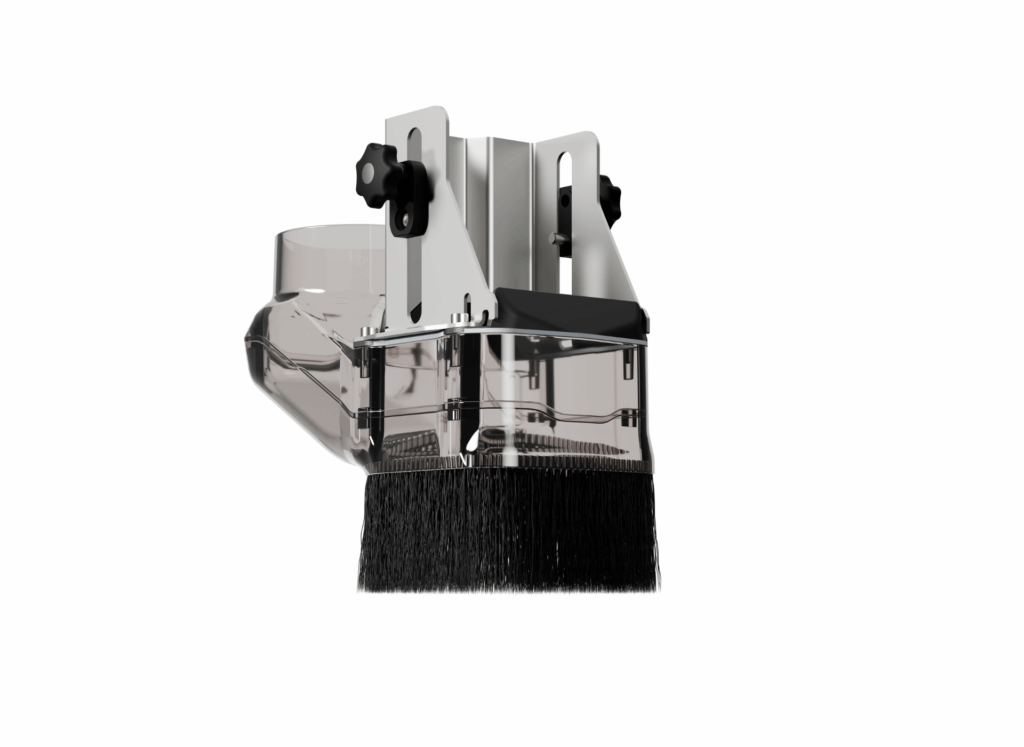
Additionally, our new “Clear Cut Dust Shoe” was specifically designed for all of Sienci Labs’ lineup of spindles, and comes standard with the ATC. This allows for tool changes to happen without any interference from the dust shoe.
Additional add-ons are available as well:
- Separate Tool-Rack: $245 USD / $340 CAD
- Single Tool Holders: $28 USD / $38 CAD
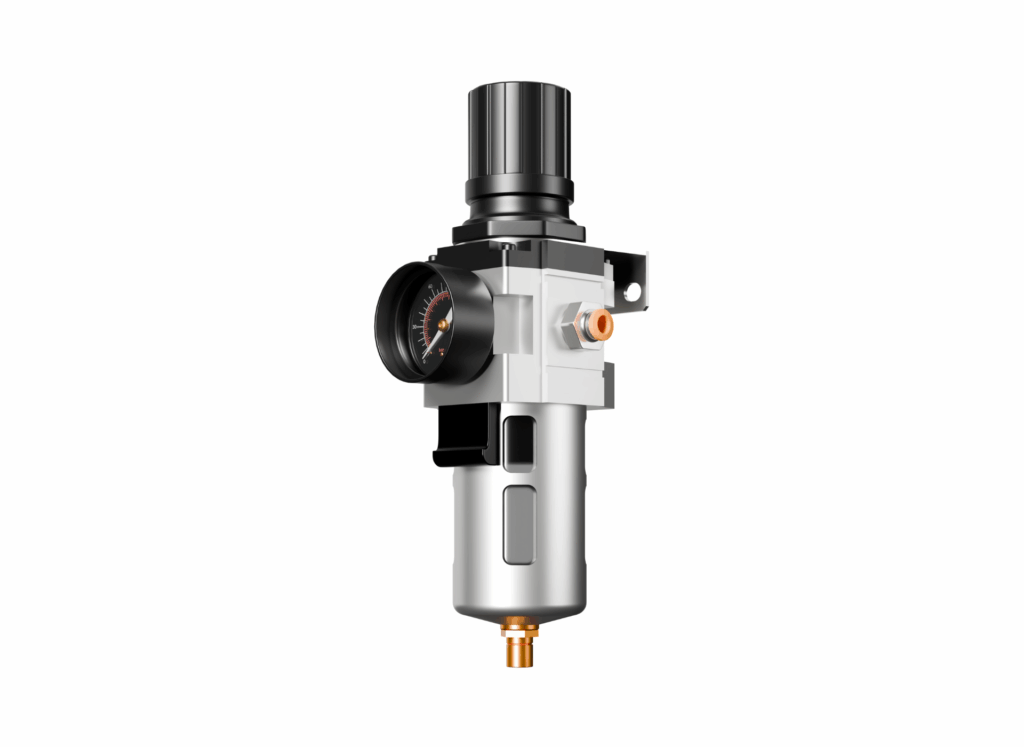
- Air Filter Regulator Kit: $80USD / $120 CAD
All available products are sold here
Air compressor compatibility
For proper operation of the ATC, users must provide a reasonable sized air compressor, with 3 CFM at 90psi or better, and 100psi minimum. The ATC spindle will only consume significant amounts of air during a tool change, but not while cutting, which keeps compressor requirements minimal.
FAQs
Some common questions are below but on Thursday, December 4, our project lead engineer Johann will be hosting a Q&A with Kevin our lead gSender software developer, and will answer any technical or work flow questions you may have. Watch for more formal announcements but you can quickly find live the streams on YouTube.
And if you haven’t already, check out what all the engineers have to say in this breakdown video:
Does the ATC work with the LongMill?
Due to weight and mounting constraints, no. The ATC is not compatible with the LongMill.
Why do I need an air compressor?
The air compressor is needed for several functions on the ATC, including supplying power to engage and disengage the tool holding mechanism, as well as providing a de-dusting function, where a blast of air is shot onto the tapered part of the tool holder to ensure that dust and debris have been removed before loading a tool.
Can I get the tool length sensor separately?
As discussed earlier, the tool rack system integrates a tool length sensor to calibrate the Z position of the tool, as well as confirm the existence of the tool itself. We will provide the tool length sensor for mounting to the machine as a separate add-on at a future date, such that LongMill and AltMill users can automate the process of finding the Z-height of their tool before cutting.
How many tools can I have set up with the ATC?
The ATC and gSender can be programmed to hold 32 tool offsets (coded into grblHAL core.) However, we believe one of the 6 or 12 position holders provides an adequate number of tools and fit within the working area of the machine.
Does the tool rack take up some of my working area from my machine?
Yes, the tool rack takes up a few inches of space in the Y direction. However, during the development of the AltMill, due to our anticipation for this to be the case, all AltMills come with some additional travel space beyond the listed capacity so that in practice, the impact is minimal. Additionally, the tool rack comes with an easy installation and removal system, which means that tool racks can be installed and removed in minutes, allowing users to get the extra space for tiling and other pass-through jobs when needed. The system intelligently detects when a rack is removed and prompts the user to swap tools when needed using the manual tool change button on the side of the spindle.
Is the ATC air cooled or water cooled?
The ATC is air cooled. We have specifically chosen to use an air cooling system to reduce the complexity of the system for the user and integrate additional functions such as automatic control over the fan, based on the spindle’s cooling needs and to provide quiet operation when not in use. A temperature sensor built into the spindle provides an additional safety mechanism to prevent overheating.
It should be pointed out that both air cooled and water cooled systems are both designed for full duty cycles, which means that the cooling system is scaled in both systems to ensure full time use. Neither system is superior to each other with regards to performance or durability.
Is the ATC compatible with other CNC machines?
In theory, yes. We will provide mounting drawings, wiring diagrams, and schematics that may allow users with machines outside of the AltMill family to integrate the ATC into their own system. However, the use of gSender, gControl, and other Sienci specific hardware may be required to use the full capabilities of the tool. We are not providing support for third party use at this time.
Will you come out with more powerful spindles in the future?
Although we do not have specific plans for a more powerful spindle option in the future, we are expecting to work on a more powerful version, especially as we continue to develop our 4×8 line of AltMills and grow our production focused customer base.
Can I take an existing spindle motor and add the ATC parts onto it?
Unfortunately no, due to differences in the design they are not interchangeable.
Can I run the ATC on 110V power?
For the ATC to run properly, a user must provide 220V power and at least 10A. Some users may choose to get a step up transformer which can allow for the use of this spindle with 110V power outlets, but caution should be used to ensure the current capacity of your breaker is not exceeded during operation.