Hey everyone, welcome back. Here’s August 2026 Production Update!
US/Canada Tariffs
A number of our American customers have been inquiring about the status of tariffs with the recent announcement by the U.S. government on potential tariffs being applied to Canadian products.
These tariffs are aimed to target three groups of products:
- Alcoholic beverages
- Dairy
- Motor Vehicles
Based on our cross-reference of all of the HS codes that are expected to be affected, we have determined that the products we are selling to the U.S. are not part of that group of HS codes. This means that we do not expect tariffs to be applied to our products.
Because the tariff situation between the U.S. and Canada is still a little bit unpredictable, we can reassure that we will handle this in one of two ways for our US neighbours.
- For orders that have been placed before the tariffs have been applied, we will absorb the cost of any tariffs (if there are any) and continue to ship our products as DDP. This means that any duties and tariffs will be billed directly to us and will not impact the customer.
- If the tariffs create a situation where it is unsustainable or not possible for us to reasonably absorb the cost, then we will communicate this to the customer and either come to another arrangement or allow the customer to cancel their order completely.
We will make an update to our policies if the tariffs end up being implemented.
Based on our experience over the last few years, and due to our CUSMCA/USMCA certification, we do not expect there to be tariffs in the future.
Customer Support Updates
We’ve been putting a lot of work into ramping up and improving our support process.
Our new support page is now live! A few updates to this:
- A more specific step by step process for completing tickets so that we can determine relevant vs irrelevant information
- Built in search function to suggest articles and information that may help with the issue
- Tracking to see which issues are the most common
- Tracking to see how often the issues that we suggest are correct in helping the user
We also have now revamped order status tracking in our website, which allows customers to better keep track of when they expect to have their items ship. You can now enter your order information and get a list of all of the items that you ordered. Soon, we’ll have the lead times tied to each of the products, so that you can get the estimated lead time for each of the products. This will also give us a better idea on our delivery timeliness success rate, as well as more easily identify orders if we are expecting them to be delayed, so that we can communicate with the customer better.
We’ve also had a lot of discussions with customers and our team in establishing better after sales support, with initiatives currently underplace to:
- Provide maintenance kits for lubrication and replacing wear items
- Parts available for spares and replacements
- Updates to machine use and maintenance resource pages
- More support videos
Lastly, it’s been mentioned to us about our warranty period for our machines. We are coordinating with the team to establish longer and improved warranty periods and support for our products.
For people wondering why our warranty is so short right now:
- First of all, we set up this warranty system years and years ago, and we didn’t really revise it because it wasn’t something that people were talking about that much.
- Overall, we haven’t had many issues with our warranty length because the issues are relatively rare. When we do need to send out replacements, we will typically do it for free or at minimal cost, even if the warranty period is over.
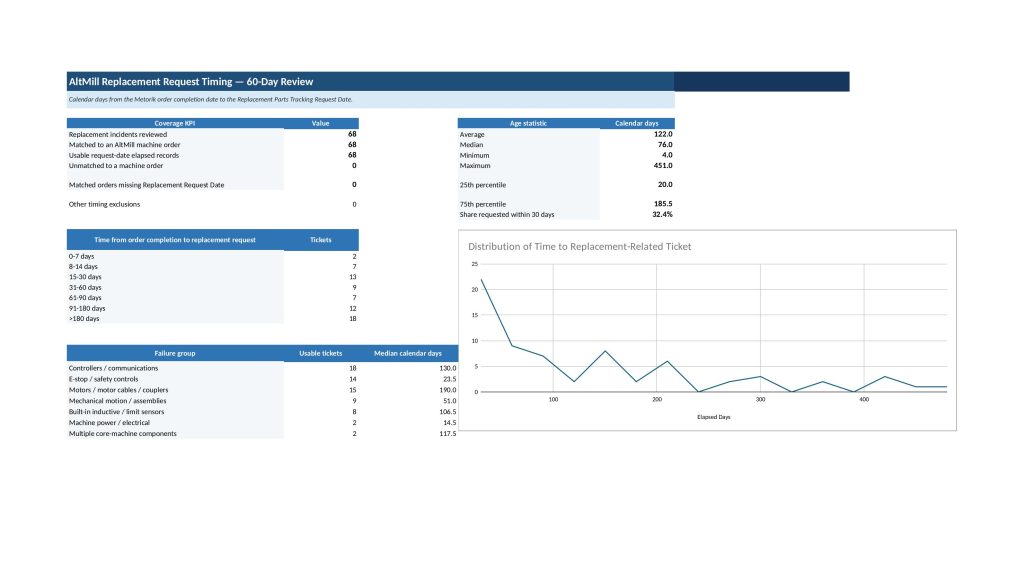
- Practically speaking, the most issues happen within the first 30 to 60 days of ownership. It’s very rare for customers to have issues after the fact, which means that even though our warranty period is pretty short, people don’t really use the warranty after the first setup.
However, I wanted to bring this up because this is something that a couple of potential customers have been asking about. And I guess if it’s not going to impact anything to provide a longer warranty and offer additional peace of mind, then why not consider it?
Here are some things that we’ve learned:
- The overall cost for us to provide replacements has been relatively low month over month. Based on my calculations, this is about 0.35% of the overall machine value on average.
- Even if this were to double, the potential uplift in sales that we’d want to see in providing the longer return period, it would only need to be covered by around two or three machine sales per month.
- Regardless of whether the customer needs to purchase a part or not, we provide the same level of service for the customers to troubleshoot and repair their machines. We expect the service we need to provide and the costs associated with it to be relatively the same.
- We also expect that it will make it a lot easier for our team to handle repair issues because we can just issue replacement parts without having to figure out the transaction process as well.
All of which to say, it seems like we can significantly increase the warranty period while saving some costs in some areas and also with minimal impact to our bottom line. We also believe that offering the additional warranty will provide better peace of mind to customers, so from my perspective it seems like a win-win situation.
In any case, we are working on setting this up and establishing our processes, and we will also increase warranty for customers that already exist retroactively.If customers have paid for replacement parts due to warranty service that happened outside of their warranty period, then we will work with the customers to either refund them or provide them credit appropriate to their situation.
Tool Length Sensor
We recently launched the TLS in the past month to great reception. After receiving customer feedback and getting through our first batch of production here’s some updates and changes to expect:
- Updates to the workflow in gSender
- Ability to fine tune fast and slow find settings
- Improved setup videos, instructions, and resources
- Improved and streamlined packaging
Improving our Supply Chain Process
Alongside customer service and care improvements and restructuring, we are also working on improvements and restructuring to our supply chain process, with the aim to reduce delays and allow us to react more quickly to changing demand for our products. Some initiatives put into place include:
- Automated monitoring of supply chain communication to tag and flag shipments
- New review process for Bill of Materials for products
- Tracking of supplier reliability and timeliness
- Reorganization of our physical space for increased storage capacity
- Cross departmental access to key reports to track supply and inventory
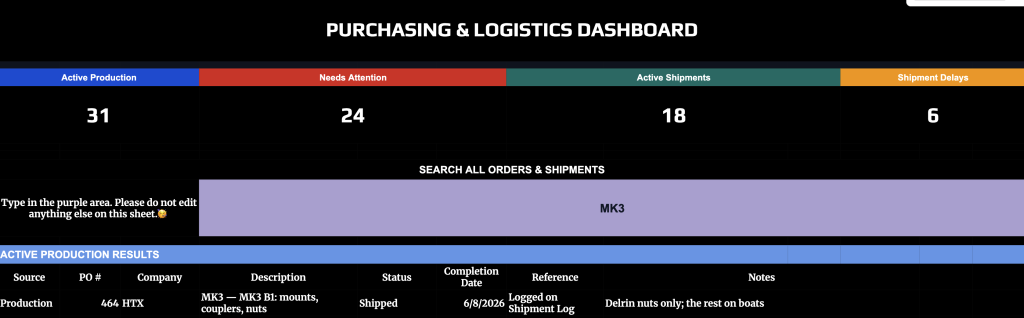
We are also slowly moving away from a batching system to a rolling inventory system. As our supply chain becomes more diverse, rather than building in big batches, each part will eventually be ordered as needed on an individual basis. This means that for parts like fasteners that are used in many different products, we can order them in larger quantities for multiple product lines.
You’ll likely see some changes in how we track our lead times from expected shipping month to number of weeks to ship. This gives us a more exact time when products will ship, rather than a vague date target. This will allow us to better keep track of our shipping ability and work with customers in the case of production delays.
We have also continued to grow our team on the supply chain and inventory side, with two new team members in the department and with a current search for an extra third member.
AltMill 4×8 Production
First, please note that you can check the status of your order and when it is expected to ship in the Order Status page.
AltMill 4×8 machines are expected to start shipping at the earliest on Aug 14 pending the arrival of additional rack and pinion hardware, but with assembly and processing time, most likely to start shipping between the end of August to first week of September. The remaining batch of machines in the queue are expected to clear out at the end of September. In the meantime, we are prepping parts and production to push machines out quickly once the parts arrive.
The current lead time for AltMill 4×8 is 10 weeks.
To prevent having long lead times in the future, we have about 300 machines on order for our second batch, and we expect to have about a years worth of inventory on hand. Could be less over time given that we tend to get a lot more orders as we decrease our lead times, but for now, we’ve made sure to pad our stock as much as we can.
Auto Tool Changer Production
ATCs are expected to resume shipping August 23rd, pending the arrival of a shipment of spindles around August 10. Once these spindles arrive, the remaining 58 orders in the queue will start shipping, with all current orders expected to be fulfilled by September 13.
The current lead time for ATCs is 8 weeks, so orders placed today are expected to ship early October. The lead time is due to the spindle being reviewed and modified.
Power Supply Certification
With some things going on with CSA-related certification to do, we’ve been working on designing, developing, and testing our own power supply designs for the next iteration of our machines. During this rework, we have put sales within Ontario for the LongMill MK2.5 and AltMill machines on pause until the rework is completed. Customers outside of Ontario are not affected, and LongMill MK3 will already come with Ontario compliant power supplies.
With the development of the SLB-EXT V2, we are revising the power handling and power shutoff mechanisms away from the controller, which better complies with Ontario safety standards. Although meeting these standards are not required in many other regions, we expect this work to overall improve safety for the machines and improve safety compliance in other markets in the long run.
Current work being done now include:
- Testing of power supplies in hot/cold conditions
- Power draw and handling
- Custom PCB design
- Fuse testing and trip behavior
We now have very few (if any) LongMill MK2.5 machines, and users in Ontario and the rest of the world should expect to receive their LongMill MK3 machines in September. Ontario customers waiting on AltMills should expect to see them return for sale in November this year.
LongMill MK3
A bit more work done with the LongMill MK3 in the past month, with our focuses mostly with
- Resource development and assembly manuals
- Packaging design and drop testing
- General machine testing
Many of the parts for the LongMill MK3 have now been received this month, and we are going through the setup for the assembly process.
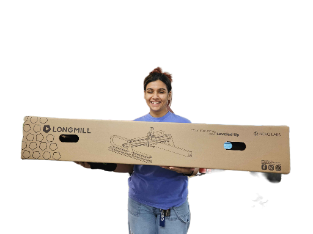
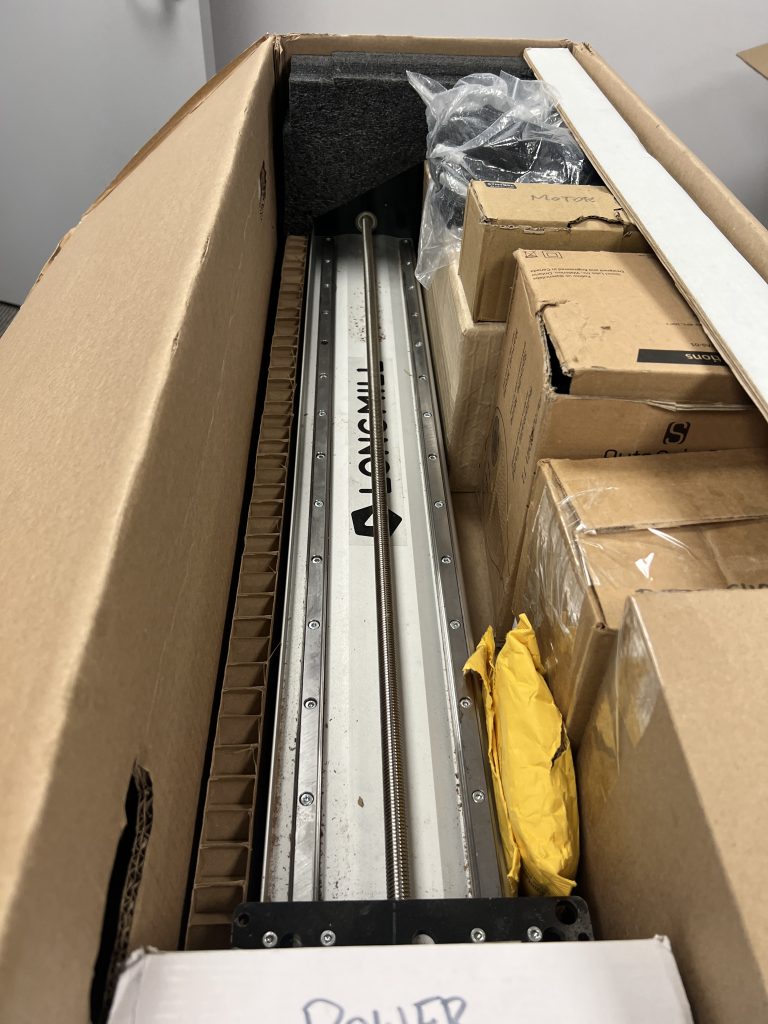
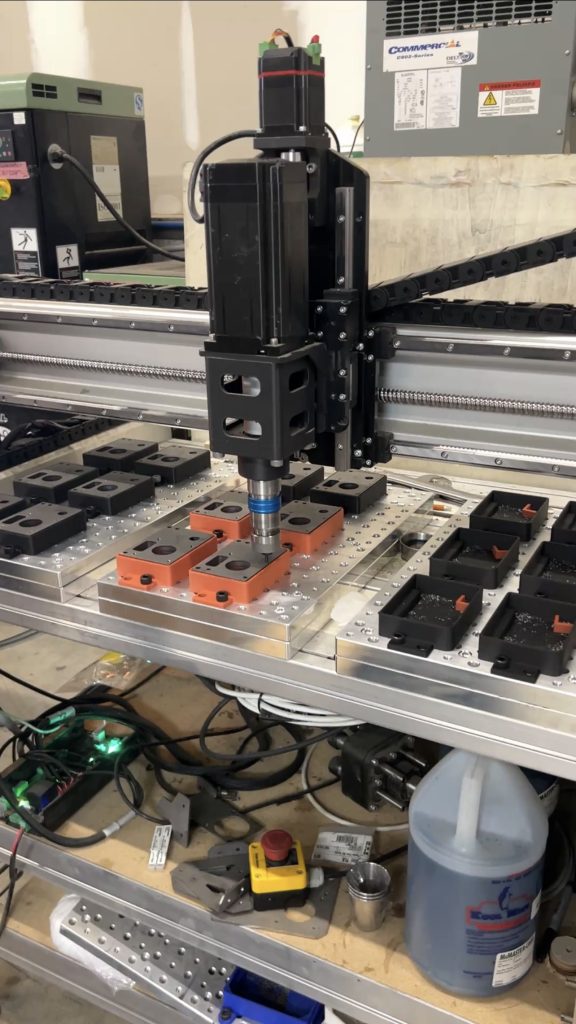
We are expecting to start shipping LongMill MK3 in mid-September.
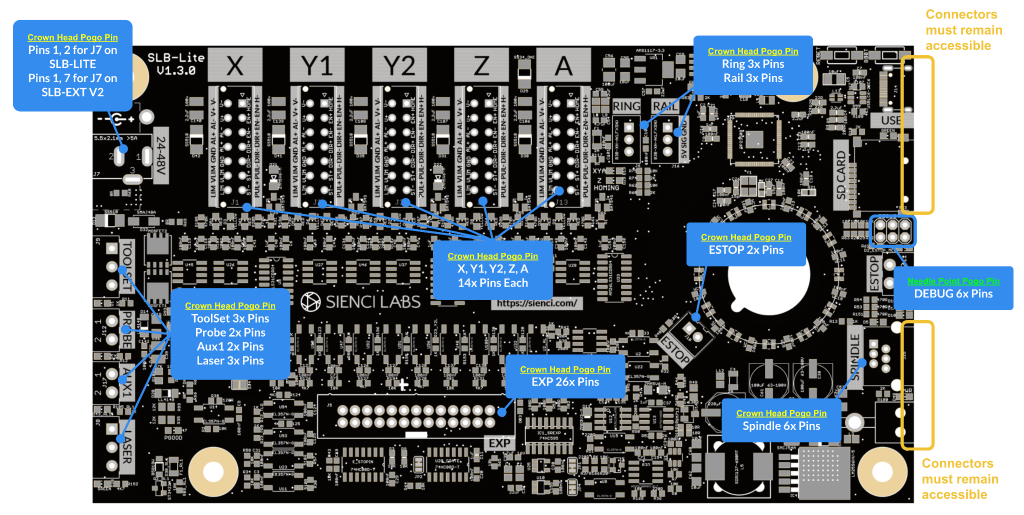
SLB-LITE and SLB-EXT V2
We are now reaching the final stages of SLB-LITE and SLB-EXT V2 development. Main work done for this month include:
- Design and planning for testing jigs
- Design and planning for firmware flashing
- Testing and updates to firmware
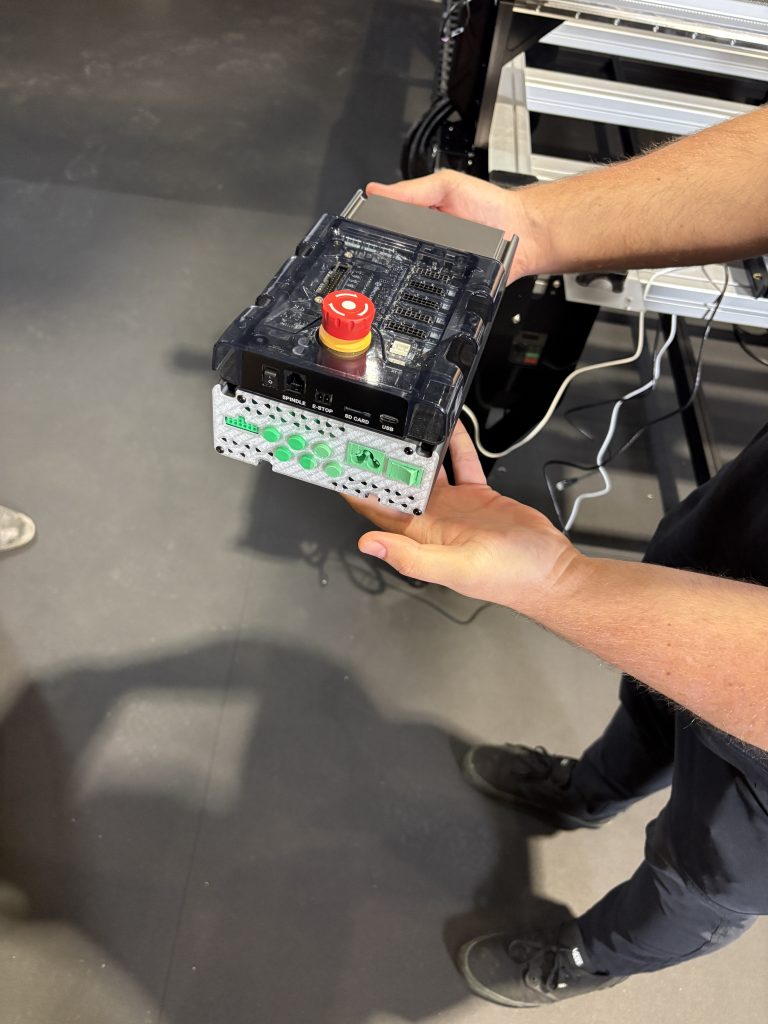
We are also expecting new packaging and initial batches of controllers to arrive soon in preparation for our first batch of LongMill MK3 machines.