Sienci Labs will be closed on Friday, April 3 for Easter weekend. Customer Support services will not be available. Orders can be placed as usual. Please use our online resources and help videos until the team is back on Monday, April 6. Dismiss
Hey guys, another busy month here for Sienci Labs. Here’s some news to share.
AltMill
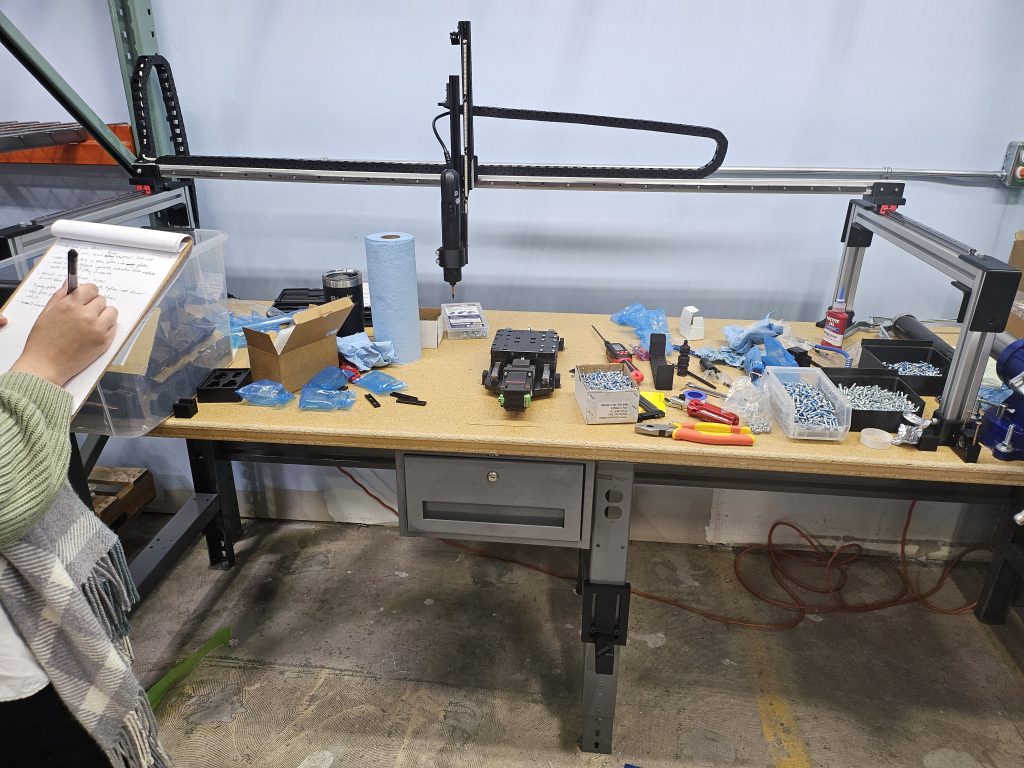
We continued to ship machines out in July and we are excited to see people putting their machines together. Our first 50 or so folks should have received their machines and we are expecting to start shipping another 50 units at the start of August. The remaining parts for another 100 units will arrive around the end of August so that we can wrap up the first batch in September. As we typically do in these situations, we are full bore on the assembly of subcomponents, and we will be able to ship things rapidly once everything arrives.
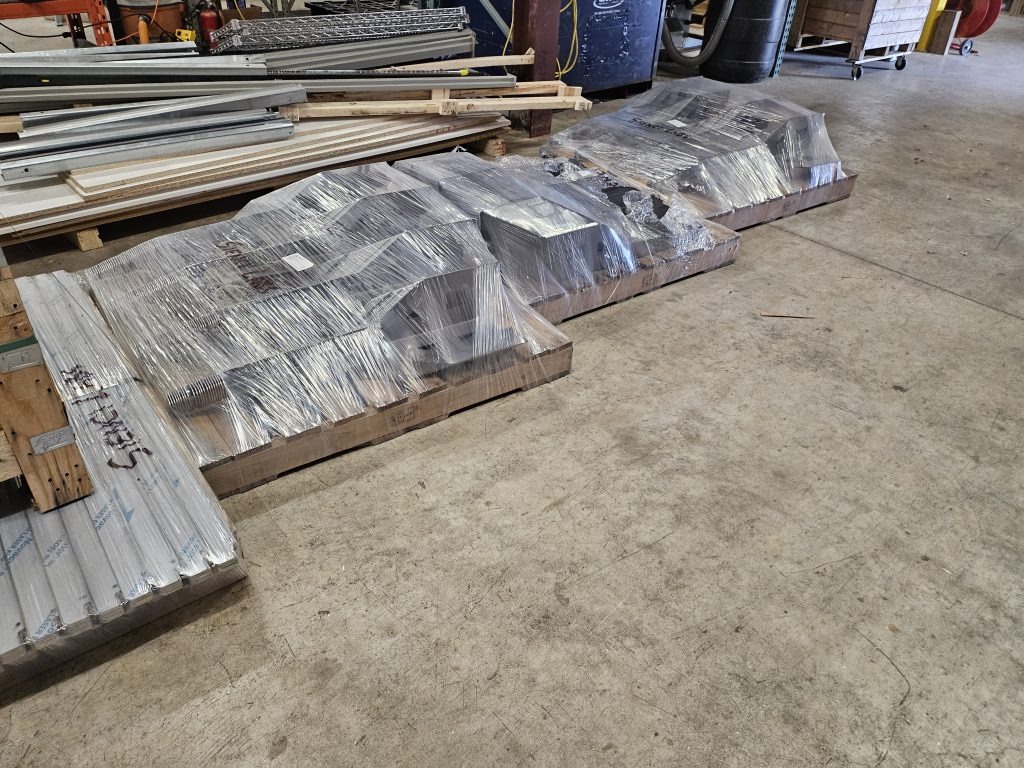
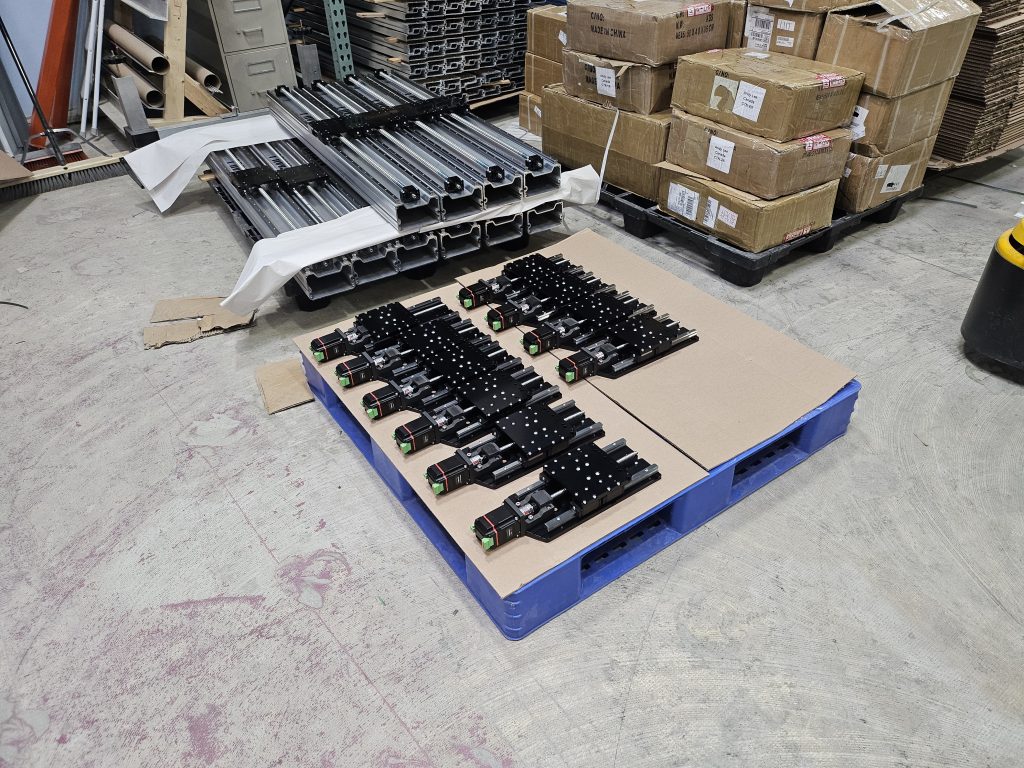
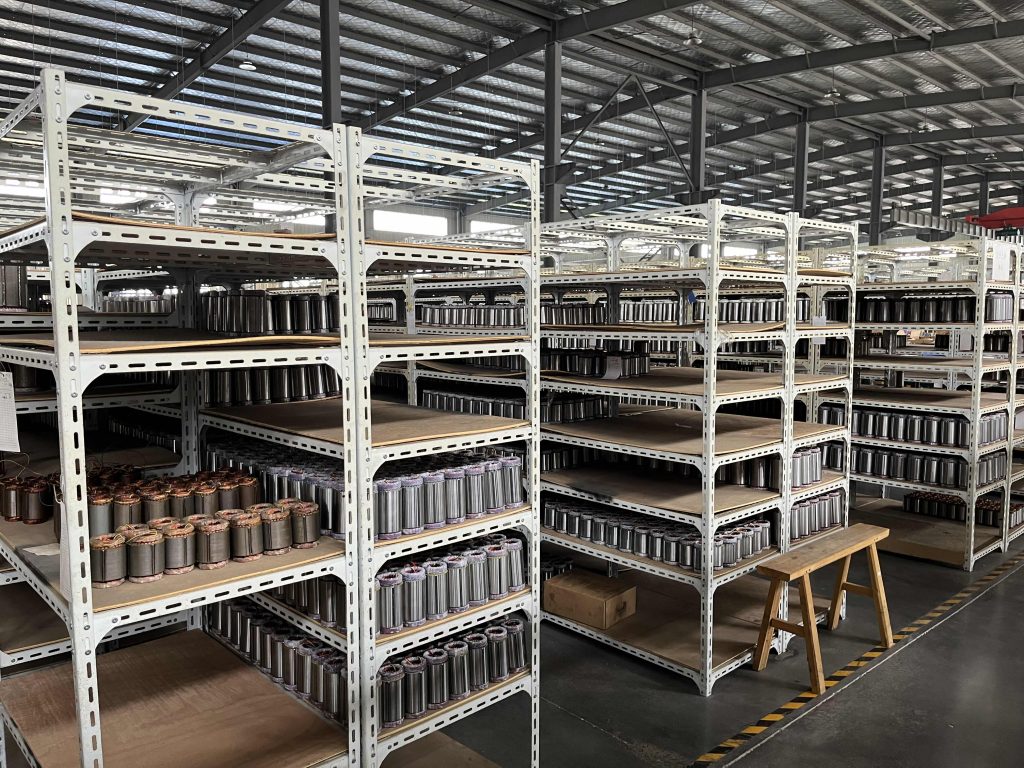
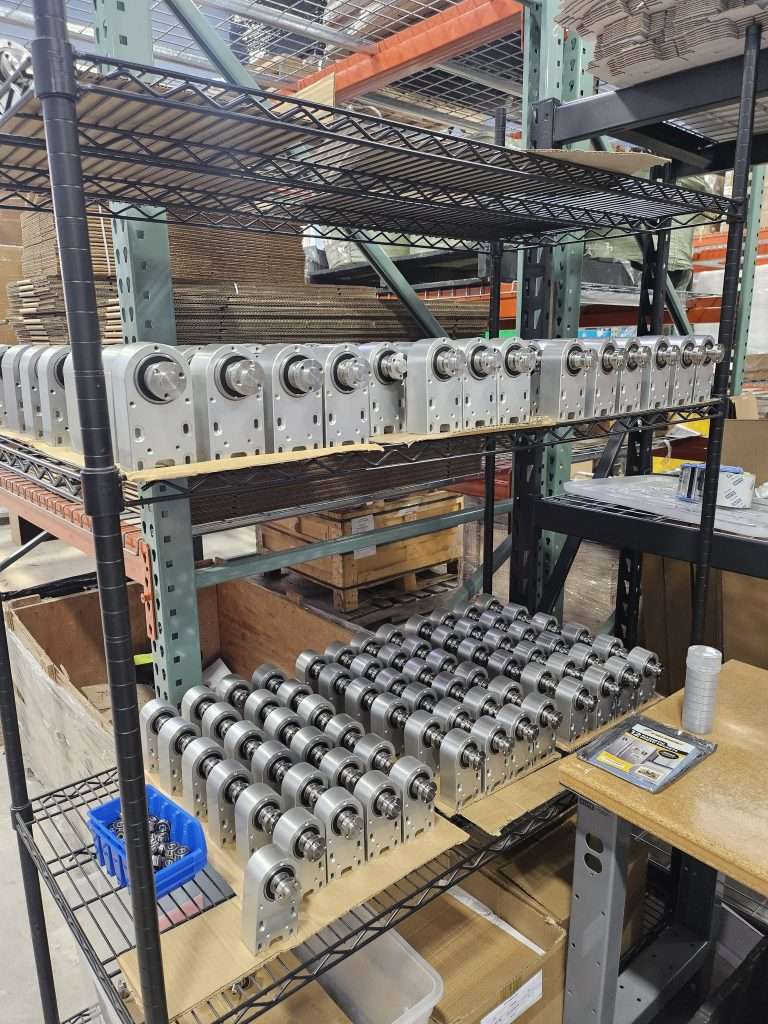
Parts waiting for tapping and coating for AltMill
While overall things went smoothly, there were a number of things we needed to improve on and change, or make adjustments to the manufacturing process as we continue to work towards starting shipping for the next 150 machines.
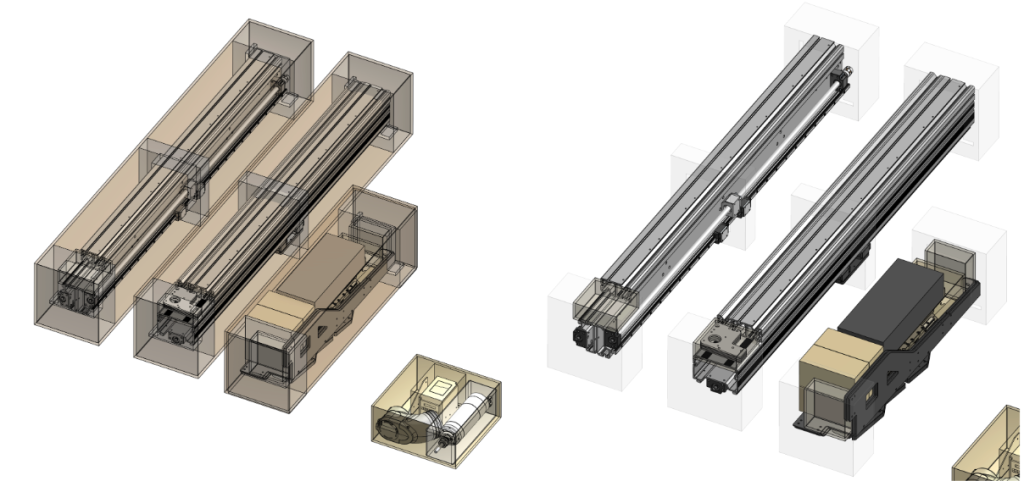
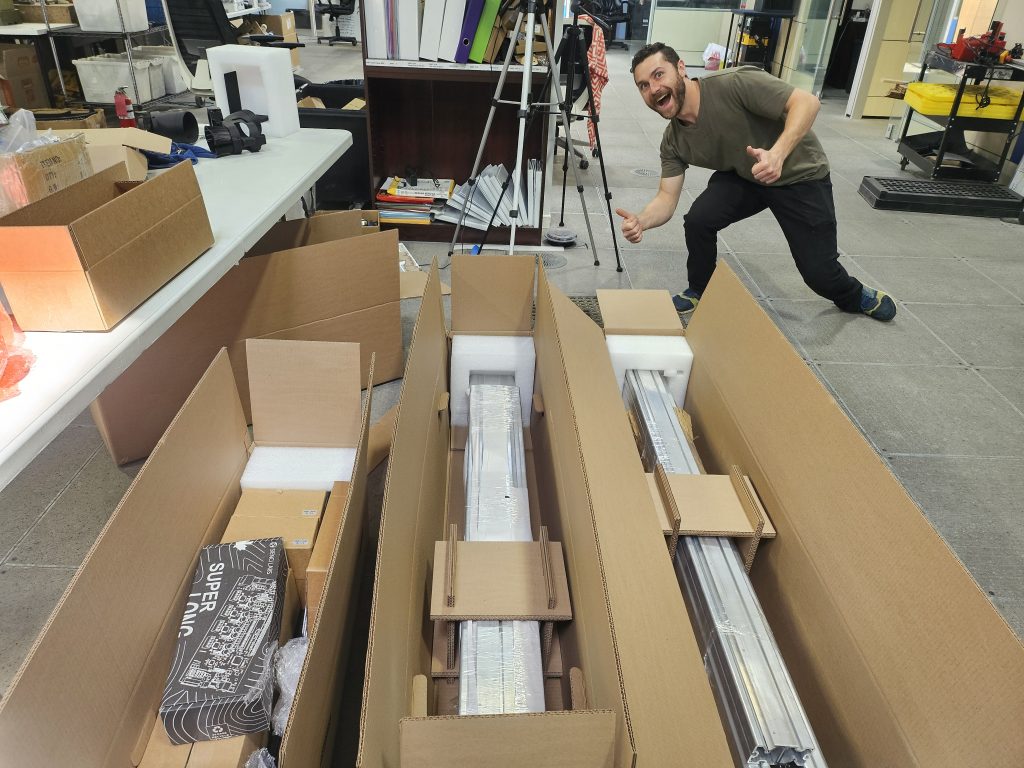
A number of shipments arrived damaged and we have continually improved the packaging for the AltMill to address these issues. Since we did anticipate some issues to come up when we first start shipping, we’ve staggered some of the shipments to allow us to make sure we are able to fix things as we go along.
We did also miss shipping the dust shields with the first 13 or so AltMills, which we’ve shipped out as soon as we found out.
There are a number of improvements to quality we’ve addressed, such as the height of the bearing blocks, threading on the extrusions, and surface finish of some of the parts. These issues were manually fixed for the first 50 machines, of course, but additional QA checks and instructions have been passed down to manufacturers to have taken care of in the future batches.
Besides some of the issues, we’re glad to start getting positive feedback on the ease of assembly and overall quality and construction of the AltMill, and we believe that we will continue to improve this product in all aspects. Thank you to the first group of people who have provided us feedback and support!
Additionally, Batch 2 AltMills are now starting production. We are in the process of ordering 200 sets of parts for large components like extrusions and plates, and 400 sets of parts for smaller components, such as fasteners, bearing blocks, brackets, and couplers.
In other news, are working on a few more things including:
Having replacement parts like bearings and linear guides up for sale on the store page
Additional documentation for accessories, such as the dust shoe and Vortex
Assembly video for the AltMill
LongMill MK2.5
LongMill MK2.5 pending orders have been caught up and new orders should ship within 1-2 weeks. We are now in Batch 9, with 1500 machines, which should keep us stocked for at least the next 4-6 months.
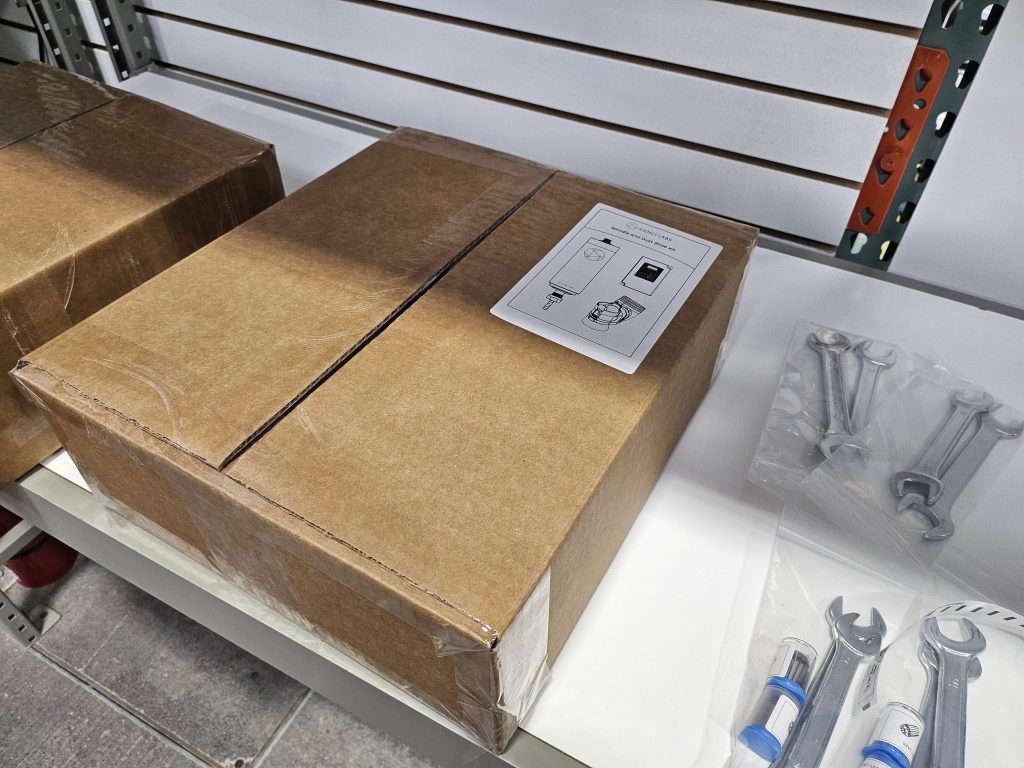
LongMill Spindle and Dust Shoe Kit
Due to the massive amount of interest from the LongMill community, we have now created a specific LongMill Spindle and Dust Shoe Kit! For those who might have already ordered one, the hardware is the same as the AltMill Spindle and Dust Shoe Kit, but with a 80mm router mount. You can find the kit on our store page.
These kits are coming with the AltMill Spindle and Dust Shoe Kits that are coming with Batch 1 and Batch 2 AltMills, and are expected to start shipping at the end of August or early September.
As with everything, we’ve done a lot of testing and research to make sure not only are we able to make sure that the kit is suitable for LongMill users but also to share testing data and our assessment. To read the full article, please check out our blog post.
Sprouter/Makita Router Clone/Spindles
We received another brushless DC motor sample to start another batch of testing. However, we have run into some minor issues and working on a few things such as:
Making a new batch of motor and bearing mounts
Improving the plastic sleeving for the motor
There still appear to be some speed-tuning issues we’re still trying to iron out. Development on the BLDC system continues to be a bit of a slow slog as we continue to work with and vet 2-3 different manufacturers.
We have some promising results with the Makita clone. Just for some context:
We wanted to explore the option of selling our own version of the brushed AC router that other companies currently sell, like the Carbide Compact Router or the Openbuilds RoutER, and started talking with some companies that make them.
We had done some testing on similar products in the past, as well as a deep dive into the construction of the Makita RT0701 and found some areas that we could improve.
We could add a few features, such as using an ER collet system, better bearings, and PWM control
We have found that the overall power and speed control performance is acceptable and on-par with the RT0701.
Our next steps from here include:
Creating a system for 5V input and a switch between manual and PWM control
Safety and regulatory certification
Panel computer
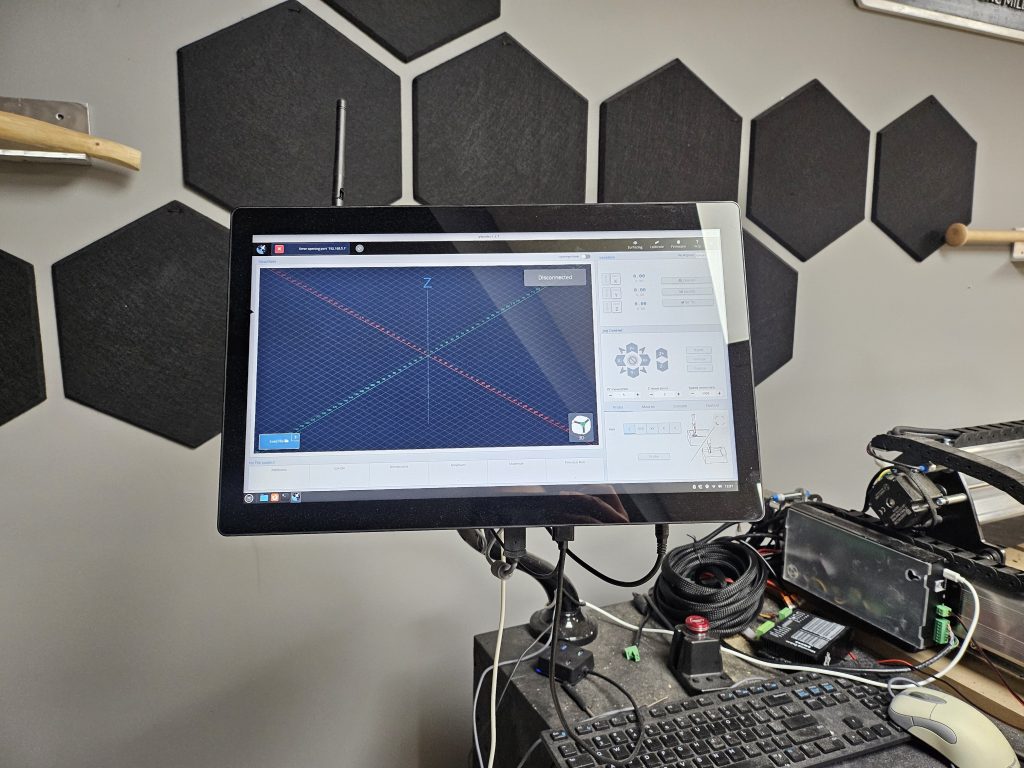
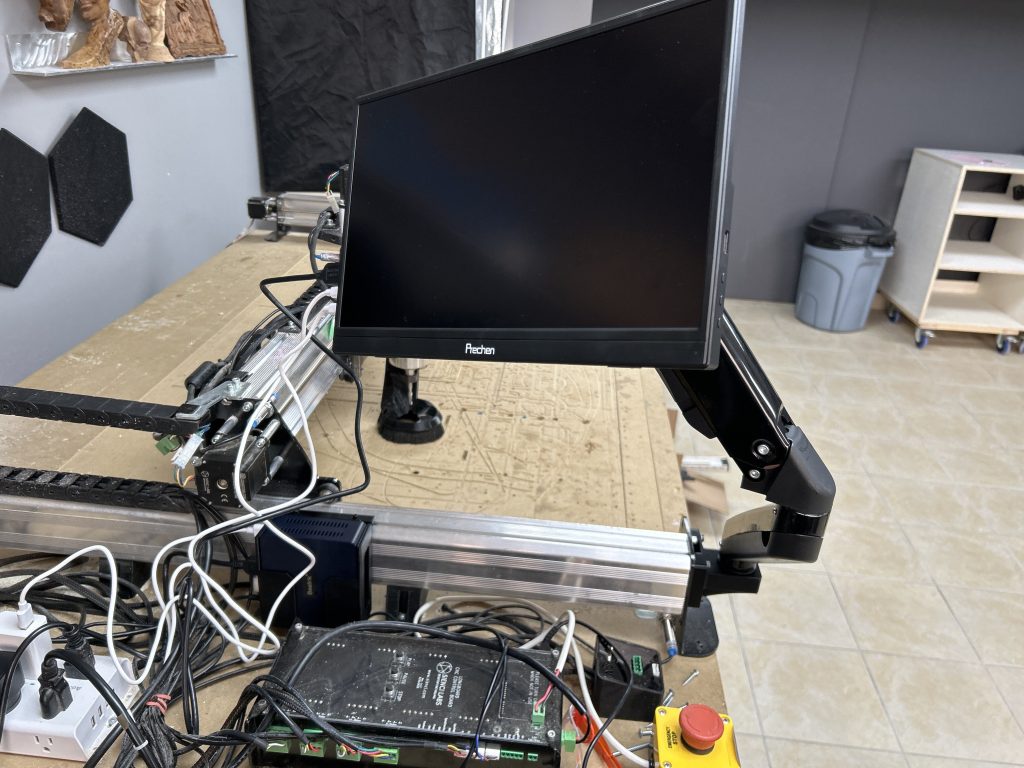
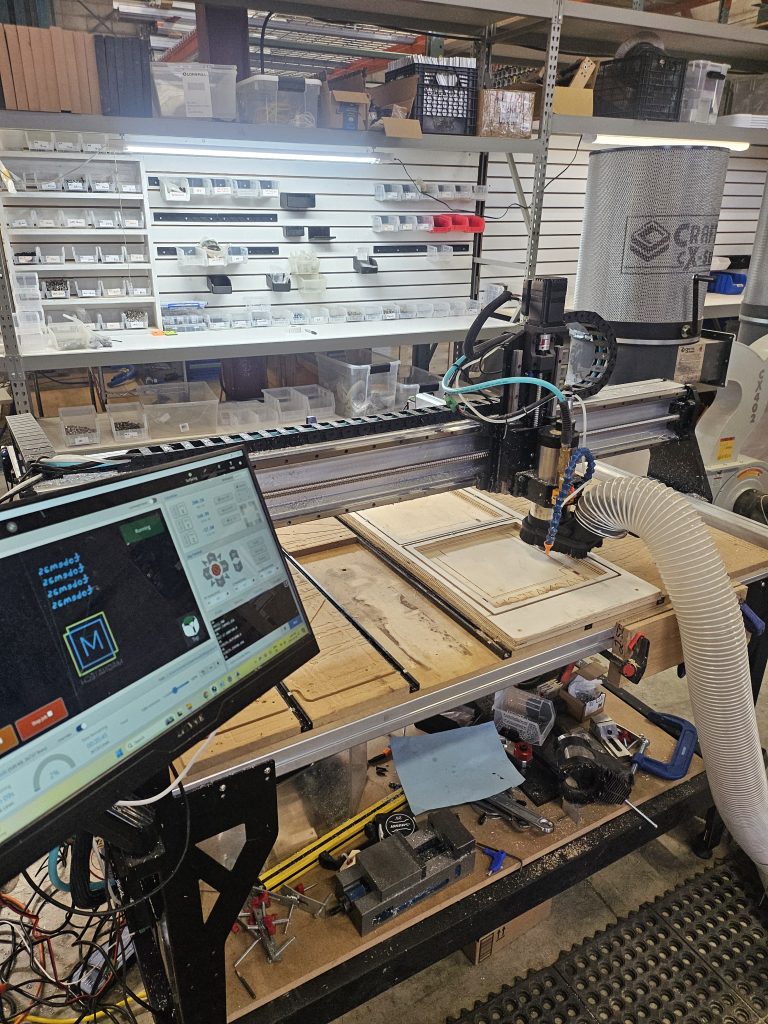
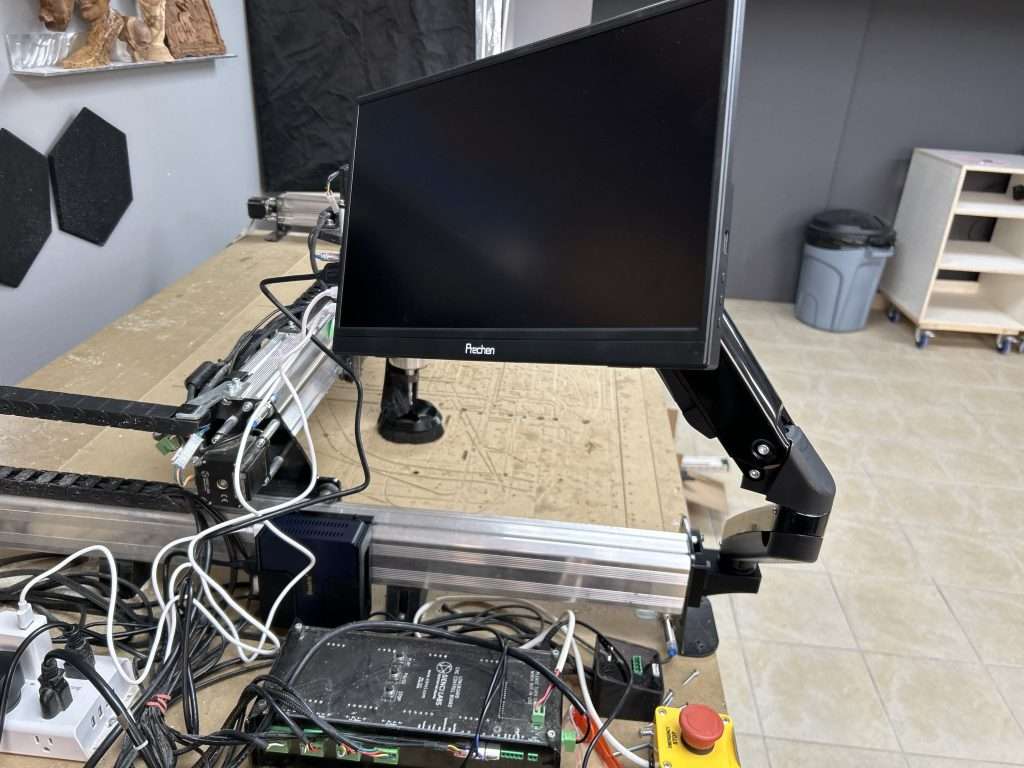
I’ve been using one of the new panel computers and to this point, they have been fantastic. With regards to the hardware, they are solid and easy to work with. We’ve also tested a number of monitor mounts and designs and have settled on a pretty stable set up that should work well for LongMill and AltMill users.
Our main problem continues to be with trying to sort of a way to get access to Windows 11 licenses. Here’s a few things we’ve learned:
There are a number of different types of Windows licenses. The one we want needs to allow us to install Windows on the customer’s behalf as a OEM or manufacturer. This means developing a relationship with Microsoft to set up an account. Even though we’ve tried, there doesn’t seem to be a straightforward way to make that happen since we’re way too small of a company it seems.
As another way to do this, we’re in the process of talking with some solutions providers that partner with companies like Microsoft to implement IT solutions.
Additionally, we’ve talked with some other, perhaps better known computer manufacturers that can sell us a similar type of touch screen computer.
There are also some secondary markets for licenses that sell online for a reasonable cost. However, based on our research, buying from these sources do create some risks, such as the licenses stopping working after a while or arbitraged from countries that might not allow the licenses to be used in certain markets or North America. It is still an option to use this, but we are aware that there may be some risks and we are considering our first options as there are less risk of licensing issues.
Vectric 2024 User Group Meeting
We are thrilled to announce our participation in Vectric’s 2024 User Group Meeting! Join us for an exciting weekend of learning and fun at the Embassy Suites Round Rock Hotel in Austin, Texas, on Friday, October 11th, and Saturday, October 12th, 2024. We’ll be showcasing the AltMill and Vortex, and Scott will be a guest speaker. If you can make it, we’d love to see you—stop by and say hello!
For those unfamiliar with Vectric, they create VCarve, an excellent design tool for CNC projects. You can purchase a copy on our website and enjoy the benefit of owning the software with no subscription fees.
To learn more about the Vectric 2024 User Group Meeting, visit Vectric’s event page.
Hey everyone, welcome back for our July 2024 production updates.
AltMill
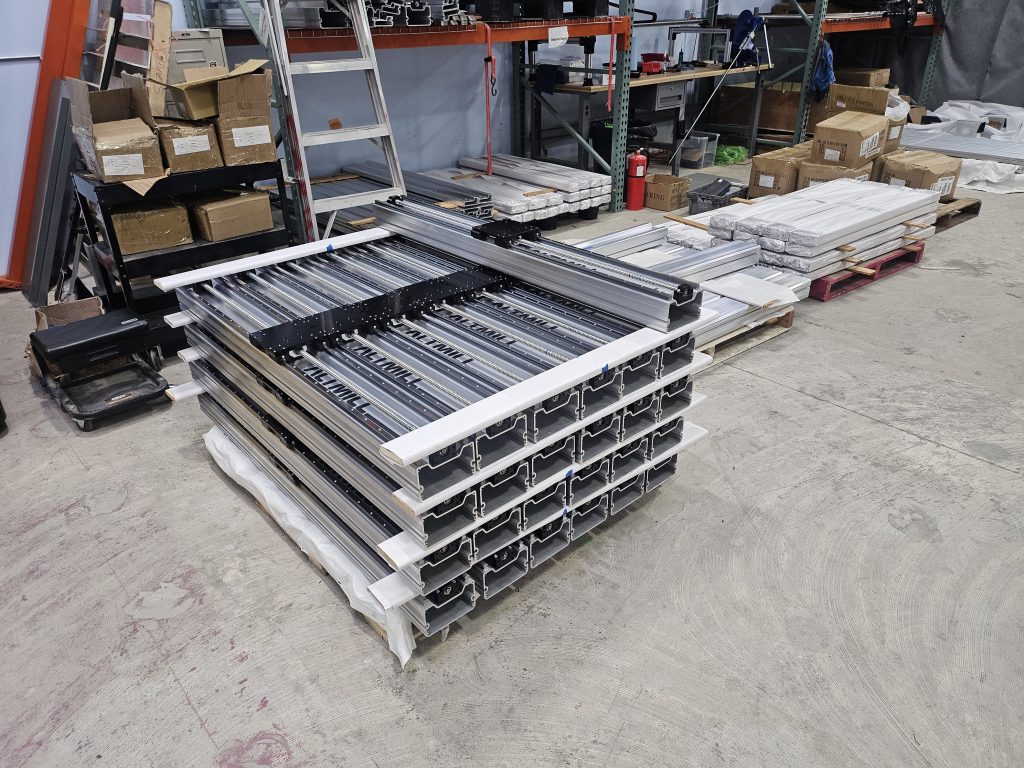
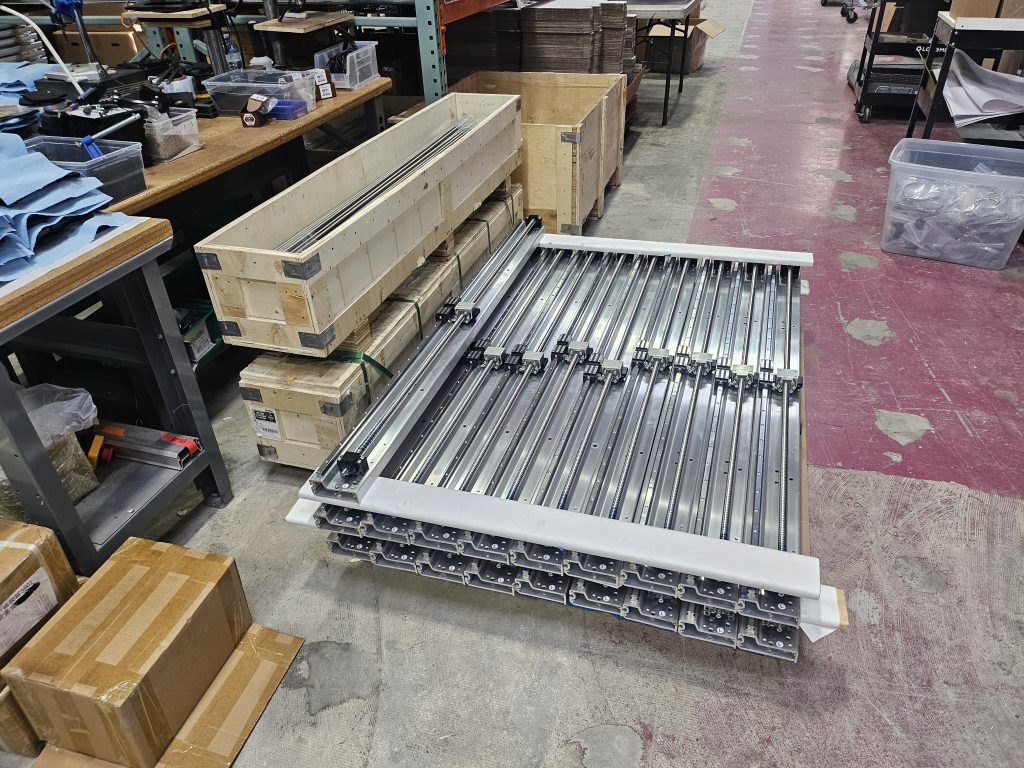
X-axis assemblyY-axis assembly
As we alluded to in the last update, we were hoping to start shipping AltMills mid-June. However, we did run into a few issues:
There were some issues in the wiring for the spindles, which were done manually in-house to get some put together. We should have new ones arriving soon
There were some parts on hold for coating due to some scheduling issues in the plant.
However, we are excited to announce we have started shipping AltMills! Horray!
We’ve brought on several new people to help on the production and operations side of the AltMill so that we can ramp up shipping and iron out any kinks as they come up during our production.
Also… new gSender update is expected to come in the second week of July, which will contain settings and defaults for AltMill.
Our first batch of 200 is now sold out, and we are working on stocking up on our second batch. This means that new orders will be part of the second batch. The shipping schedule will also be largely determined by the timely arrival of those parts.
AltMill/LongMill Spindle Kit
I’m not sure where I should add some extra info about the AltMill Spindle Kit, with regards to LongMill compatibility but I’ll throw that in here for now.
#image_title
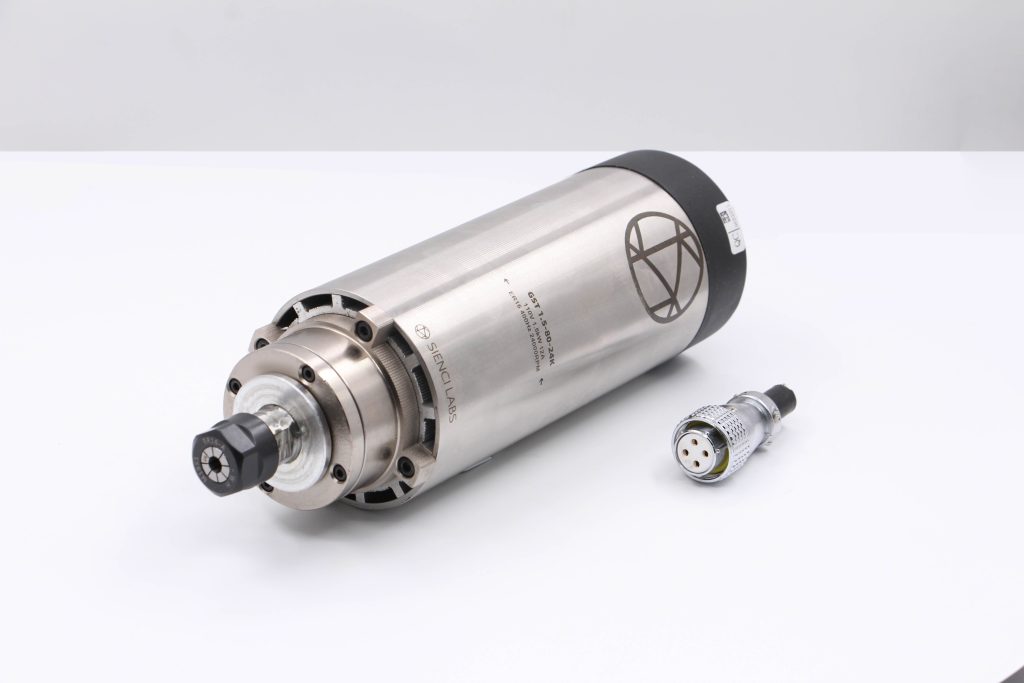
We have gotten a lot of requests for the AltMill Spindle Kit to be available as a separate purchase, and we have planned to have it available since the beginning. It is now available in our store.
This also brought up a lot of interest in official spindle support for the LongMill. Some of the factors why we are working on supporting a spindle option include:
Now that we have established a spindle testing and QC procedure for the AltMill spindles, we can use the same techniques for supporting LongMill as well
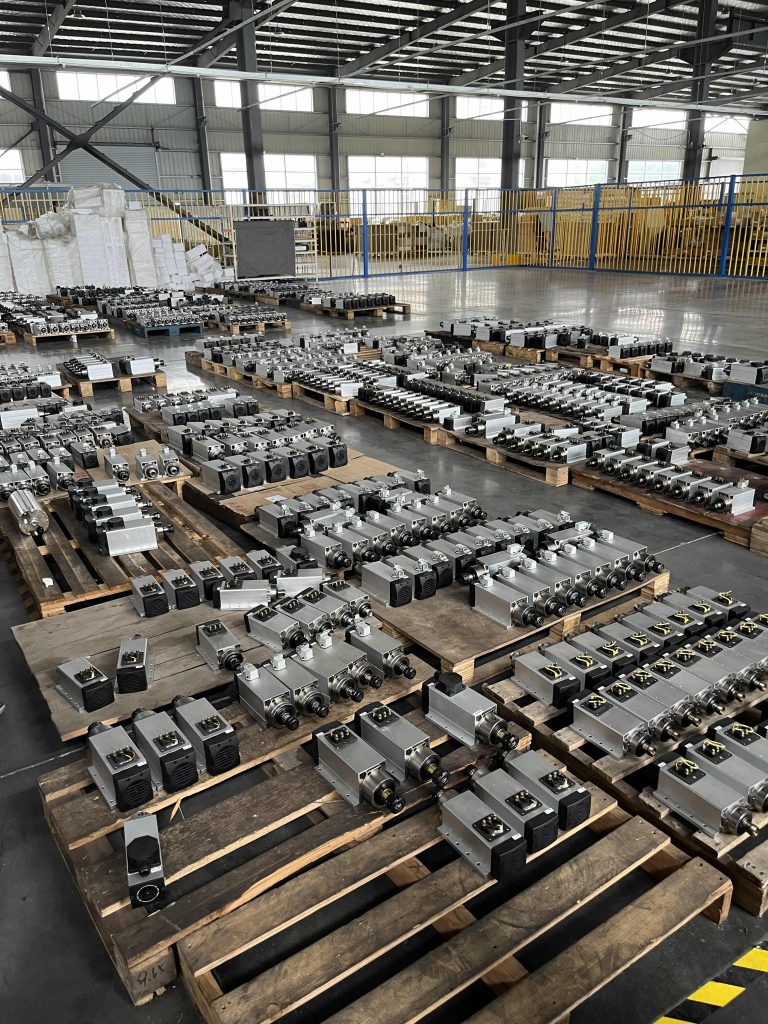
We have created a relationship with an established spindle manufacturer who can build to our specifications
The production of the AltMill provides enough volume for us to order more spindles, which brings the overall cost down.
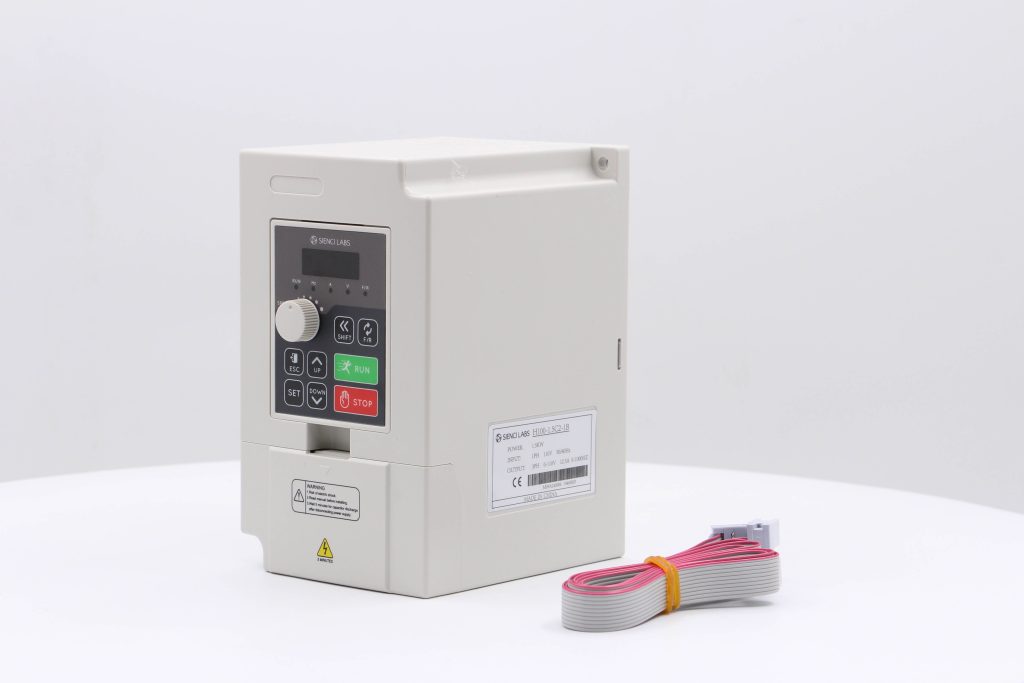
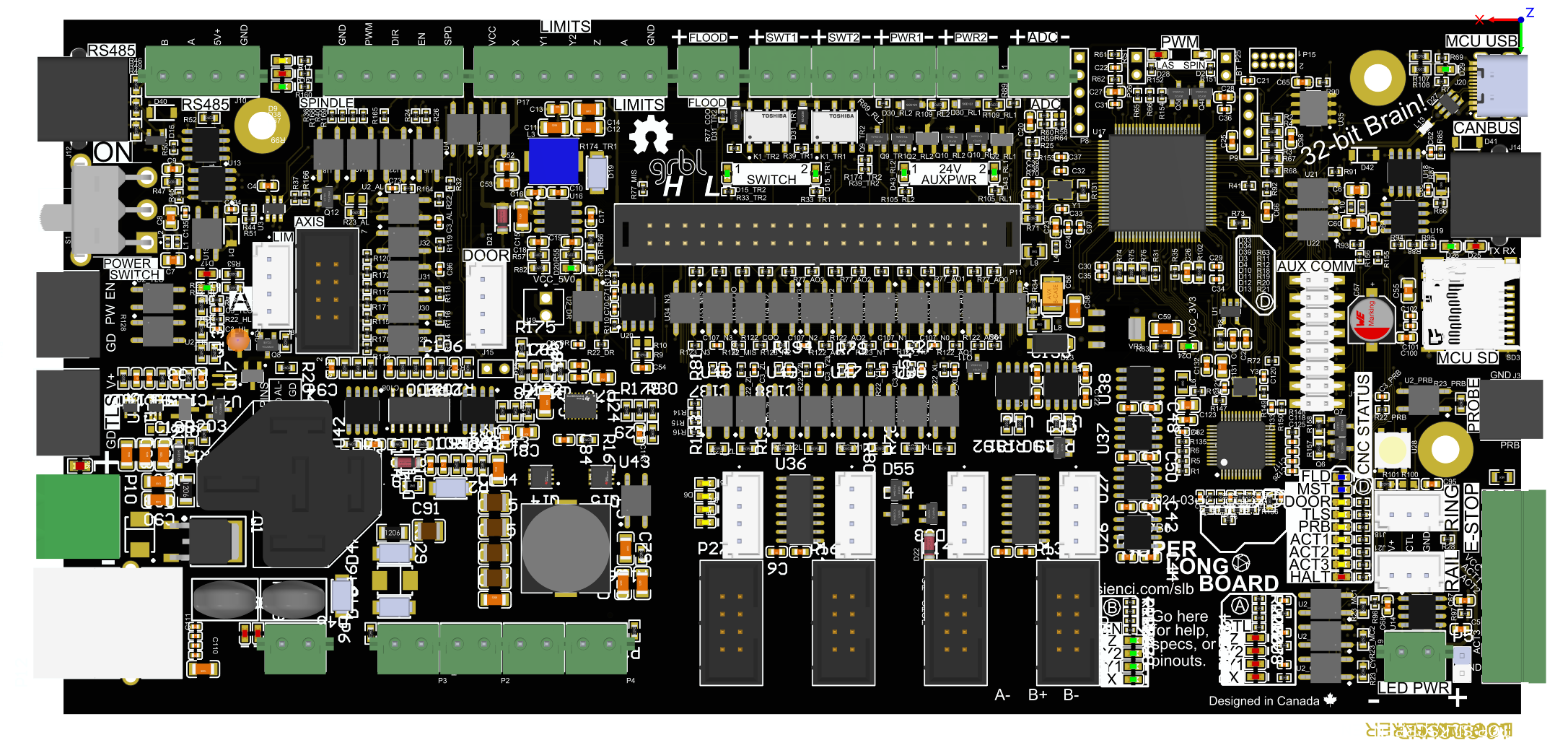
The addition of the SLB greatly improves and simplifies the installation and setup between the controller and the VFD. The SLB and the VFD used in this package allow for RS485 communication which allows for control of the spindle speed directly through gcode and the gSender interface, and can allow for features such as “wait for spindle”, which allows the spindle to get up to speed before starting the cut.
This interface also allows for additional safety features such as being able to stop due to spindle issues and shut things down in the case of an emergency (with the SLB)
With the improved motor holding capabilities of the SLB, the Z axis is better able to support the weight of the axis.
I should include that the spindle can be used with the original LongBoard, however there are some limitations
Speed control through code or gSender may not be supported out of the box. It is possible to control it using the PWM, but a converter from 5V PWM to 0-10V analogue may be needed. The spindle can be controlled manually and turned on and off directly from the VFD, and so it can still be used this way.
The added weight of the spindle may be enough to cause the Z axis to come down when no power is going to the motors. To mitigate this, users can use the command “$1=255”, which causes the drivers to hold their position. However, this constantly powers the motors and use a lot of power. There is no way to control how much power goes to the motor and each motor draws full current when this setting is turned on. The SLB allows for specific current values when the machine is stationary, so power draw can be controlled.
With that in mind, to take advantage of the new features, it is strongly recommended to use the spindle with the SLB.
We have ordered 200 spindle kits to finish the first batch of AltMills, plus an additional 200 kits that will be shared between AltMill sales and separate spindle kit sales. These are expected to arrive in mid-August.
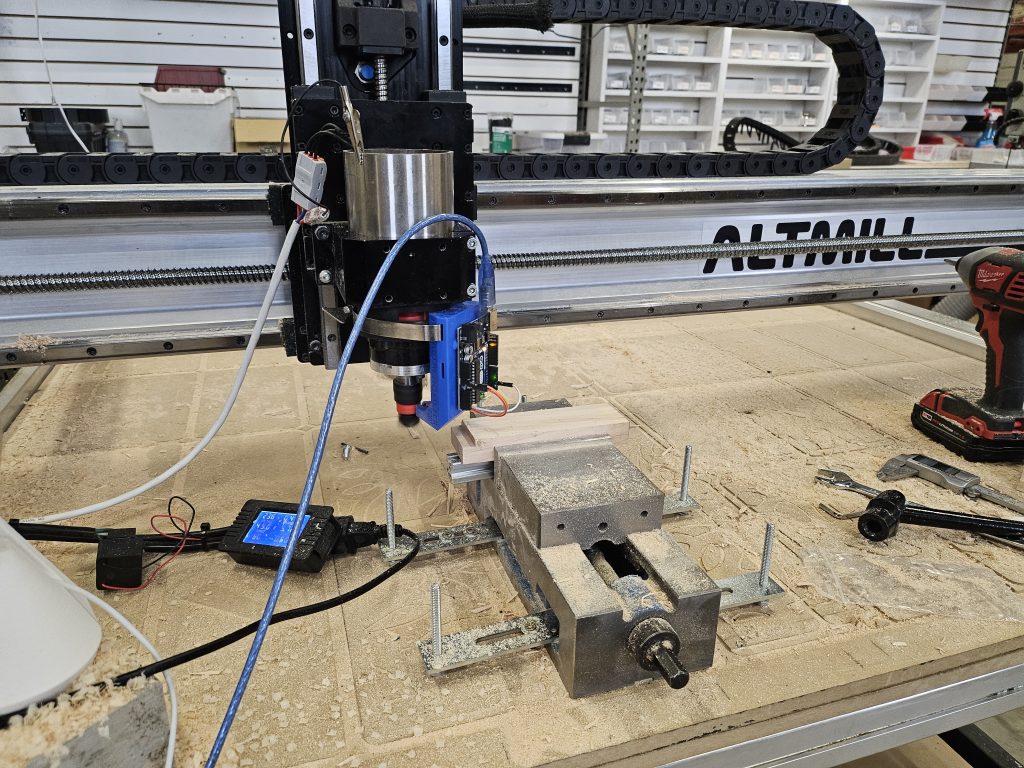
At this stage, the spindle used for the AltMill has been tested on the LongMill and work is being done to have completed support documentation for the LongMill. Users can order the AltMill spindle kit for their LongMills. At this moment, we don’t officially support it, but we will officially support it once our testing is complete.
This also brings up the consideration of potential support for non-Sienci machines. If you have a machine that you want us to consider working with for the spindle kit, let us know.
Additionally, we’ve checked the fit for the 80mm dust shoe to be compatible between the AltMill and LongMill. We are also working on supporting 2.5in hoses (the 80mm dust shoe uses 4in at the moment).
LongMill MK2.5
LongMill MK2.5 machine are shipping now. We are working to get lead times down as we work our way through our list of orders, but at the time of writing, most are shipping within 3-4 weeks. Please refer to the order page information for most up-to-date estimates.
More shipments continue to roll in for LongMill production, and we aren’t expecting much news at this moment for production.
Vortex
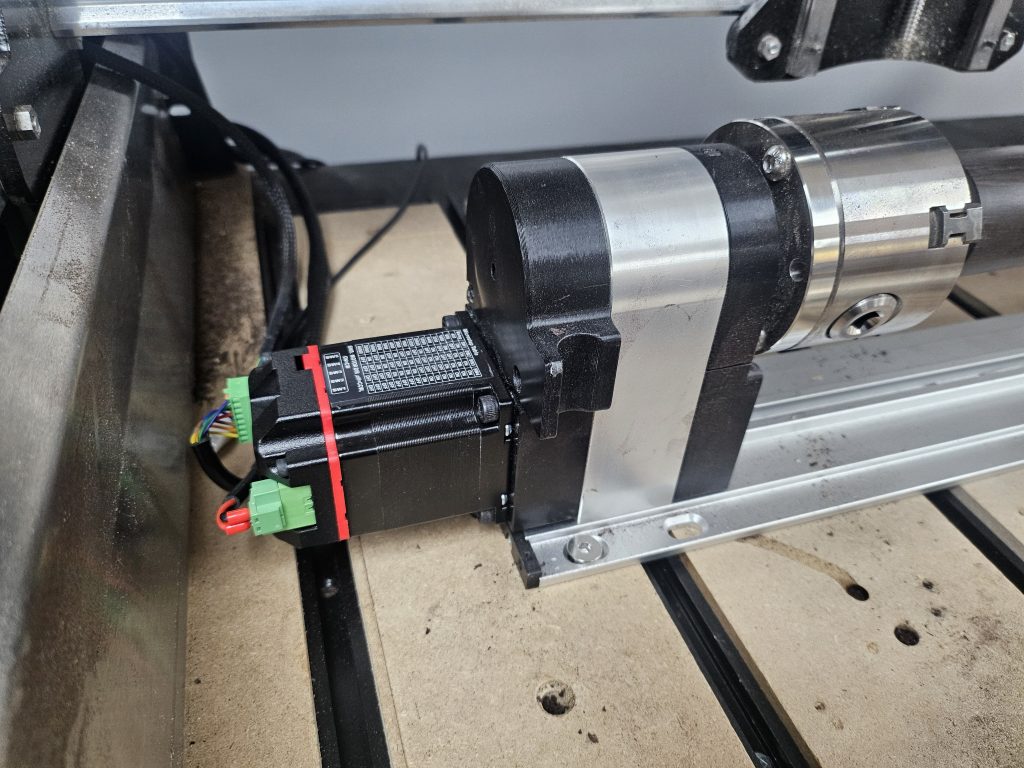
Vortex orders continue to ship out. We’re excited to announce that we are working on the official version of the independent 4th axis, which combines and external driver with the SLB to allow for all axis to move simultaneously. For those who don’t know, the Vortex is currently connected to the Y-axis drivers so that you can switch between either the Y axis or the rotary axis. The SLB has an external driver output which allows another driver to be used to control another motor, in this case, the Vortex.
4th axis support is already officially supported and documented on the Resources. Users can integrate their own drivers for full 4th-axis support. The new development we are doing will be a plug-and-play option for the AltMill and SLB-integrated LongMills.
Given that we are purchasing a lot of closed-loop steppers, we have decided that the cheapest and easiest way to provide the 4th-axis support was to integrate them. While this might be little bit wasteful for existing users, since it leaves one unused motor in the conversion, in the long run as we move towards the SLB adoption, it will be the simplest and best option for this application.
#image_title
SLB
A new batch of SLBs has arrived and folks who have ordered them after our first batch of 500 units should be getting them now.
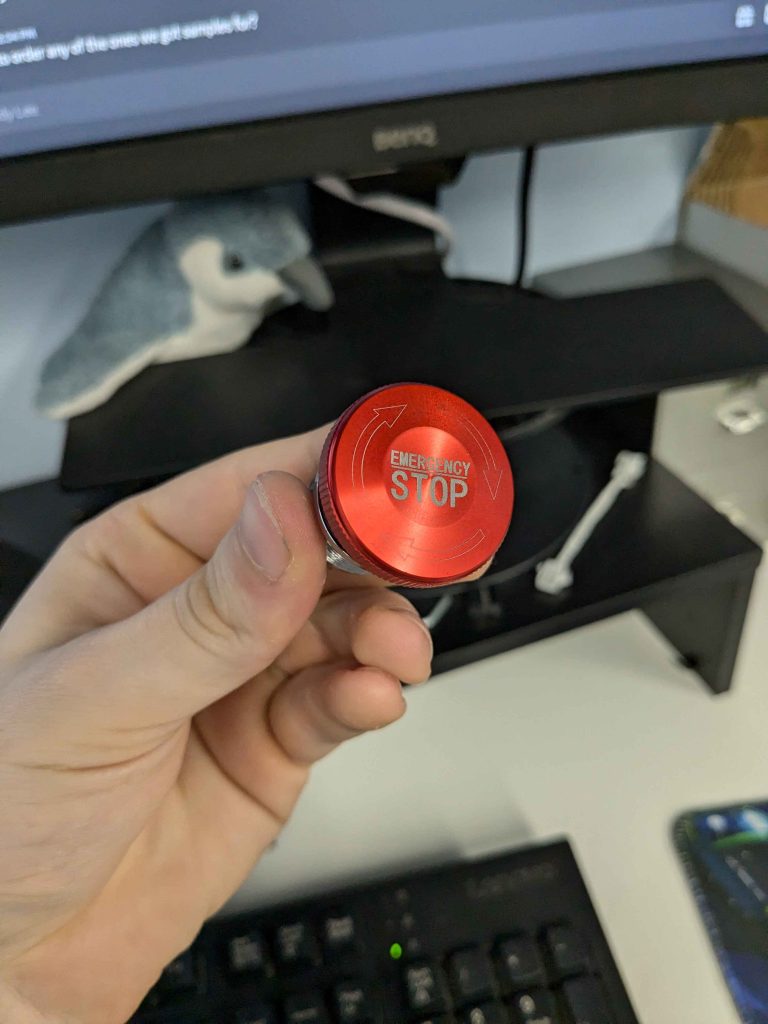
A small change that’s coming to the SLB will be in the design of the e-stops. Our initial version had an illuminated switch. However, we found that it would make more sense to have lights on the case itself since it offered more button choices and we wanted to have something more durable/easier to replace. Both buttons work the same and are interchangeable so there likely won’t be any particular notice on when this change happens. We have another 500 of the original version in production now and we’re getting things together to make another 1000 sets.
Sprouter
I guess one of the things that the Sprouter project has become is an exercise in understanding spindles, routers, and machining science in general.
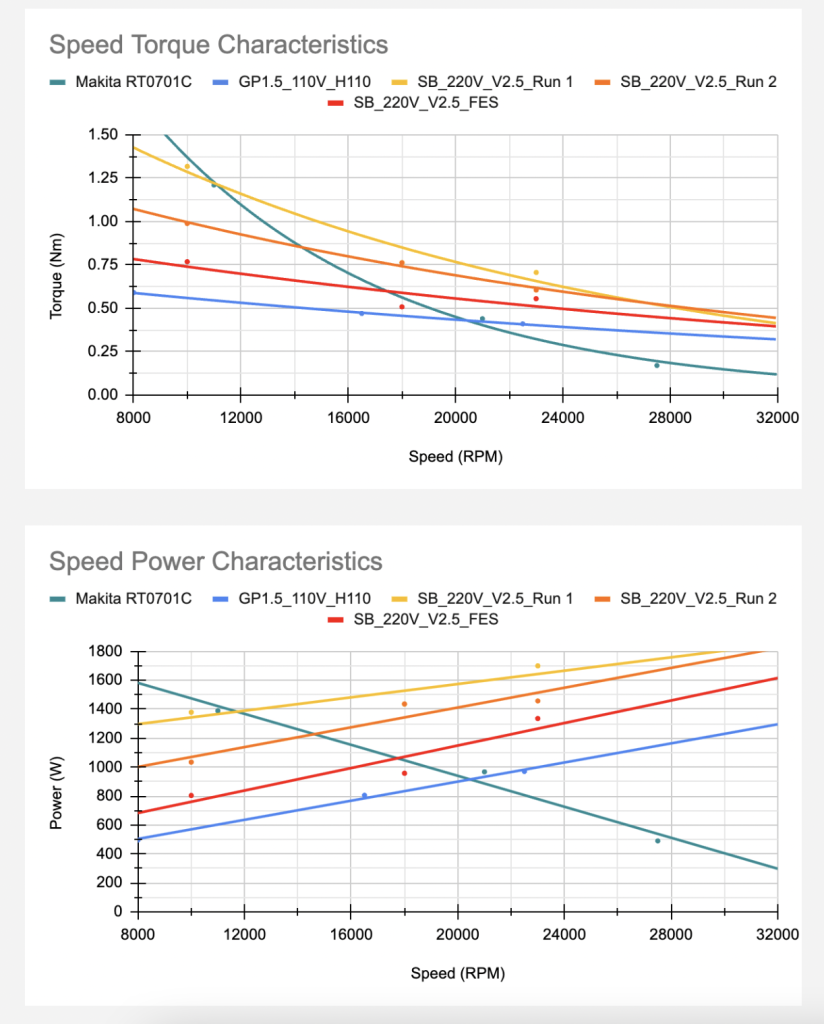
We have received another set of prototype motors and Johann has been testing that plus the Makita router and 1.5KW spindle. Here’s a breakdown:
At the lowest level, the Makita has the highest torque, but drops proportionally to the speed (green)
The spindle keeps a fairly flat torque curve, but needs to spin above 20,000RPM to see power advantages over the Makita (blue)
The BLDC/Sprouter tested in various configurations show the potential to have a higher power output between the spindle and Makita router.
It also looks like the sensorless BLDC speed response was greatly improved in the new iteration. However, because the motor was built and tested to run at 160V (to be voltage compatible for both 110V and 220V), testing at 220V gives very good results, testing at 110V does not have an acceptable response time.
The manufacturer is currently working on a new version specifically tested and manufactured for 110V use only, which in theory should have similar performance as our current version, with the compatibility for 110V.
I should include some disclaimers here:
While this shows the maximum power output, it may not reflect real-life optimal use. For example, running the Makita at it’s highest power level can destroy itself, whereas a spindle/sprouter is designed to run at the higher level for longer.
Power output was calculated through indirectly with speed and torque simulation under real-life cutting loads, as our dyno cannot handle this level of power at this moment, it would be
#image_title
Here are some current conclusions:
The BLDC, after all the work, shows a lot of promise. These are results that we feel are “extraordinary”, which is that because they are so good, we have to make sure they are actually true. If the results are actually accurate, then in theory, it is possible to design a spindle using BLDC that could outperform a 1.5KW spindle.
There is also a massive potential for this technology to be used in more applications outside just our machines. Perhaps it opens up a new roadmap for the company? We feel that after all of this work and development focused in this space, we may be one of, if not the only company doing this R&D, and perhaps the only one who is in the position to put out a new revolutionary (haha, bad pun), spindle design and platform.
This also feels like uncharted territory, so there’s a lot of business end planning we need to do to decide how we want to keep committing to this project.
In other news, the testing of the Makita clone was not very good, as the speed control was poor. After some back and forth with the manufacturer, we are expecting to have a new sample with much-improved speed control soon. This version won’t have the 5V PWM input yet, but we should know if the performance is acceptable before moving onto this next step.
Panel Computer
We have now received the new batch of fanless panel computers and they are pretty great.
#image_title
There are a few things we’re trying to decide on. One of them is which operating system to use. The two main contenders are Windows 11 and Linux. These are some of the things we are trying to weigh:
Linux is free. Windows on the other hand, is pretty configurable, but does cost money. We aren’t exactly sure what that cost would be, as some sources offer it for $10-65USD, whereas the Microsoft store sells them directly for around $139USD. For us to be able to offer Windows as an option, we would need to navigate getting the licenses legally.
Pretty much everyone either knows how to use Windows or has used it at some point. Linux on the other hand has a pretty small following. This may make some of the support for Linux more difficult, since there are a lot of info and resources available for Windows.
Based on initial testing, the performance of gSender on the same hardware running Linux is slightly less fast than on Windows. We are still trying to iron this out, but we suspect that due to the differences in the drivers and optimization, going with Linux may mean there needs to be some additional optimization on gSender to make it compatible.
Here are my current thoughts.
If we can get Windows licenses at a small cost, it would be a better option because we know that it works and people are familiar with it. We would of course have to pass this cost off to the customer, but I think people would be willing to pay a little extra for being able to use the platform they are familiar with.
We can create images for both Windows and Linux, and they can be available for anyone to download and use. They should in theory work for both the panel computers we will sell and other computers as well, but we’ll only know once we do the testing. This means that if people want to switch between operating systems, or use their own computers, they can do that.
Currently, we are:
Looking for a way to get legitimate Windows licenses
Testing with Windows and Linux
Testing and designing ways to attach the panel computer to the machine
If you want to provide any extra feedback for the Panel Computer, please feel free to fill out the survey.
Hey guys, a lot of things moving forward at Sienci Labs.
So traditionally I’ve been writing production updates for pretty much every product, but I’ve realized for some things there’s not much news with some things, especially if they’ve been shipping out smoothly for a while, so I’m going to stick to writing about new stuff. If you’re looking for an update on something and you don’t see it, check out the previous blog posts for more information. https://sienci.com/category/production-updates/
The office guinea pig
LongMill MK2/MK2.5
As we brought up in the last update, we are transitioning the LongMill to include a few new updates to the machine. Things happened a lot faster than we expected, resulting in the rest of our original LongMill (LongBoard) controllers being sold out and allocated to the previous batch. We are now into Batch 9 and are taking orders for LongMill MK2.5.
The LongMill MK2.5 Kits are expected to ship 6-8 weeks from the time of order. Once we start shipping the backlog, we expect to be able to get this lead time down.
Chris has written a new post “Introducing the LongMill MK2.5”, which covers everything you need to know about the differences, changes, and pricing for the updates.
We are waiting on more SLBs to arrive in the next few weeks, which will allow us to start shipping LongMill MK2.5 and the rest of the SLB backorders. This means that we have a growing waitlist of orders, which we are currently prepping so that we can get out the door as soon as all of our parts arrive. We are tentatively expecting them to arrive around the end of this week or start of next week.
We’re also hiring some extra staff to help with the packing for AltMill and LongMill to help with the extra production workload.
SuperLongBoard
We continue to wait for the second batch of SuperLongBoards to arrive. We are expecting them to arrive in the first week of June, which will allow us to clear the remaining backlog of orders and start shipping the LongMill. We will receive a batch of 1500 in total (but spread over a few weeks), which should allow us to stay stocked for some time.
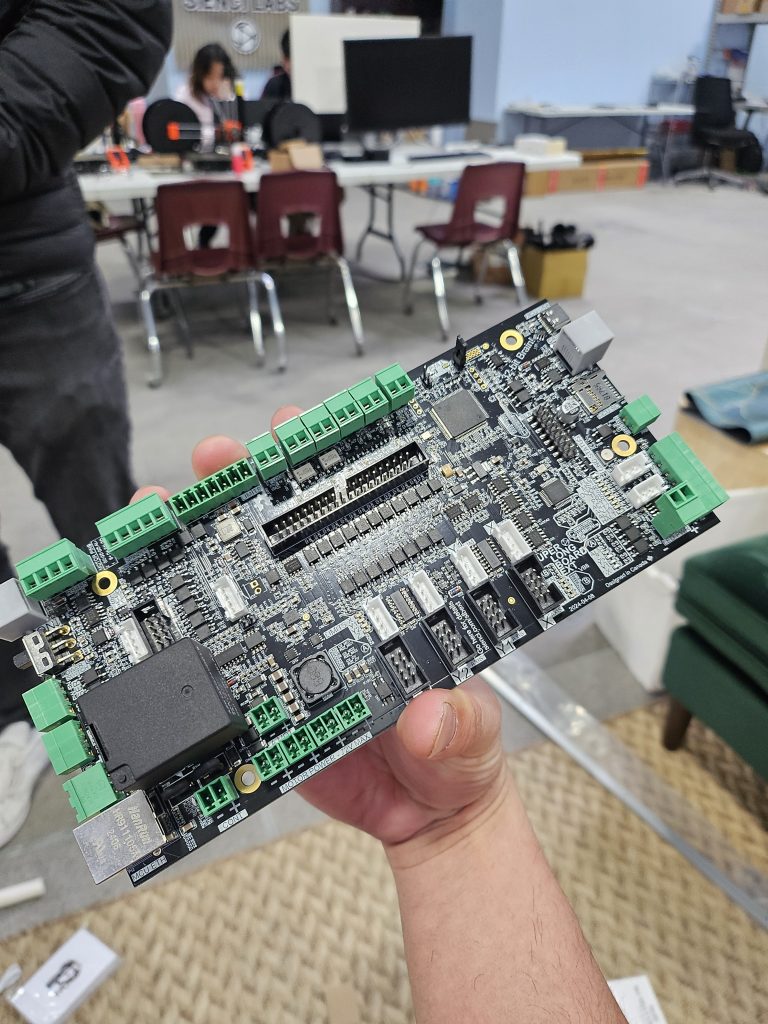
Additionally, SLB-EXT for the first 50 AltMills testing has been successful. We are updating the value of one of the capacitors and soldering the first 50 boards by hand to fix some issues with the switching circuit. I look forward to the larger rollout of the SLB-EXT, as perhaps it may offer a solid offering for not just the AltMill but for other CNC machines as well.
AltMill
A lot of progress has been made with the AltMill project, and we are getting ready for shipping. As we discussed in the last update, we are expecting a few straggler parts for us to wait on before we can ship. It appears that our last item to arrive is the wiring harnesses for the closed-loop stepper motors. We expect these to arrive in the first week of June.
Based on the team’s estimates, we expect to start shipping on the second week of June, but wanted me to let everyone know to set their expectations not too high in case we run into issues.
Additional work and supply chain continue to happen to prepare parts to arrive in July/August for the full rollout of the AltMill.
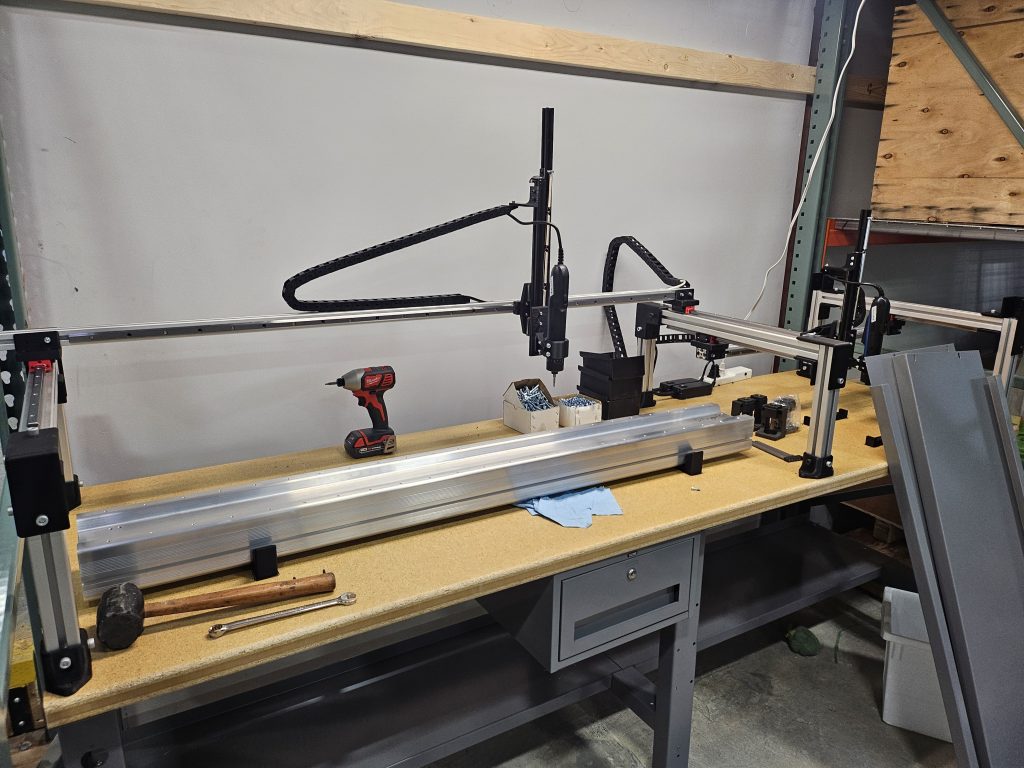
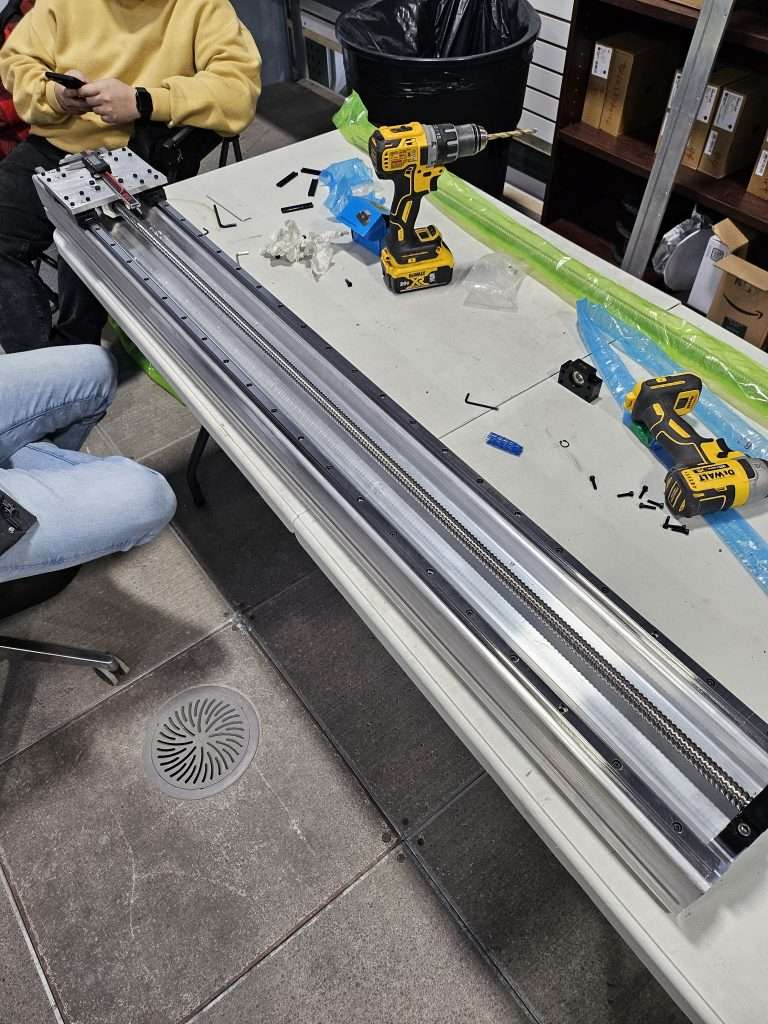
Assembly for the AltMill is in full swing, as we have mostly finished building the jigs for assembly.
Rail mounting jigWriting down the SOPs for Z axis assembly
Some of the test packaging has arrived and we are double-checking the dimensions of everything and doing the final touches to the graphics for all of the packaging.
Packaging graphic designPackaging layout for the AltMillTest fit of the packaging
Also excited to share the first look at the AltMill Spindle Kits. We will have them available for sale additionally in a few weeks, as a lot of folks have asked us to allow the purchase of them outside of the AltMill kit. We likely won’t ship them until August, so there will be a bit of a waiting period for these if you’re ordering them without an AltMill.
VFDSpindle
In addition to manufacturing for the AltMill, we’re also working on building out the assembly portion of the AltMill, and we’ve already started putting together tons of resources to help users get their machines ready to go as soon as they arrive.
Sienci Router (Sienci Sprouter)
I think I mentioned this in the last update, but Johann went to China to meet with the motor manufacturers to iron out some of the things we were continuing to work on for this project.
Sample router bodies
Here’s a couple of takeaways:
Based on our initial assumption, we believe that we are at the edge of how accurate sensorless control can be for controlling BLDCs. That being said, Johann was able to check on the progress of testing one of the motors using sensorless control. The result seems to be usable, although there is some more improvement that can be made, as the stability on 110V versus 220V is not acceptable yet.
We were able to talk with a manufacturer that makes Makita clones, who may be able to make the modifications to a clone to offer external speed control, better quality bearings, and ER11 collets, which would offer a slightly improved alternative to the current Makitas
Using a larger motor will improve the speed stability, but would cost more and be larger than the 65mm form factor we are aiming for.
There were a lot of things that we learned from Johann’s trip to China, especially about the manufacturing capacities and business structure and manufacturing processes of different companies.
If you guys watched the Garrett Fromme livestream, I talked a bit about the router vs spindle, and the name thing. So a lot of people like the name “Sprouter” so I think we might go with that for now…
From Johann’s trip we were also able to connect with another manufacturer who makes the Makita clones and we are also assessing if we should also have the clones as another option. We’d focus on:
Having ER11 collets
An input for PWM signal to control the router with the controller
Better, higher quality bearings
Pricepoint similar to the existing Makita router
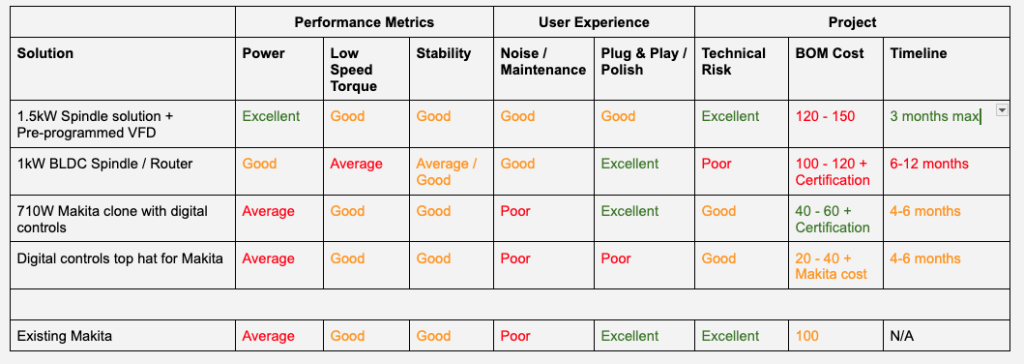
So this sort of brings up another question for the development, which is whether it’s worth having an “in-between” option between an improved brushed AC Makita router and a 1.5KW spindle.
Comparison chart
Here’s our general conclusions:
Since we already have the 1.5KW spindle in the works for the AltMill, offering it as an option for the LongMill tackles most of the users who want to make a big upgrade to their existing LongMill. Since the programming and setup is mostly done and put together as a kit, the setup should be easy enough for most people.
We found a company that can make the Makita clones with the extra features we’re looking for. Most of the development for this can be done hands off on our end so we can let this play out and test it once it’s ready.
The BLDC option is still going through prototype iterations and development, and will likely take a lot more time than we expected. We’re pretty close to getting the performance we want out of it, so we’ll continue to work on it and see if we can get the pricepoint down further as well. Working on the first two options provides something for people in the short term that can help us understand more about the development for the Sprouter.
Panel Computer
If you watched the podcast that I was on with Garrett the other week, you might have seen me talk about the Panel Computer.
Screencap of the podcast
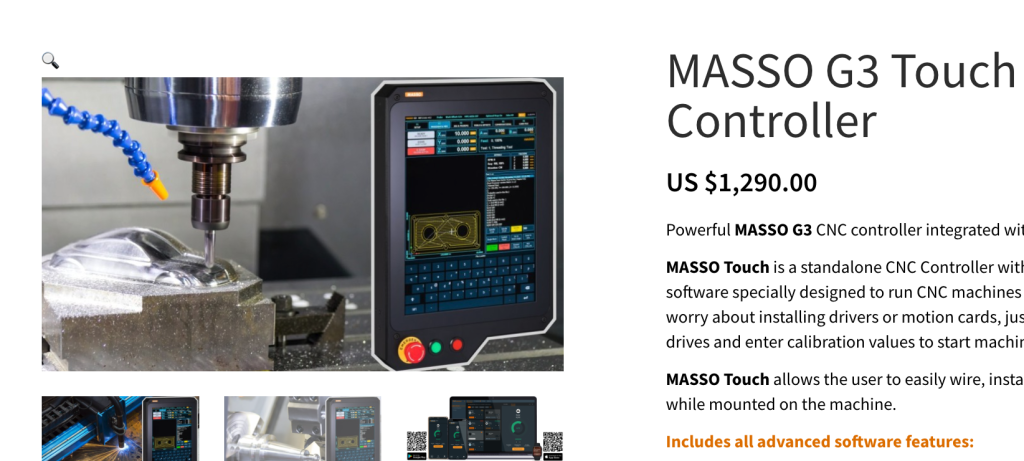
I think some people are going to recognize some similarities to the concept here between the Masso and this panel computer thing.
Charles (our business development manager) has a lot of Linux experience, and is taking a stab at testing the device with a different OS.
It turns out that the chip (i5 4th gen) that is on the test computer now is only compatible up to Windows 10. I don’t think this is specifically a problem, because it does still work, but I am looking at different chipsets that support future updates. Another contender is the N5095 or N100 chip, which is slightly faster and newer. It does cost a little bit more but is potentially a better option overall.
We did some testing and research on doing the mass-preloading for the softwares, but need to do some more setup and testing to make sure we know how difficult and how long it takes to do.
I’m looking at different monitor mount/arm designs to see if there’s any that stand out and improve the usability of the computer.
The test computers we have have fans in them. Chris told me that he talked with some people working with a lot of wood that the main reasons their computers fail is because of the fans. So I am working on getting a fanless version for some testing as well.
At some point, Chris took one of the two computers I had for testing, so I suspect the dev team might be using it for some other stuff as well. I did hear that there will be a UI update in the future that makes improvements to the software that may improve the touchscreen experience as well.
I haven’t had the chance to install the computer directly to the machine yet, but one of our students from last term did set up an arm and portable touch-screen monitor to test the functionality of the interface and test out the “human factors” side of things.
Arm mounted to LongMillScreen testing
It turns out with the LongMill MK2 and the AltMill, since there are threaded holes that are meant for the NEMA 23 motors on the front of the machine, this serves as a really good place to mount an arm.
Here’s some thoughts about the price point. Based on our BOM costs currently, I feel like the whole package is going to end up coming in at around $400USD. I think this is not cheap enough where I feel like it should be the default option for everyone, since a lot of people probably have a spare laptop or computer kicking around that they can use.
The only way we can get this pricepoint down further is probably if we can use lower-powered hardware, like something using ARM/RISC, but at this point, gSender optimization is not quite there for the smoothest experience. There is also updates with the new architectures that are improving its performance, especially with software that wasn’t made specifically for that architecture.
Another thing to look at is how much volume of computers we should get that would bring down the price. Right now I have quotes for 200 units, but at around 1000-1500 units, we’d save about 15% off the price.
I did create a short survey to see what sort of order interest there is for the panel computers. If you want to share your feedback, please check out the survey here: https://forms.gle/m2FAHcSBq6EJZ2sT7. This will help us get a better idea on how many computers we should start making.
Hey guys, things continue to chug along at Sienci Labs.
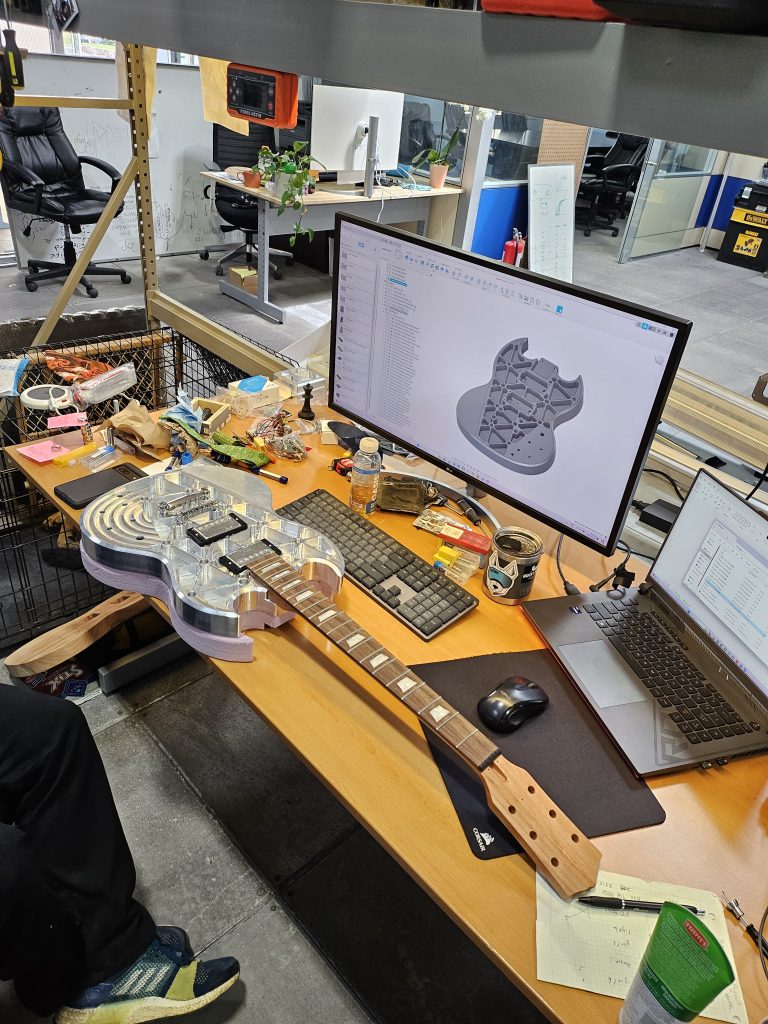
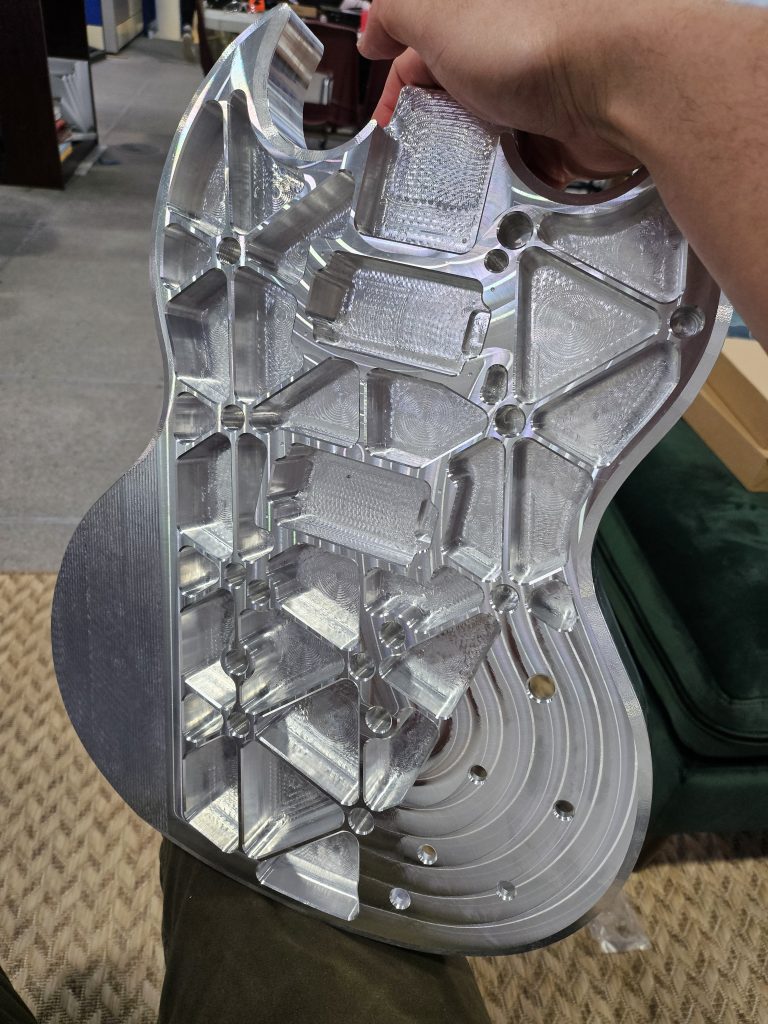
Testing the fit of the aluminum guitar made on the AltMill
Growing the team
We’re looking to expand the team! If you’re interested in working for us, please check out our blog post here.
There are now some specific job postings available on Indeed.
LongMill MK2
Production for LongMills continues to move along.
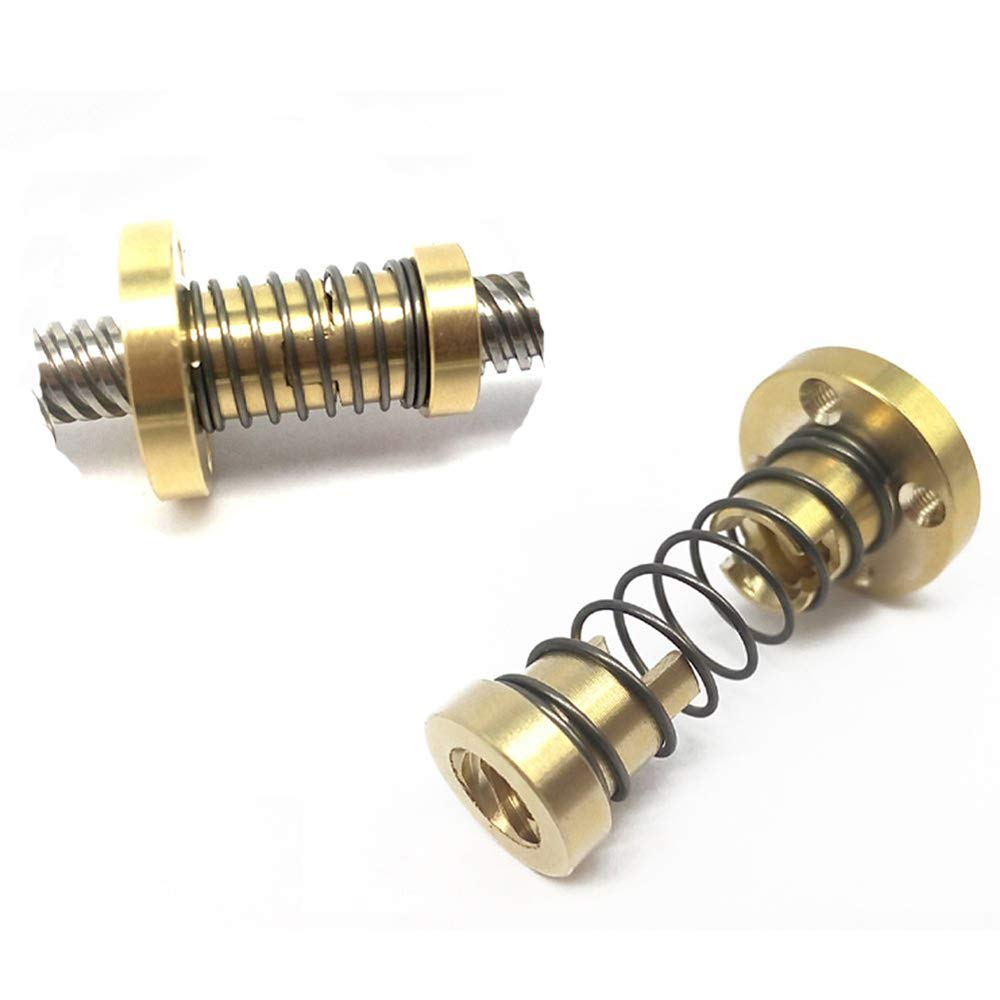
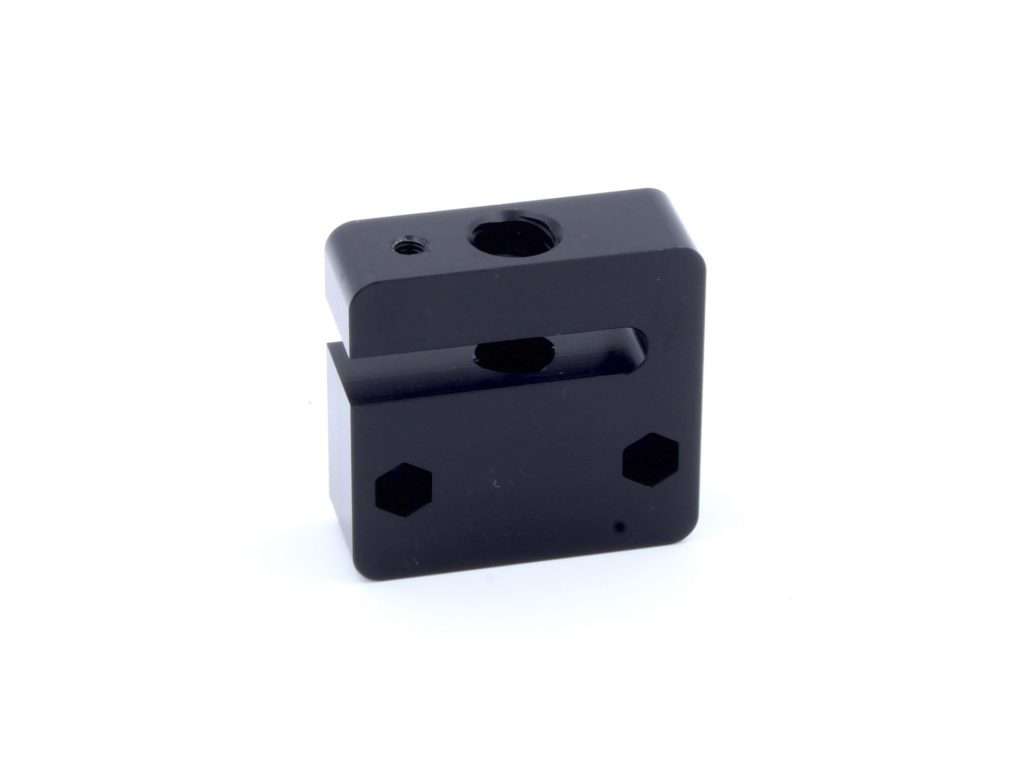
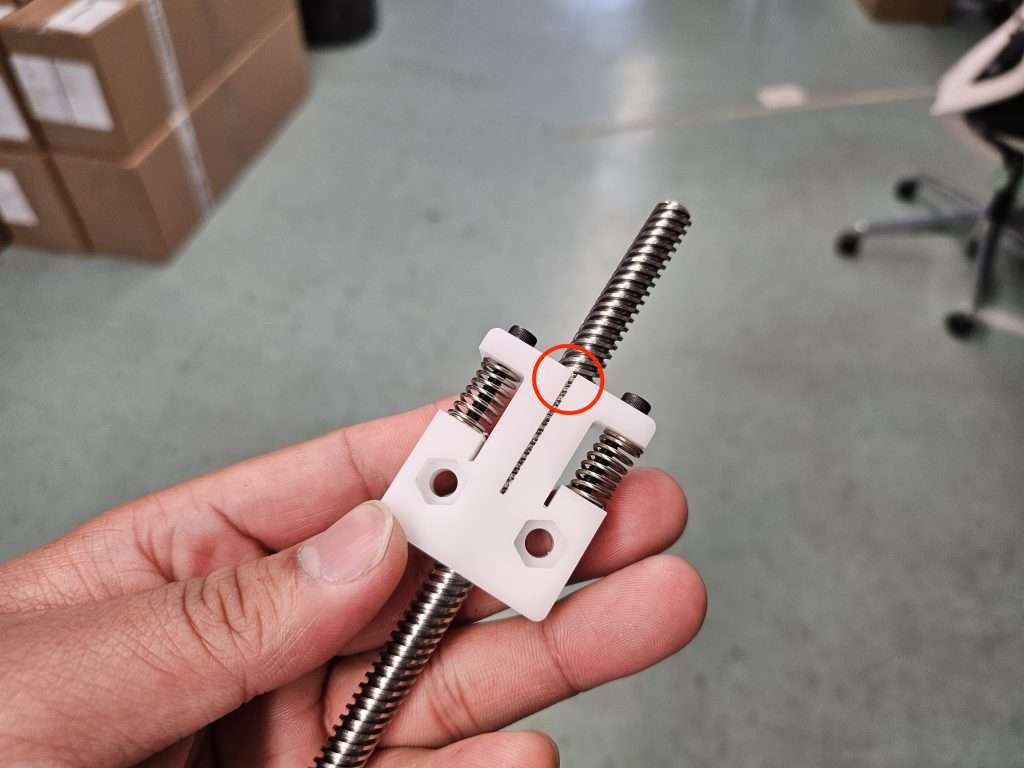
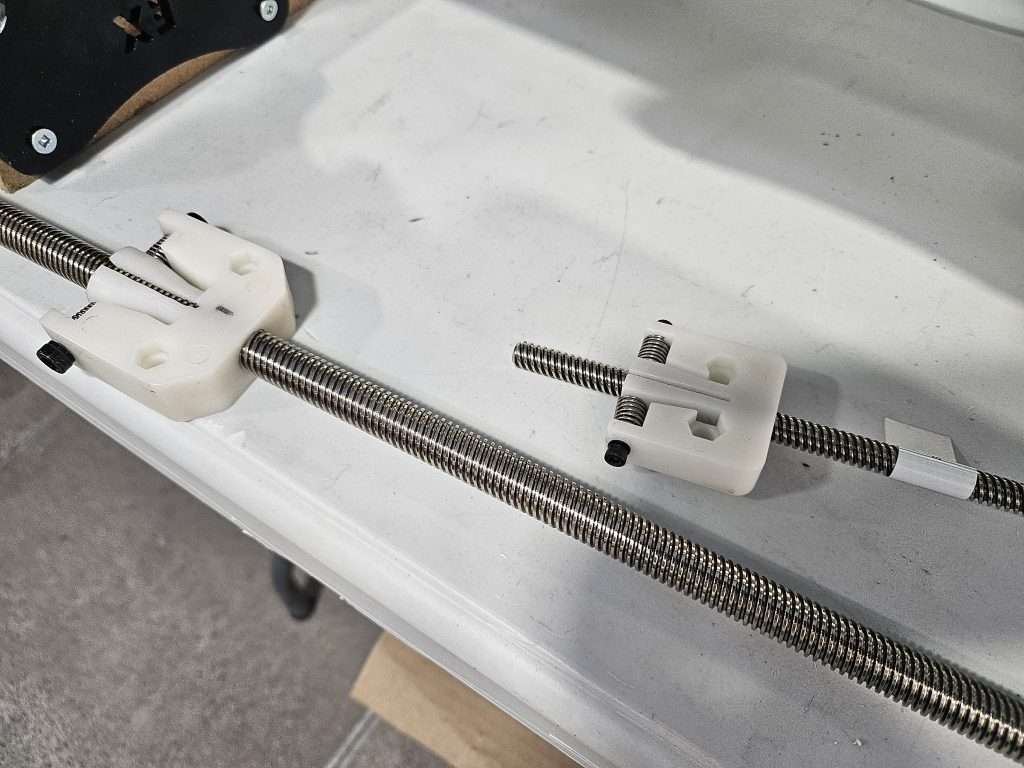
Spring-loaded anti-backlash nuts continue to be a hot-selling item, with now over 560 sets of the T8 and 200 of the T12 sold. We have received another 1300 nuts (325 sets) with another few thousand in production. We expect to clear the backlog in the next week or so as we do assembly and testing.
We have gotten reports that the nuts work well, however, users should ensure that the M5 screws that hold the nuts to the gantry are not overtightened to prevent the nut from deforming and causing jamming issues. Hand tightening to ensure that the locking washers are is flush enough to keep them in place.
We are continuing to work our way through the materials from Batch 8 and are waiting on Batch 9 parts to arrive. There may be a chance that we will run out of stepper motors for the LongMill a few weeks before the new ones arrive, and so the lead time for the LongMill has been adjusted to reflect a potential slowdown.
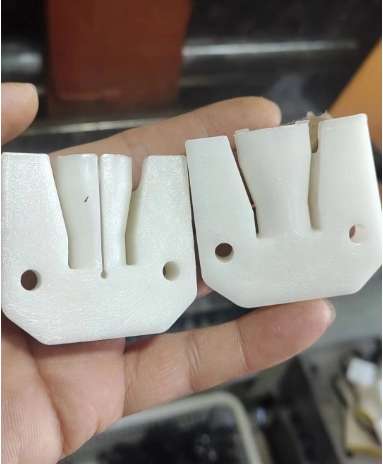
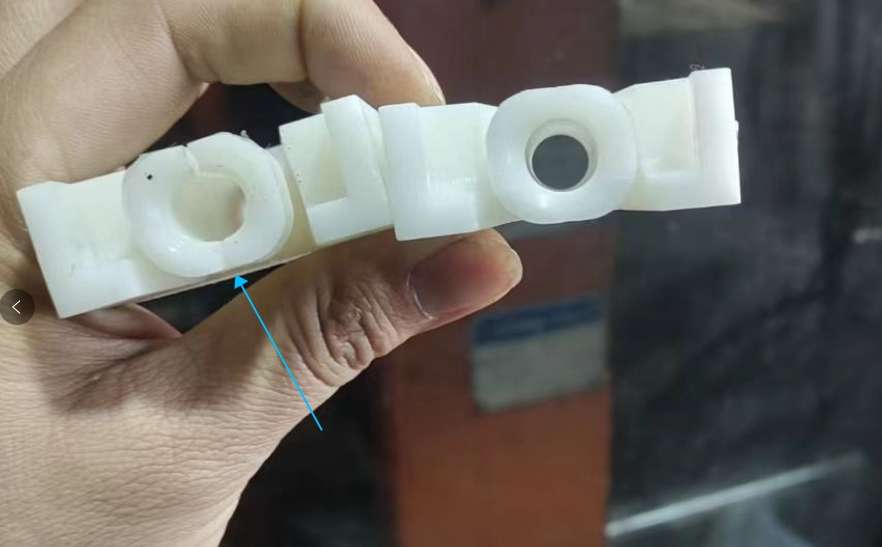
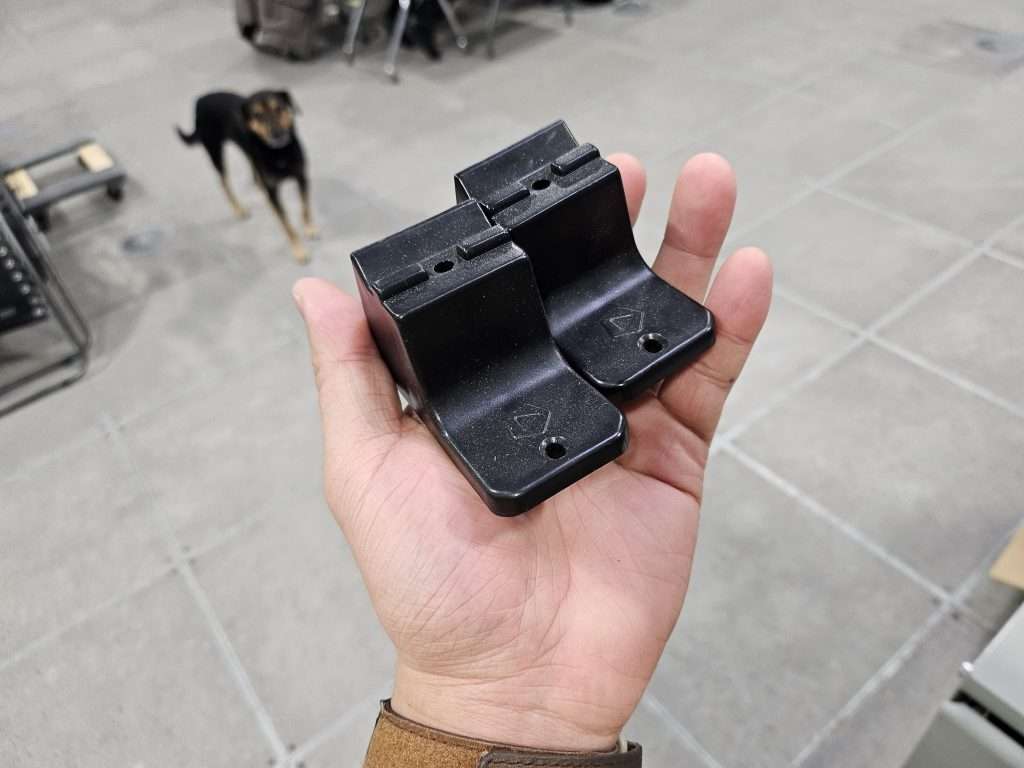
We have discovered a small issue with the fit of the injection molded feet for the Y axis rails, and so we are not swapping over from 3D printed feet just yet. Our production and QA team are looking to fixing this problem so that we can implement them into the future batch. For now we have made a system/jig to grind them down to size. I should note that this part does not offer any performance advantages, they are just for ease of manufacturing, and so users should not be concerned about which version they have received.
LaserBeam and Vortex
LaserBeams and Vortex continue to ship out as usual, most are shipping out within a few days.
Now with the SuperLongBoard out in the world, we are working on supporting full 4-axis functionality. This means that the Vortex can be used without the switch and move around simultaneously with the Y-axis. Keep an eye out for more news in the coming months. The Vortex can still be used with the switch to change between rotary and regular milling mode with the SLB.
AltMill
We continue to hammer out things with the AltMill. We are now in production for the first 50 machines. Here’s what’s going on:
The first test boards for SLB-EXT have arrived and are going through assembly and testing. We are expecting the remainder to arrive first week of May. Once testing is complete, we will build another approximately 200 units
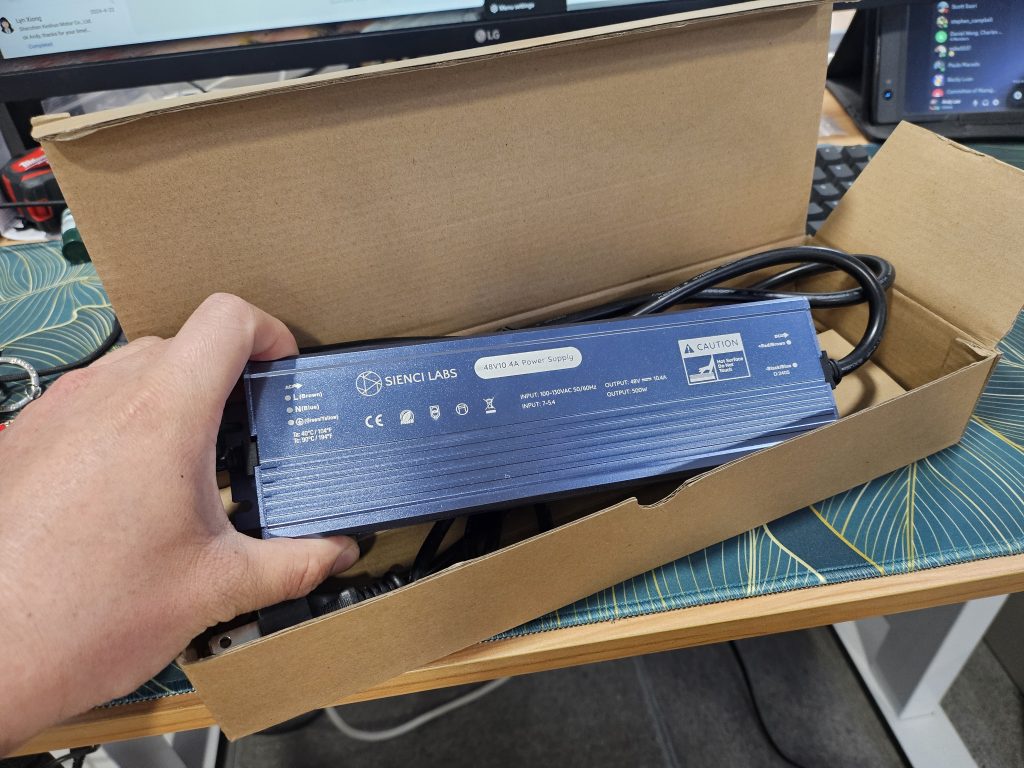
The first 50 power supplies have arrived and are undergoing testing. We are expecting another 50 to arrive in about a month.
The first 50 gantries and extrusions are completed and going through QA and assembly. Another 150-200 sets are finishing production this month and are expected to arrive in June.
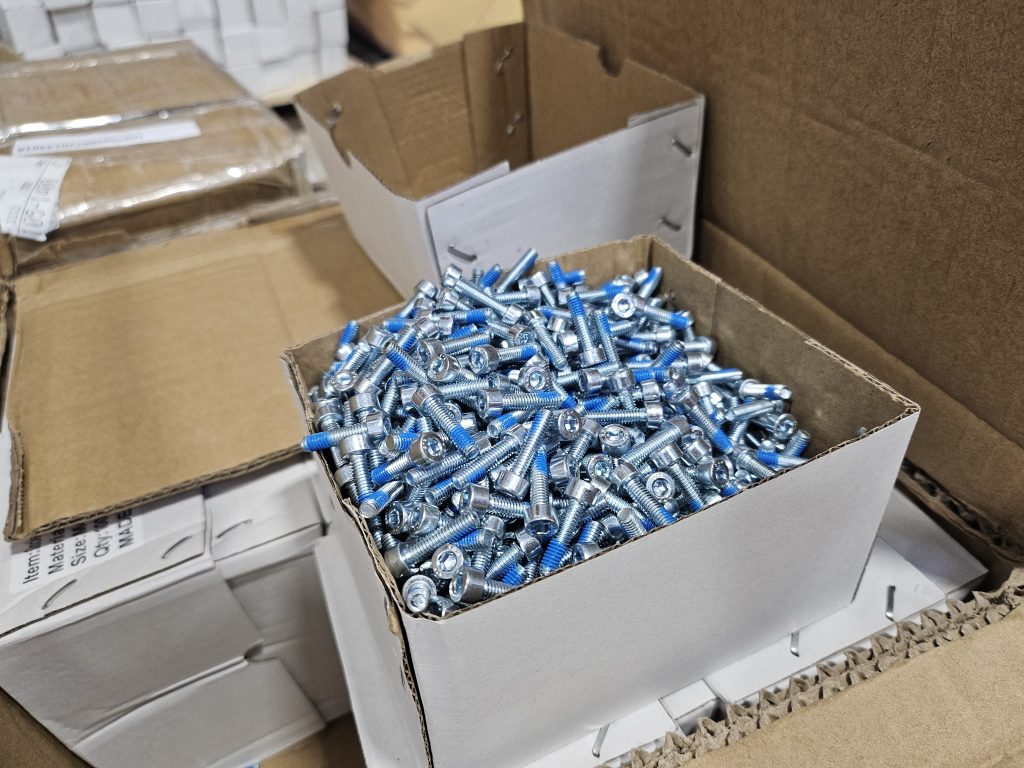
Fasteners have arrived and are being used for assemble of some of the major assemblies
Parts for the spindle and VFD are in production now and are expected to arrive in the end of May.
We have been working on some closed-loop stepper testing for longer-term use.
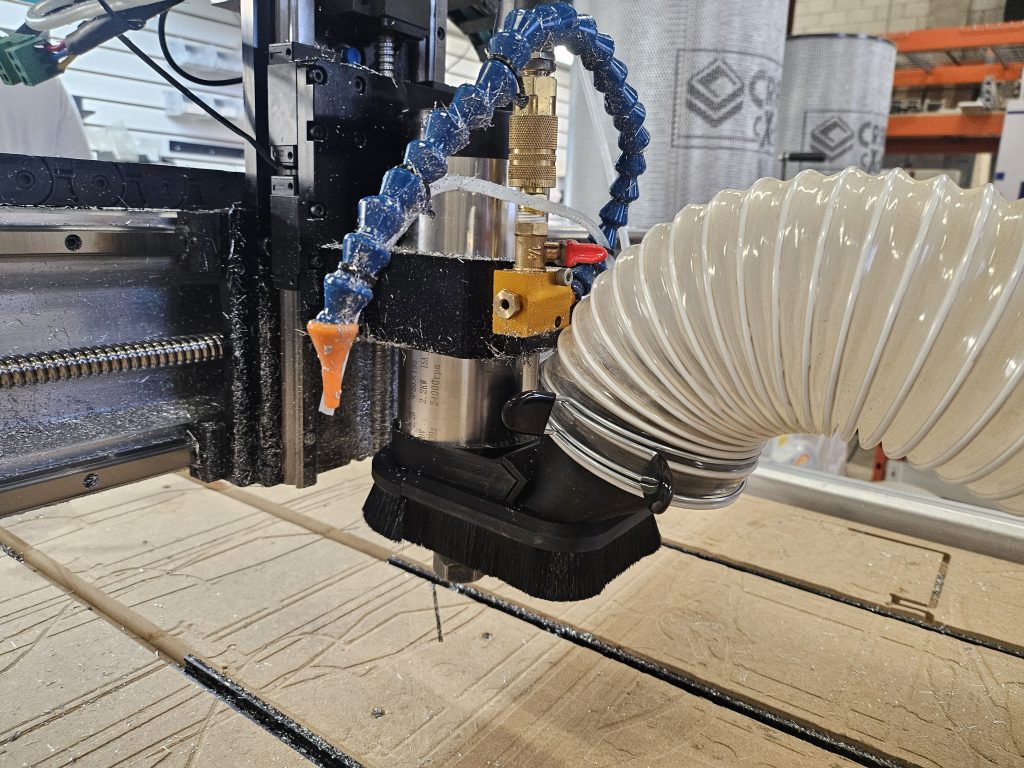
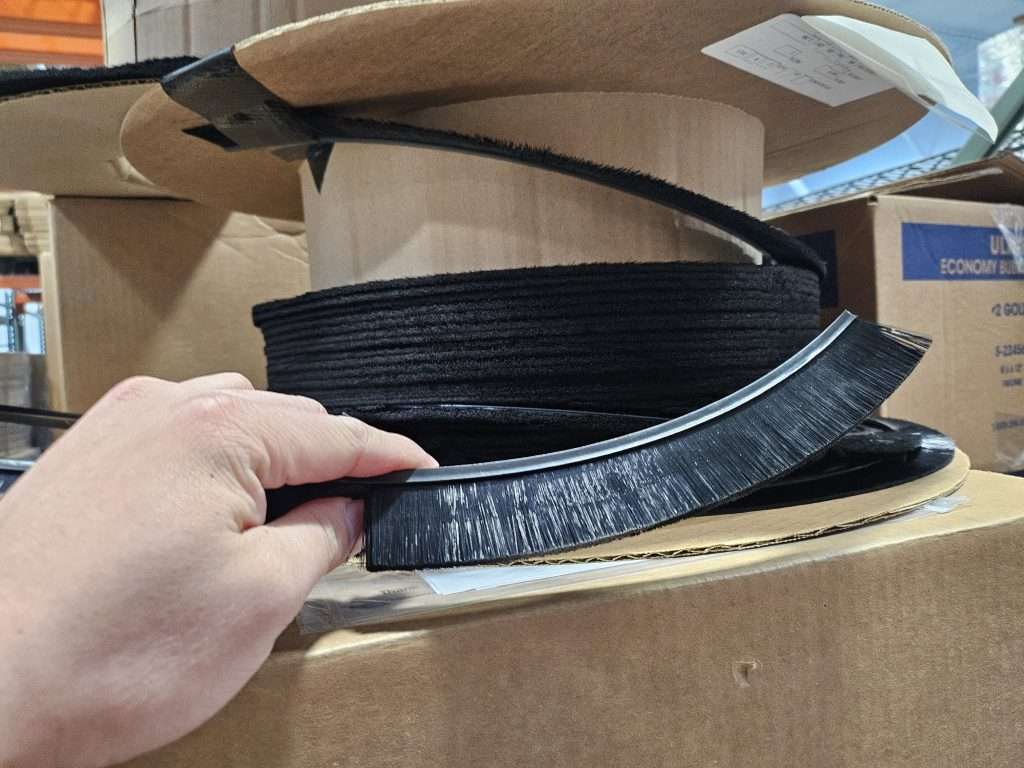
We have the bristles for the dust shoes in production and are finalizing the 3D printing design.
At the current rate, we have parts being made as quickly as possible, but there may be some stragglers that we may end up waiting on close to the end of the month that will determine the exact timing of the shipment.
These parts will probably be with the:
Closed loop stepper motor cables
Spindle and spindle components
The production version of the SLB-EXT
This means that the first 50 AltMill customers should prepare to receive their machines in June, although we are working as hard as possible to start shipping in May.
In the meantime, we are prepping everything as we receive parts so that we can ship everything as quickly as we can once we do get everything.
Additionally, the team is hard at work in developing the resources and assembly guide for the AltMill. We don’t expect to have an assembly video this month, but are planning to make it soon as we get through the first batch of machines.
SLB EXTPrototype dust shoeFasteners with pre-applied thread lockerAltMill power supply
We needed to have something to test the AltMill with, so Mike made this guitar out of aluminum.
Aluminum guitar made on the AltMill
SuperLongBoard
We’re excited to announce that the first batch of SLBs have now shipped and we have just over 475 controllers in the wild. You can now find all of the setup instructions at www.sienci.com/slb
We are now in production for another 1500 controllers, with more to start shipping in the end of May/June 2024.
Based on Chris’ updates in our production meetings, while there are a few bugs to iron out, the launch of the new SLB has gone fairly smoothly. We expect to make some small tweaks to the fit and finish of the controllers and periphery materials soon to improve the assembly of the boards.
Sienci Router
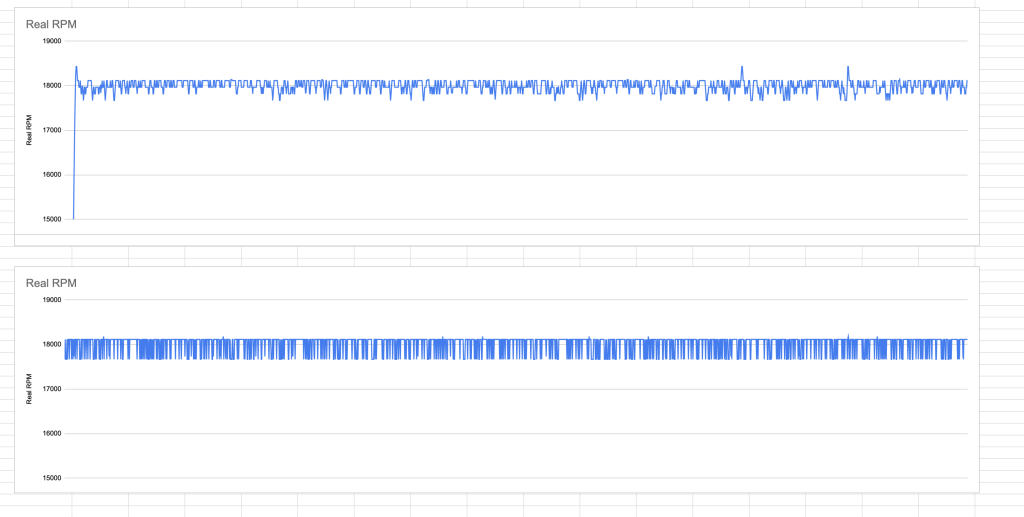
As we discussed in the last update, one of the main things we needed to iron out was the reaction time of the driver of the speed control. Basically, when the router would go under load, it would slow down and speed up again, but the time for it to happen was slower than what we wanted.
#image_title
We figured the only way to solve this was to send a working prototype to the motor manufacturer in China to do the testing and tuning directly. We are happy to share that the tuning as far as we can tell has greatly improved. At this stage, we still need to do our own testing in house to make sure everything functions properly, but this seems to be a promising step forward.
This also does bring us to something of an impasse, as we believe that we are reaching the limit of the speed response we can get from a sensorless motor (which is what we are using here). Any further tuning improvements may not be able to be implemented without a sensored motor.
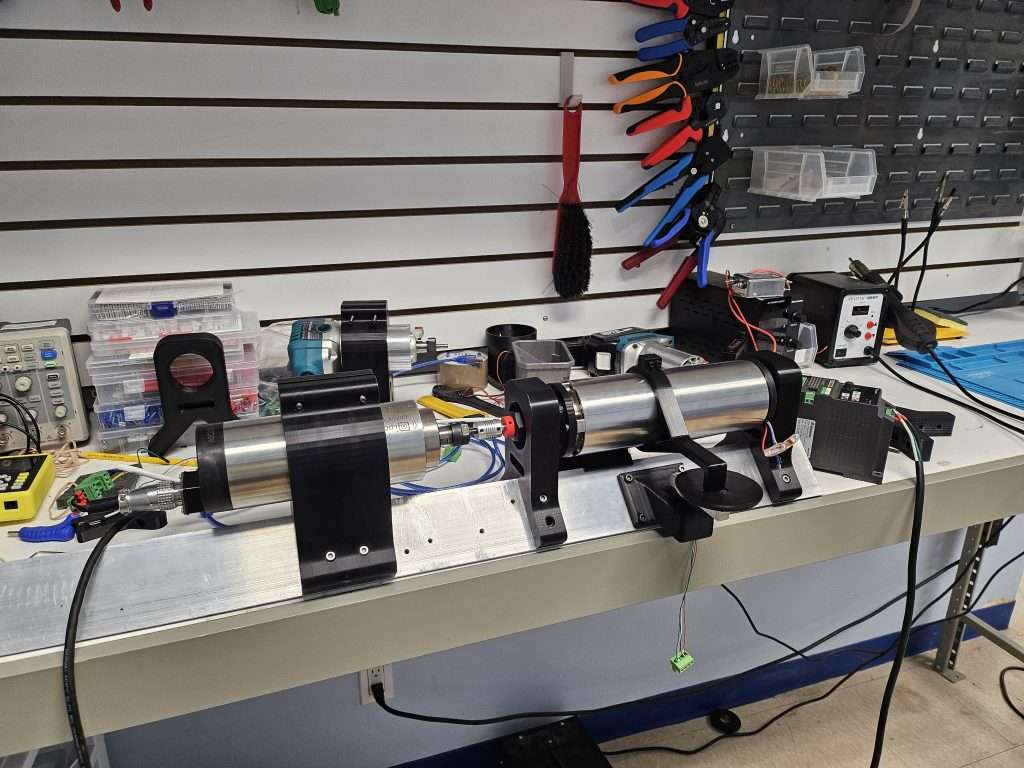
Doing this was no small feat, as we needed to create testing processes and a makeshift dyno in-house thanks to help from the students. This dyno can help measure the power output and speed of different motors.
Some of the main things on our list to figure out now is the complete mechanical design, cooling, and safety certification. We are currently starting production on a small batch of prototype parts to build some working test setups.
As we talked about in the blog post “Everything You Need to Know About the AltMill”, the launch of this new machine represents a pretty big shift in our company, what we do, and what we can do in the future. The AltMill now brings in a significant amount of revenue, which allows us to expand our capabilities and development as a company. Additionally, we can amplify the value of work we do with economies of scale and be able to share development and knowledge between the LongMill and AltMill.
We have some preconceptions in what we need and priorities in our hiring, but we also know that we have the opportunity to grow our team in a meaningful way and expand our collective expertise beyond what we’re familiar with. This is why I made a “general form” where folks who are interested in working with us at Sienci Labs can share a bit about them and we can see if there’s a potential fit.
To provide some transparency and information, here’s some stuff you should know:
Company focus
With both Chris and I being technical founders(we met while studying mechanical engineering in university), we both have a passion for engineering and technology. It brings us the most amount of joy and fun, and we are thankful to have a business that can support those passions. This sort of bring us to the general goal for both of us, which is
Have a team of people who we can work with build really cool things
Have a team of people who can take care of the stuff that doesn’t involve building really cool things so that we can focus our energy towards building cool things
We are a very technical team, with roughly half of us working in some form of development, production, or R&D.
Working environment
I think most people would consider the working environment at Sienci Labs to be “pretty chill”. Here are some things about our workplace:
We don’t have any specific working hours
Most employees are working some form of hybrid or remote
People bring their dogs and kids to the office
That being said, it should be pointed out that with some of the roles, especially with engineering and production, we do need people to come into the office since we do a lot of hands-on things at the office.
Who we’re probably going to hire first
Here are the primary roles we are planning to focus on hiring for:
Engineer with experience in mechanical and/or electrical engineering
Customer service and resource development for the AltMill
Web development with a focus on e-commerce
Engineer with experience in production, QA, and manufacturing
You will probably see some of these roles come up down the line on some job boards eventually.
That being said, we want to have a general form so that if you think we should be looking for people outside of these roles, we want to know! So feel free to share your info with us.
Hey guys, it’s Andy here. We’re excited to be launching a new CNC machine, the AltMill! This article is designed to tell you everything about the AltMill that we possibly can.
The AltMill name is derived from “alternative”, “alter”, and “mill”. We believe that “alternative” fits the namesake of the AltMill because this machine represents a different way of approaching things in engineering, technology, and the way we build our company as a whole. We believe “alter” fits the purpose of the machine, which is to take materials and alter them into new forms, uses, and purposes. And of course, since we use milling as our way of altering the material, we can put these ideas and words together to form the name “AltMill”.
The AltMill is a culmination of new technologies, hardware, experience in manufacturing, and customer feedback. Our goal was to take all of these things and build a machine we felt brought the most value to the CNC user by incorporating our ability to engineer high-performance, quality machines at scale.
Differences and Similarities Between the AltMill and the LongMill
The focus for the LongMill was to be a medium-format, hobby-focused CNC machine. Most users typically are looking to make things with a CNC in their spare time. Because of this, we made the LongMill the most affordable option possible in this size category, while being useful and effective enough to handle just about any CNC woodworking project you want to throw at it. We define LongMill’s success in its ability to make CNCing accessible to the average person.
The AltMill is designed to have the most “effective value” as possible. Its success is defined by how much value it can create versus the cost of the machine itself. In simple terms, we wanted the machine that would bring the highest ROI and productivity. The AltMill focuses on the intersection where we believe the performance versus cost ratio is the highest it can be for these users.
Here are some spec comparisons to highlight the differences between AltMill and LongMill:
We’ve tested the AltMill to over 830IPM (although regular cutting speeds are in the 250 to 500IPM range) in cutting speed, while most projects we run on the LongMill run at 100IPM.
Based on our deflection testing, the AltMill is approximately 8x more rigid than the LongMill.
While the LongMill’s main bottleneck in cutting speed is in motor power and rigidity, the AltMill’s bottlenecks are in spindle power and the strength of the endmills. We estimate that the AltMill could handle upwards of 6KW of spindle power (although it’s not likely we’ll dive into that anytime soon because there are a lot more expensive electrical requirements we need to tackle to get this set up for the average user).
That being said, there is an overlap between these two machines. The process of using the AltMill is basically the same as the LongMill, which means that our resources and education translate over between the two machines, and the ease of use and process of using of both is similar. Additionally, both machines are designed primarily for woodworking use, and the types of projects we expect users to create will be similar as well.
Should I get the AltMill or the LongMill?
This depends primarily on your budget and what you want to do with the machine.
Here’s why you would want a LongMill:
You are budget-conscious. The total setup cost for the LongMill is roughly half the cost of an AltMill. Additionally, replacement parts and maintenance is cheaper overall.
You have limited power in your shop. We recommend having two breakers to power your LongMill and accessories such as the computer and dust collection, but in some cases, you can get away with one. On the other hand, you may need to connect the machine, dust collection, and spindle on separate breakers depending on power availability in your shop.
On the other hand, here’s why you would want an AltMill:
You need speed. The AltMill can cut significantly faster than the LongMill. We regularly run the AltMill over 5x the recommended milling speeds compared to the LongMill. The productivity of the AltMill is much higher.
You need more working area. The largest version of the LongMill has a working area of 48×30″, whereas the AltMill can cut 48×48″. This means you can process half of a standard 4×8′ sheet in one setup.
You need more precision. With ball screws and linear guides, the overall precision of the AltMill is better. In practice this may not matter as much with woodworking projects, you may see a bigger difference in the accuracy of parts for materials like aluminum.
AltMill Budgeting
Of course, the higher performance of the AltMill comes at a cost. We discussed the breakdown of costs one should expect with the LongMill in our article here. Here are some rough estimates on what you should budget (in USD).
Based on my estimates, you should budget around $4500USD to fully set up an AltMill from scratch, about double the cost of the LongMill. You may have some of these items already which will lower your costs.
#image_title
The machine itself ($2950USD)
This is the machine and all the doo-dads to have a working machine, minus the spindle, wasteboard, and computer.
Unlike the LongMill, the AltMill comes default with table legs, so you don’t need to build a bench for it. Additionally, the AltMill comes with inductive homing sensors by default.
Based on our rough estimates, shipping within US and Canada should cost between $150 to $200USD.
Spindle and dust shoe ($515USD)
We recommend users to use a spindle with their machine, because running the Makita router on the AltMill will make the life of the router very very short and unenjoyable. We expect the majority of users to order the Spindle and Dust Shoe Kit which we offer as an add-on kit.
For users wanting to add their own spindle, we expect after all of the parts, wiring, and extra things you’ll need with the machine, it’ll run around $500USD on the low end, but could cost up to a few thousand dollars for some really high end spindles.
We are offering a 1.5KW 110V spindle at this time because we believe it will accompany the most number of people at the launch of the AltMill. However, we will likely offer higher-powered spindles requiring 220V in the future. Users planning to implement higher power spindles should also budget the cost of hiring an electrician for any extra work.
Dust collection ($300 to $1000USD)
Assuming you get the Spindle and Dust Shoe Kit from us, the dust shoe comes with a 4″ hose mount. To get the full performance from the AltMill dust shoe and to keep up with the cutting rate of the machine, a dedicated dust collector should be used. A regular shop-vac can be used, but may not be able to keep up with the waste material generated by the AltMill when running quickly.
At minimum, you will need a computer to run gSender to control the machine.
Wasteboard ($50USD)
Like the LongMill, you will need to mount a wasteboard to the machine. A 4x4ft sheet of 3/4″ is recommended as the base. On the AltMill, the wasteboard is mounted to it’s frame using screws. You can additionally purchase t-tracks if you wish to add some workholding to the wasteboard directly.
Tooling ($100-200USD)
You’ll also probably want to order some endmills and bits for your machine. You can use the same tools between the LongMill and AltMill, although we will likely expand our range of endmills to accommodate the larger collet sizes we can use with the AltMill spindle. Tooling costs vary widely, but we sell affordable end mills on our store.
Software ($0USD to $699USD)
The AltMill works with our free gSender for all of your machine control needs, along with additional features such as machine calibration, firmware changes and updates, surfacing g-code generation, and more.
For CAM, all of the software that works with the LongMill also works with the AltMill. You can learn more from our Software Resources. There are both many free and paid software options for the AltMill.
The most popular software, and the one we recommend frequently is VCarve Pro, which offers advanced 2D and some 3D carving features, flip-milling set-ups, 4th axis support, and more. This software has a one-time cost of $699USD.
What to Expect When You Get an AltMill
Please note that at the time of writing, we are starting the first production run of the AltMill. You may find relevant information about the Order Status page or in our Production Updates in the blog.
Shipping and Delivery
The AltMill comes in three large boxes. They have been specially designed to fit compactly to reduce shipping costs as much as possible. We estimate each box will weigh about 70lbs. With UPS or other courier shipping, you should expect transit times within the US and Canada to take around 1 week.
Packaging mockup
Based on some general shipping cost calculations, customers should expect to pay around $150-250USD for shipping within the US and Canada for an AltMill.
Set up and Assembly
Large portions of the machine will come pre-assembled, but final assembly of joining the sub-assemblies will be necessary. Most of the machine is put together with M5 and M6 screws, and a set of metric bits or allen keys are required to finish the assembly. Additionally, you will need to provide and mount your own wasteboard. We recommend using 3/4″ MDF.
We will have resources to help users set up and assemble their AltMill on our Resources in a similar style to the LongMill and other products we’ve created. Users should allocate between 3-5 hours for the assembly and set up.
Users will also need to provide a computer that can run gSender. More information about downloading gSender and details about its setup can be found in the gSender Resources.
Operation
The AltMill works just like the LongMill and most other CNC machines. We’ll provide more guides on setting up the machine for different types of work. Beginner users may find content in the LongMill Resources relevant. We expect this group of users to be a bit more advanced, and some of the content and information will reflect this. Additionally, users should expect revised content such as updated feed and speeds and installation for the add-ons to come soon.
Maintenance
The AltMill maintenance is simple, but needs to be done regularly to prevent damage to some of its components and have optimal performance and longevity.
Here are some estimates for bearing maintenance:
Ball screw and supporting bearing components should be greased every 3000-5000 hours, or a small amount of greasing done more frequently
Linear guides should be wiped and oiled for every 100km of use. With full-time use, users should oil their linear guides every 3 to 4 weeks.
We will provide thorough resources and guides to perform proper maintenance for the AltMill.
Engineering
Extrusion Design
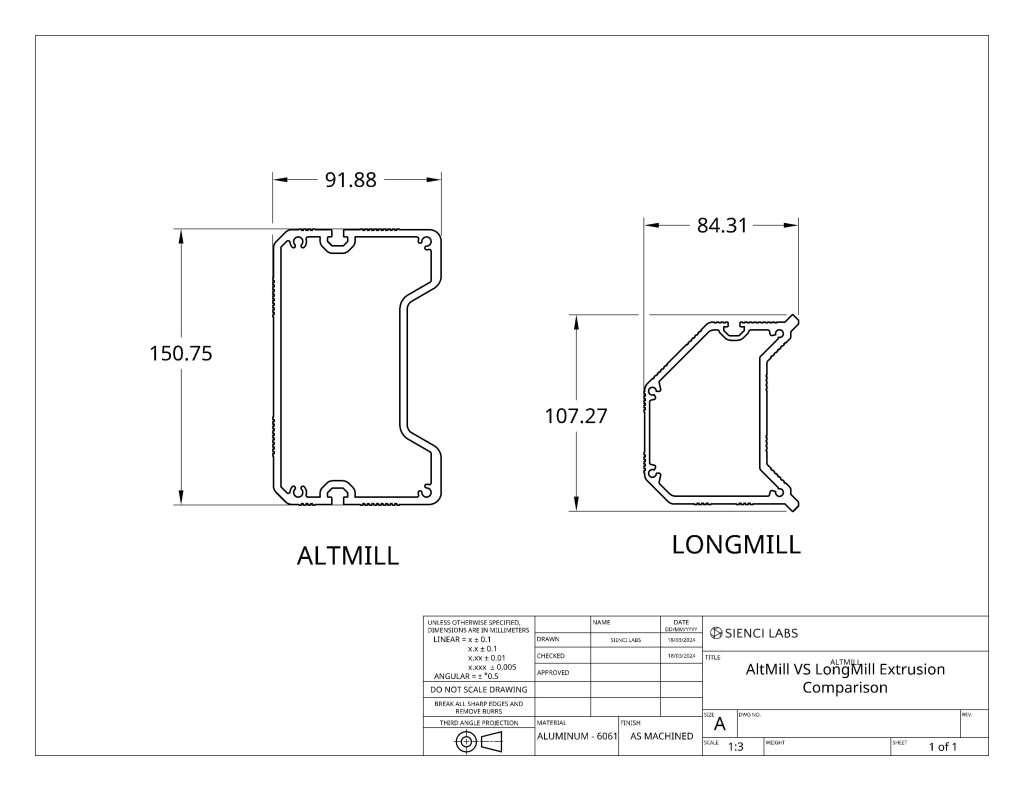
The process of designing the LongMill extrusions gave us a lot of experience in designing extrusions for high precision and rigidity critical applications. Since then, we’ve used this knowledge to manufacture parts such as the t-tracks and the enclosures for the SLB. This experience was able to help us understand the quirks and strengths of aluminum extrusion in the construction of the AltMill.
The AltMill extrusions are big, especially compared to the LongMill, which lends to its strength and rigidity. If you want to check out the video where we talk about this more, see it below:
Clip from the video
To make sure that the frame and axis of the AltMill are straight, a few additional steps have been incorporated to make extract as much performance and accuracy from the extrusion as possible.
First is in our process of extruding and milling the critical surfaces flat. Once the extrusion is pressed, it gets annealed and straightened, which allows for fairly high tolerances. However, there can still be sub-tenths of a millimetre deviations in the tolerance and straightness of the extrusion. To eliminate this, mounting surfaces for the linear guides and the ends of the extrusions have been machined to ensure they are flat and parallel.
Second, additional extrusions that make up the base of the machine are designed to help keep the Y-axis rails straight and parallel. Each of the bottom rail ends have been machined to make sure they are of an exact length, so the distance between the two Y rails is extremely accurate. This also provides additional support and rigidity to the machine, plus having mounting points to make it easy to add a wasteboard to the machine.
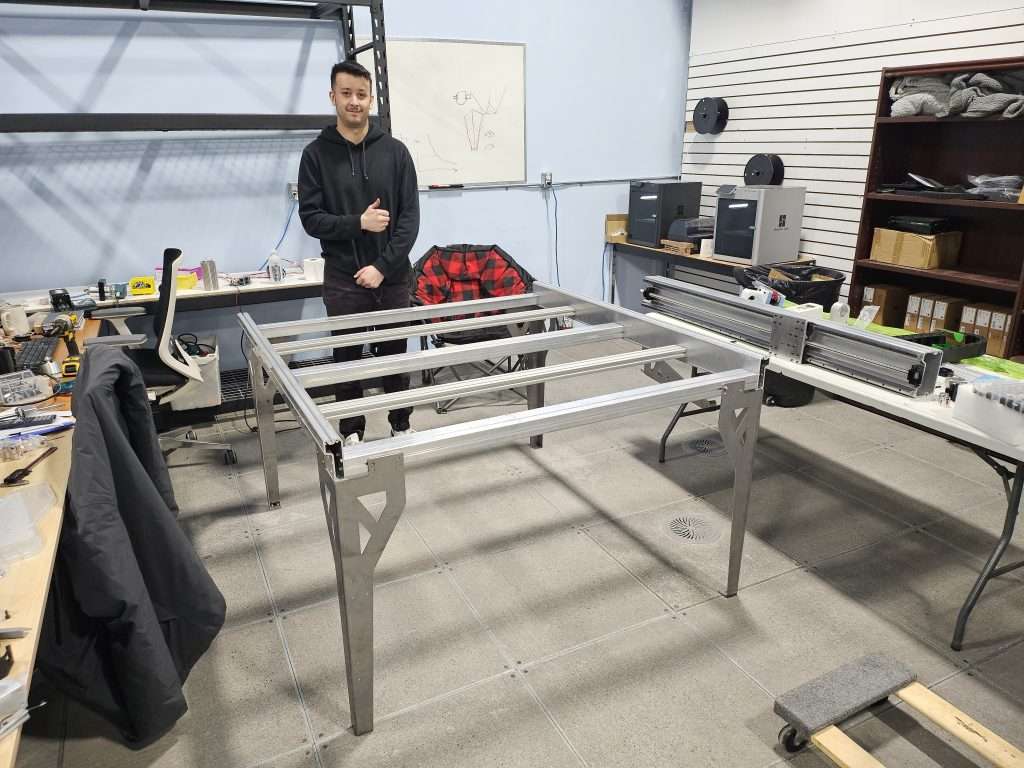
Test assembly of the AltMill “bench”
Users will find that the extrusions also come with many different design aspects, such as t-tracks and mounting points for motor components, legs, drag chains, and more, allowing the machine to be easier to assemble and maintain while saving costs by reducing the number of parts needed to build the machine.
Design for Shipping
One of the challenges that come from getting a CNC machine, especially a large one, is getting it from the factory to the door. Most machines in this range do need to be shipped in multiple boxes and the AltMill is no exception.
To make it as inexpensive as possible to ship, we have made a lot of considerations such as:
How can we maximize the travel of all of the axis while keeping the rails as short as possible?
How can we keep the weight of the machine low while being structurally rigid?
What items are we going to make default or optional, and how will we design the packaging around these considerations?
What sort of weight and size can the packages be and how will it affect handling?
The AltMill is designed to come in 3 large boxes weighing around 60 to 70lbs each.
Design for Assembly
Because of the more complicated procedure for assembly of the AltMill, a lot of consideration was made to make the machine as easy to assemble as possible internally. Here are some considerations for the design for assembly:
Mounting surfaces for high-precision components like the linear guides and bearing blocks are machined and toleranced to help initial assembly onto the rails and gantries pre-aligned.
We’ve worked with our fasteners manufacturer to use custom make screws with pre-applied thread locker, reducing the chance of screws coming out from vibration and avoid the need to apply thread locker manually
Reutilization of linear guide assembly procedure, testing, and torquing of screws to ensure smooth movement of the assembly used in the LongMill Z-axis.
Machining tolerances for the AltMill X-axisBack of the X-axis gantry where the linear guide blocks mount
Linear Guides and Ball Screws
One of the biggest differentiators between the LongMill and the AltMill comes from the use of linear guides and ball screws. While the LongMill’s v-wheels and lead screws offer an affordable, simple, and forgiving linear motion experience, ball screws and linear guides offer another step above in precision and rigidity.
Our ability to integrate linear guides and ball screws comes from a few different areas of expertise we’ve developed over the years and additional research and testing we’ve done in this project.
Linear guides and ball screws are much more expensive than v-wheels and lead screws. However, we have been able to source them at a lower cost because we are able to order them in larger quantities. For context, ordering them at wholesale can cost 1/3 or less than retail prices, and we can pass those savings onto the customer. Second is our ability to understand the differences and context of the cost and in-practice differences between different linear motion components. The AltMill doesn’t use the highest-end, most expensive components because we know that for our users, they won’t experience or notice the benefits of it. By being able to balance cost and performance, we’re able to choose the right components for our application.
We’ve also had the chance to work with different linear motion components in the production of the LongMill Z-axis, as well as through other internal projects. Through this experience, we’ve been able to better understand the process of assembling and working with different linear motion components at scale, see firsthand the results of long term use and lack of maintence through LongMill users, and test linear motion parts from different designs and manufacturers.
We do expect some new challenges with working with linear guides and ball screws, mainly in educating users on proper maintenance of these components. While these components can last a very long time, proper cleaning and lubrication is critical to make sure they perform properly. From our experience, the biggest factor in the longevity of these components is in the proper lubrication. It should be noted that one of the main downsides of using bearing-based linear motion components is that lack of lubrication can dramatically accelerate wear and cause catastrophic damage. To mitigate this, we plan to provide proper instruction and lubrication supplies to make it easy for users to perform proper maintenance for their machines.
Tramming Functionality
For those who aren’t familiar, tramming is the process of adjusting the position of the router or spindle, typically by tiling it forwards and backwards, and/or left to right. This ensures that the cutting tool stays aligned with the Z-axis. Having a machine out-of-tram can result in things such as ridges or artifacts, especially on surfacing operations with wider bits.
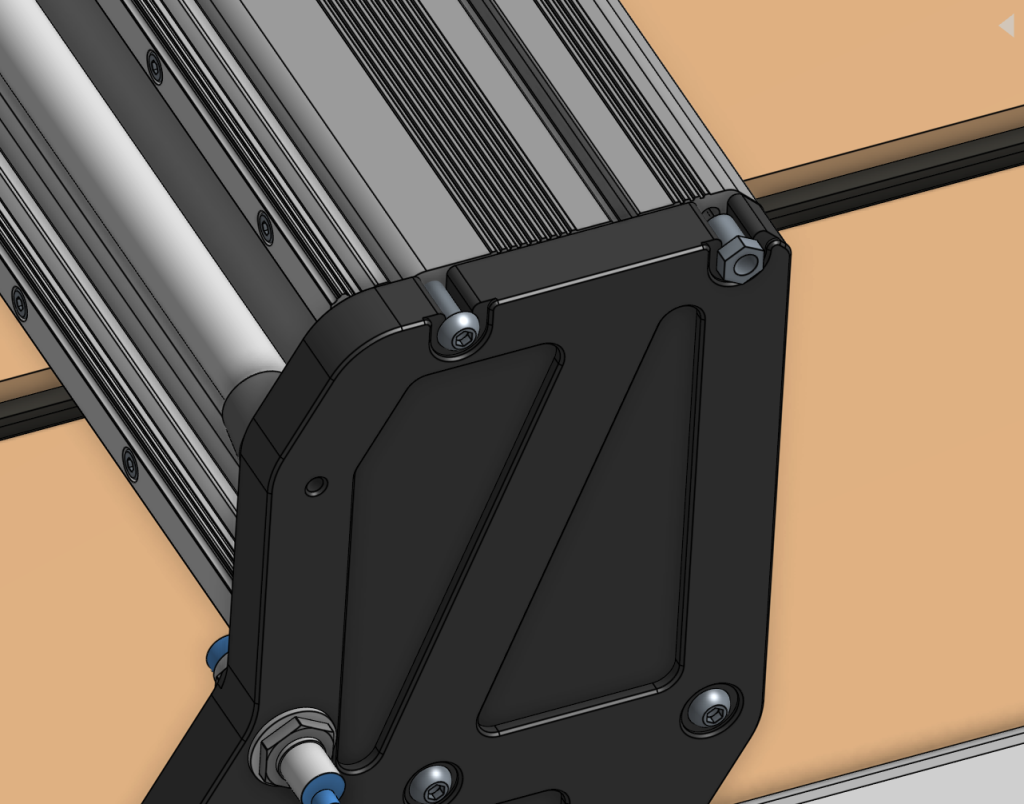
The AltMill, as far as we’ve been able to find, is the first hobby CNC machine to have nod adjustment, allowing for the X-axis rail to tilt slightly forwards and backwards, eliminating the need to shim the spindle mount. Additionally, the AltMill offers tramming on the spindle mount, which allows the user to move the mount left and right slightly as well.
A combination of an eccentric bushing and shoulder bolts are used in the Y gantry and X-axis to provide nod adjustment (bolt removed for clarity) Similar to the nod adjustment, the router mount uses an eccentric bushing to adjust left-right alignment
I should note that the eccentric bushings are only used for tramming. In the regular set-up, they have a bolt securing through them, or a shoulder bolt which aligns them to the gantry by default. Also, I should note that currently the tramming for the Z-axis is only built into the default 80mm mount. We do have mounting options for the LongMill 65mm mount, but this does not have tramming.
It should be noted that having the machine assembled in the default position will be within spec enough for virtually all users. Most of the relevant parts are machined to very high tolerances, and there are also many reference mounting points and hardware to help have the machine aligned and straight out of the factory in the assembly process. It is unlikely users will be able to easily make meaningful adjustments without tools like a tramming tool or gauge and a surface plate, and we recommend keeping the machine at its default position.
Why did we add this as a feature? To be completely honest, I hadn’t even thought about it, but one day when I asked Daniel if he’d thought about it, he just shrugged and said he designed the whole thing just for the heck of it.
SuperLongBoard
While the SLB initially started off as a project for the LongMill, many of the technologies and improvements will be present in the AltMill as well. We are currently in the development of a new version of the SLB (code named ALT-SLB or SLT-EXT) that will allow the use of external drivers that the AltMill uses for its motion system.
SLB-EXT, with plugs for external drivers
The main focus of the SLB was to improve stability and reliability of the LongMill’s motion control. We believe the development in this area will translate to rock-solid connection between gSender and the controller. Additionally, on-going development to have a dedicated, on-board computer will be able to be used for both the AltMill and LongMill.
There are some other important aspects and features that we believe are very relevant for the AltMill, including*:
RS485 Spindle control
Communication between the controller and computer using Ethernet and USB-C
Programmable physical buttons to trigger g-code commands and functions such as homing, moving the machine to a corner, and more
Tool Length Sensor and Tool Changer support
Ability to manage more pulses per second for higher motor speeds
Squaring and calibration functionality
Full independent 4th axis support
*Please note that some of these features are in-progress and are not ready for release yet.
Along with the “brains” of the board, we are also working on an external power-switching system to distribute power to the motors and interface with the e-stop to ensure the power is cut completely in the case of an emergency.
It should be noted that the SLB and the SLB-EXT are not interchangeable. The SLB is primarily focused on being a controller designed to be plug-and-play with the existing motors on the LongMill, and does not support external drivers for the X,Y, and Z axis. The SLB-EXT does not have integrated stepper drivers on board and must use external drivers.
48V Power Supply
During the pandemic, due to the chip shortage, the original power supply that we were using for the LongMill became extremely expensive due to a specific chip needed for manufacturing. Because of this, we spend a lot of time looking into alternative power supply designs. By switching to a design more commonly used in lighting applications, not only were we able to decrease the cost of the stepper motors, we were able to improve the reliability of the power supply because we were able to internally encapsulate the components to protect it against moisture and vibration. Additionally, we were able to more easily make larger power supplies because of the improved heat dissipation properties of the new power supply.
With this change, we’ve seen a dramatic decrease in power supply-related issues for the LongMill while being able to provide more than 20% more power than the previous design. The AltMill power supply offers nearly double the power of the LongMill power supply at 48V, which allows for additional benefits.
The main benefit of a 48V system is the ability to run the motors faster. Stepper motors lose torque the faster they turn, which means that the faster the machine moves, the more likely it is to lose steps. Increasing the voltage allows stepper motors to “flatten” the torque curve, allowing more torque at higher speeds. With our initial testing with open-loop steppers, we were able to see some small gains in motor speed by about 20%.
Closed-loop stepper motors
When we first started prototyping and testing the AltMill, we quickly found out that one of our bottlenecks was the speed of the open-loop steppers we were using. Over the last few years, the technologies behind motor control has greatly improved, and the cost of these components has come down as well. Additionally, because of our ability to purchase the components at a higher volume, we’re able to also make the machine as a whole more affordable as well.
Closed-loop steppers are motors with an encoder that provide the driver with feedback on the position of the motor. With this information, the driver can correct the position of the motor in real-time, compensating for lost steps and adjusting power consumption based on speed and load.
With the LongMill open loop steppers at 48V, we were able to hit speeds of around 4000-5000mm/min. With the new closed-loop motors, we were able move the machine at around 25,000mm/min before the ball screws start vibrating and jam up the machine. We were also able to push the AltMill all they way to 5000mm/min^2 acceleration rates, 6-7 times higher than the LongMill’s defaults.
There are a number of additional features that make the closed-loop steppers an exciting part of the AltMill because:
The motors can detect crashes and jams, then send an alarm to the controller to automatically shut down the power and spindle down, making the machine safer
Because of the higher efficiency, they can run cooler and a smaller power supply than what an equivalent open-loop stepper system would need
Noise and vibration are generally lower
Spindles and VFDs
Given how powerful the AltMill is, having a spindle is a must. Looking into different spindle options has continued to allow us to look into many different considerations when it comes to picking the right one.
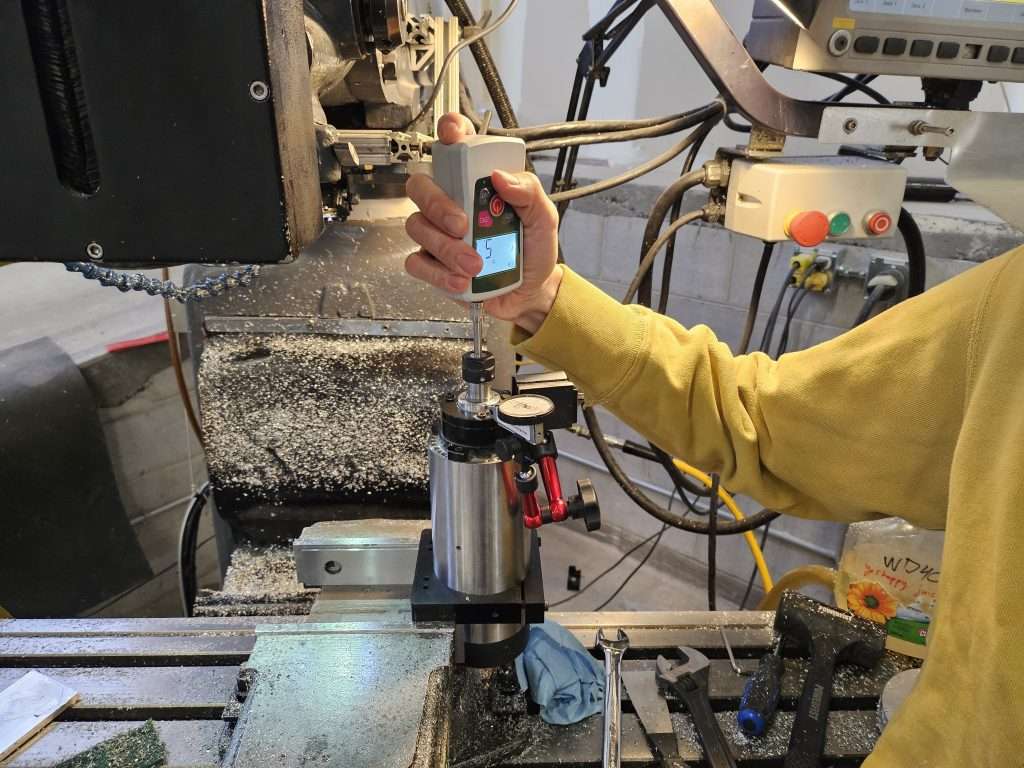
Testing deflection on a spindle
As I talked about in the past in this article, the quality of different spindles varies widely. Because of this, we’ve been hesitant in offering a spindle option since we knew there would need to be a lot of work involved in finding the right manufacturer for it. However, now that we need to get one for the AltMill, we’ve learned a lot about them. Here are some of the considerations about the spindle sourcing including:
The bearing quality, size, and configuration and how it affects the longevity of the spindle
The deflection from the spindle itself
Cost and availability
Cable quality and durability
EMI
Communication protocol like PWM, analog 0-10V, and RS485
VFD efficiency and control technologies like vector control
Programmability and ease of use of the VFD
Collet quality and size
Runout
We have a pile of VFDs and spindles in the testing phase. We haven’t settled on a specific combination yet, but we are planning on choosing one soon.
At launch, we plan to offer a 1.5KW 110V spindle that can run off a regular North American outlet. We are currently in the process of testing a 4KW spindle option that will require more power.
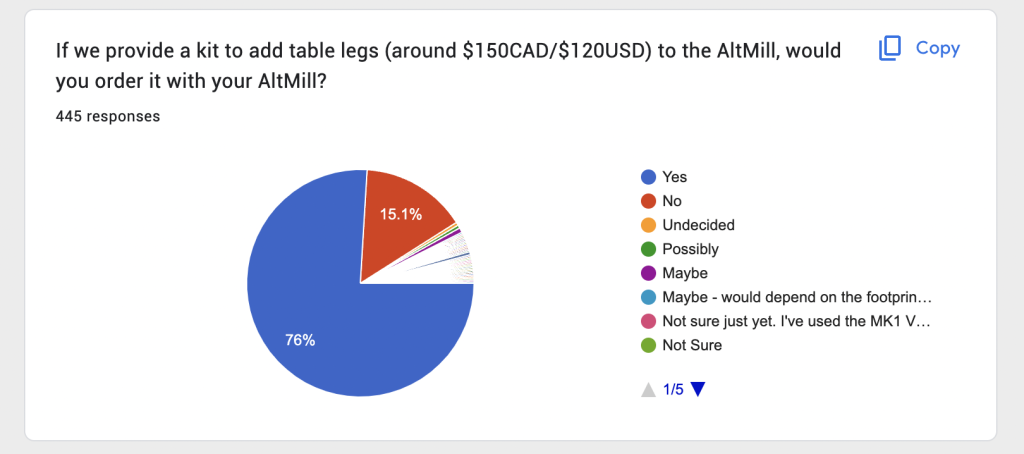
Table Legs
One of the main reasons why we didn’t end up making a 4×4′ LongMill is because we would need to move away from the “mount the machine to a big piece of MDF” design. Basically, since the machine needs to be larger than it’s working area. If we wanted to go for a 4×4′ working area, the material the LongMill sits on would need to be a bit larger (probably around 6×6′).
I should also add here that the main reason we chose a 4×4′ working area for the AltMill is because most standard sheet goods like plywood and MDF come in 4×8′ sizes, so the AltMill can process half the sheet at a time. I should also note that because of the back end of the machine is open, you can pass materials through the back, so you can put the full sheet on, cut into it, and move it out the other end without cutting it in half.
AltMill table mockup
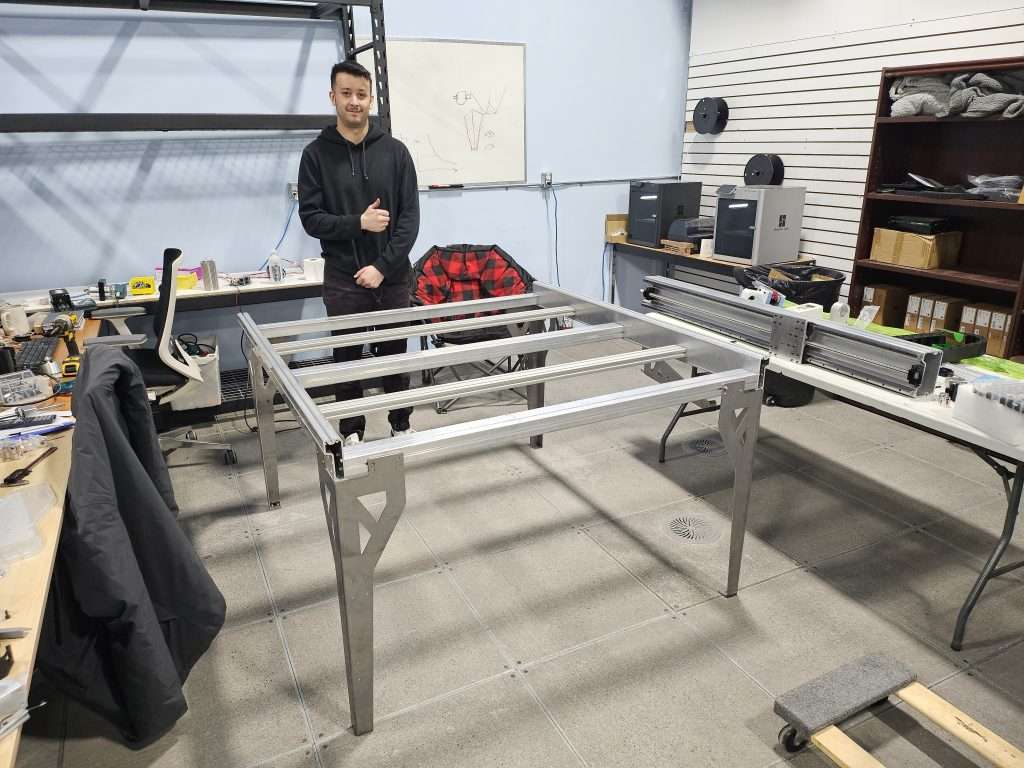
If we were to have the AltMill come without legs, users would need to have a larger bench, also about 6ft wide and long, to accommodate. If you took two 6ft wide workbenches from your hardware store and put two of them together, you’d probably be paying around $800 for the pair. The extra legs on the otherhand, cost about $150USD and are made from bent and welded sheet metal in a local shop near us.
Additionally, the AltMill carries a lot more inertia when it moves, which means that the structure it sits on needs to be as solid as possible. This is why a lot of industrial machines use cast steel and welded steel frames, since the mass of its structure dampens the movement and reduces vibration. Of course, we’re not getting into that realm, but we knew that if we built our own table legs, we could make sure it was to the specifications and level of stability we would want to see users have by default. Additionally, we wanted to take the chance to build in a few extra features including:
The ability to add extra shelves underneath by screwing in some extra 2x4s to the pre-cut holes. These shelves are also designed to be 4ft wide at the front, so you can keep half sheets of material under the machine. Having the extra cross bracing adds more stability to the structure as well.
Add leveling feet, to make sure that each side of the table is contacting the ground, to avoid wobbling. These could potentially be swapped for casters, so the machine can get moved around.
Add mounting points for other items such as the VFD and e-stop (still in progress to solidify exact positioning)
We’ve found that at some really high accelerations and fast movements, the machine can “walk”, and so we’ve been considering sandbagging the machine to see if we can up the speeds even further. It’s probably not practical, but something of consideration.
Performance
One of the things I sort of realized is that for most hobbyists and beginner-level users, it’s hard to get context on how much “performance” a CNC machine has. So We figured that the best way to show it was to film videos on the machine doing stuff. So here are some videos below.
Here’s also another non-scientific test.
Daniel standing on the Z axis of the AltMill
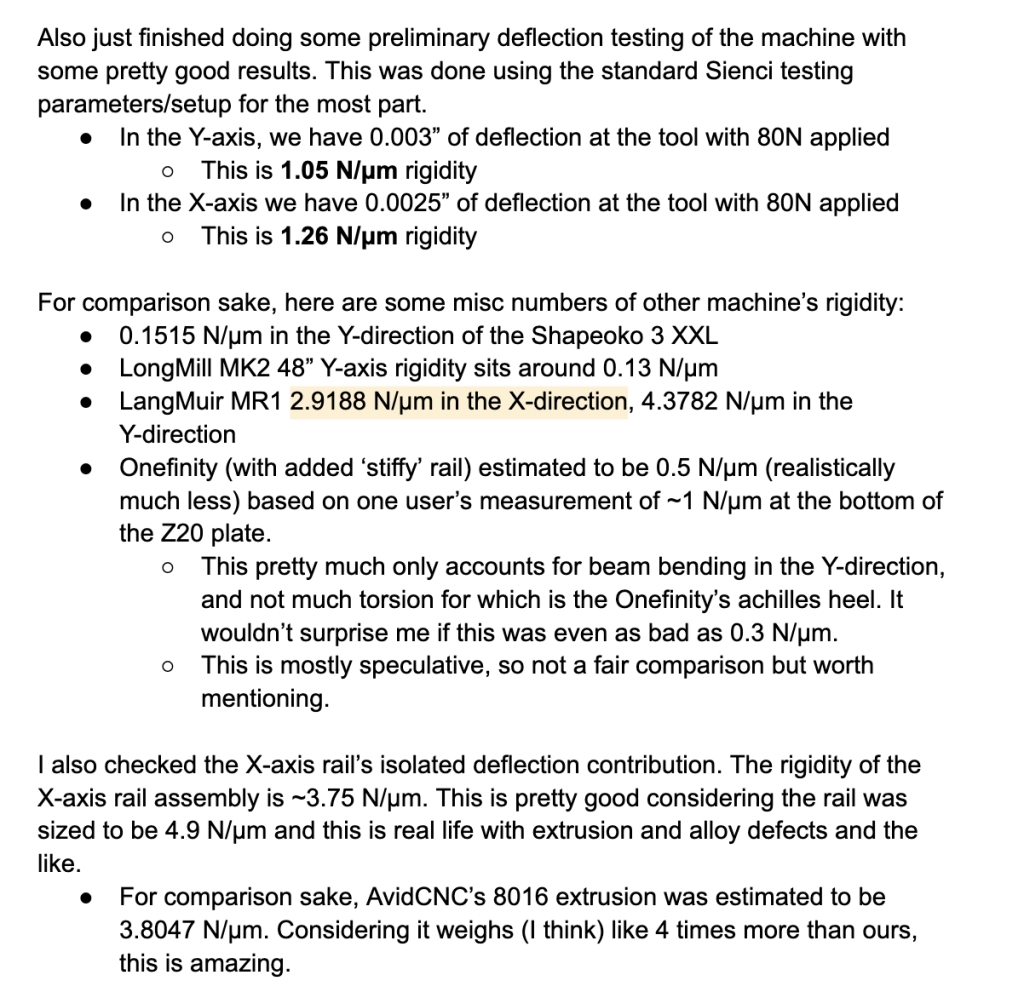
Here are also some of Daniel’s notes about the rigidity, which should provide some context on where the AltMill stands based on his estimates. I should note that these are just rough estimates based on calculations from tests done by other users, so they may be incorrect.
Market and Competition
I see a lot of similarities between the launch of the original LongMill and the original AltMill in a number of ways. When the LongMill was first launched, it competed directly against machines such as the Shapeoko 3 and the XCarve. At that time, there were a lot fewer hobby CNC companies, and those were the most popular machines at the time. At this stage, cost was a really important barrier for people to get into the hobby, and we knew we needed to design something robust enough for people to use the machine to make valuable products while being affordable enough to get that ROI back as soon as possible.
An interview video with one of our first beta testers for the first generation of the LongMill
First, we made the LongMill design as simple as possible. This allowed us to have fewer parts, which not only reduced the cost overall, but made it easier to pack, assemble, and ship the machines. Second, we tackled the most common complaint and limiting factor that users (including Keith) complained about, which was the use of belts. By using leadscrews on the LongMill, we made this machine an even more compelling option. Even though our company was not very well known at this point, I believe that a combination of our approach to designing a better machine at nearly half the cost of the competition got a lot of new users on board into the hobby.
The idea of a 4×4′ CNC router table isn’t unique. In this market, the AltMill competes directly with machines like the Onefinity Elite Series, Shapeoko 5 Pro, Shapeoko HDM, and XCarve Pro Series as a mid to high-end CNC hobby router. However, by reading and studying the feedback from users of all of these machines, we’re able to focus on addressing these things in the AltMill design itself. I won’t go into them here in this article specifically, but some examples include:
Using closed-loop steppers to eliminate the issue of losing steps
SLB and SLB-EX development to address static and EMI-related control issues
Plug and play 4th-axis option
Additionally, although the price difference between the AltMill and it’s direct competitors is not as dramatic as it was for the LongMill, it is still priced extremely competitively and minimum $1000USD less expensive than it’s closest priced counterparts.
Moving beyond that, we believe that the AltMill may have some customers looking for high-end hobby to semi-industrial machines who are also considering the Avid PRO4848, Phantom SC44 and StepCraft Q.404CNC. These are machines in the $8000-13,000USD price range.
Just to be clear, the AltMill is not a direct competitor or replacement for a semi-industrial or industrial machine. A lot of these higher-end machines may have things like welded steel frames, which is technically better for high-speed cutting. In practice though, there is still a lot of overlap because both machines can do the same projects and run at pretty high speeds.
I sent an email to Avid to ask about the specs for the PRO4848 and this was the response:
In any case, Daniel and I had a long discussion about where the AltMill falls. It feels like the AltMill with its speed, power, and price, blows all of the hobbyist-level machines out of the water. When comparing the AltMill to some of the upper-level machines, the distinction between them also starts to shrink.
Here are some of my final thoughts:
If you’re looking for a hobby machine in the $3000-6000USD range, the AltMill has the highest performance in this category
If you’re considering a semi-industrial machine above the $6000USD range, all the way to around $15,000USD, an AltMill might still work for your application, or you can buy more than one to double your production ability.
There are a few areas I do feel like we need to work on to make the AltMill even more compelling and competitive which include:
An onboard computer and touch screen, similar to the Masso controller. At this current time, we are working on our own computer and touchscreen setup, and expect to have more news in the coming months
A more powerful spindle option around 3-5KW
Toolchanger
More advanced work holding system, such as a vacuum table.
Larger machine options
Future Goals for the AltMill
Engineering Trickle up and Trickle down
There is a lot of engineering that can be transferred between the lower end of our product line (the LongMill) from the AltMill to make improvements, as well a lot of things we learned from the LongMill in the manufacturing of the AltMill.
Some AltMill development that may trickle into LongMill include:
Toolchanger
3 phase spindle options
Z-axis and router mount designs
Bench/table designs
Some LongMill developments that may trickle into, or have already impacted the AltMill feature set include:
SLB features, such as USB-C and Ethernet, RS485, tool length sensor input, physical macro button support, external relay control, improved laser rastering, and more
Extrusion manufacturing and quality control processes
Customer service and resource development processes
Additionally, as we make more volume of each new product and technology, we can bring the price point and improve accessiblity because we can leverage economies of scale and the fact that the work of each project impacts more people overall.
New Markets and Verticals
So a bit of backstory. Sometime last year, we started rediscussing the potential of designing and developing a new machine. From this discussion, we had three contenders, the AltMill, the CO2 laser, and some sort of mill dedicated to milling metals. The decision was made that we should try to make all of them, one way or another. Both the AltMill and the CO2 laser are in development now, which leaves the metal milling machine project still up in the air.
Just for a bit of context, the engineering team had a general idea of making something similar to the Langmuir MR1, or basically an affordable, hobby-level gantry mill.
The plan was to make the AltMill first, and shrink the AltMill down to make our a gantry mill using the same core parts and electronics. Based on Daniel’s testing on material removal rates, it looks pretty promising we can build a competitive machine in this realm.
In my travels in the past year to Brazil and China, one of the gaps that I’ve seen has been in the way CNC machines such as VMCs are used for production. While large industrial machines have their place in making high-precision parts, their running costs are high, even if the parts are small, of lower value, or don’t require small tolerances. The idea is, rather than using expensive big machines all the time, smaller, less expensive machines could be used for milling batches of smaller, lower tolerance parts. Additionally, factories install and use several machines for the space and cost of one large machine to scale up their throughput.
The team and I have a lot of interest in exploring this avenue next, I expect the things we learn from AltMill design and production will help us tackle this new vertical.
That’s not to say we have some other things on the docket of considerations, such as:
Making a machine to target hobbists looking for a machine option below the LongMill’s pricepoint, size, and capability like the Mill One Plus.
A larger version of the AltMill for 4×8′ cutting
New accessories for the AltMill and LongMill, as well as support for other machines outside of our ecosystem
We’ll probably worry more about this after the launch and first production of the AltMill. But if you want to share your thoughts about what you want to see come from us in the future, make sure to share it through our form.
FAQ
Here are a list of questions people have been asking us. Please note that there are more FAQs on the main AltMill landing page.
Will the Spindle Kit be available for sale on its own?
A lot of people, especially LongMill owners, have been asking about if the spindle kit for the AltMill will be available as a separate option. The short answer is, yes, because we won’t stop people from buying stuff from us if they really want to. However there are a few things to consider.
First is that the 80mm spindle is pretty big and heavy. There is some testing and validation we’d want to do before making it an “official” LongMill spindle option because of this.
Second is that we’re also working on a “Sienci Router”, which we plan to launch in the next couple months, which will be a drop in replacement for the Makita router, with speed control, and a brushless motor that allows for around 800 to 1000 watts of usable power, or around double the power output of the standard Makita router, which will be cheaper, lighter, and more suitable for the LongMill.
I do recognize that at around $500USD, this spindle kit still offers a lot of value, and is priced competitively compared to other, plug-and-play kits. I think there will be a number of people outside of the LongMill and AltMill ecosystem that we can serve with this kit as well, so we will explore that option in the future.
Why offer a 1.5KW spindle when the AltMill can handle a 2.2KW or larger spindle?
Based on our testing between a number of 1.5KW and 2.2KW spindles, we felt like the power difference between these two options were not large enough to justify the extra complexity of having the extra 220VAC wiring. We are continuing to do both real-life testing and establishing a bench test to measure the true output of the spindle.
Based on our estimates, to get the full potential from the AltMill, a 3-5KW spindle would be best suited for the machine. However, most households would need to invest in having an electrician set up the appropriate power outlets installed to allow this use.
This comes to another question, which is “how powerful do we really need to make the AltMill”? The other bottleneck that we need to address is the strength of the end mills. Based on our real-life testing, another reoccurring issue is that if we run the job too fast, the end mills break. For us to cut even faster, we’d need to use larger-diameter end mills. In some cases, this may be useful, such as in projects like surfacing and boring lots of material, but this is a small subset, and may not make sense to offer a spindle designed to do that all-day, every-day, if the alternative is to slow down the machine during these types of jobs.
Will you be making a larger/smaller AltMill?
Very likely yes, since the AltMill offers a platform that can be made larger or smaller by changing the size of the rails and linear motion parts, as well as mixing and matching some of the components. Making a smaller machine is probably the easiest, since it doesn’t have the same problems as making a larger machine, as we will discuss next, and we have some ideas for making a machine more dedicated to milling smaller projects or metals, similar to the Langmuir MR1.
There are two main challenges to making a larger machine, which in this case is probably going to be a machine that is for cutting 4×8′ sheets. The first is in the power transmission system for the Y axis. The longer the ball screws get, the more prone to “whipping” there is, especially at higher speeds. To avoid whipping, we would need to consider other options such as a rack and pinion system, which isn’t something we have a design for. The second challenge is in shipping. The AltMill comes in three large boxes which can be shipped with a courier like UPS. A 4×8′ machine would need to have parts that are around 10′ long to make up the Y-axis, which would be heavier and harder to transport. This adds extra complexity in shipping and packing these parts safely.
That being said, we definitely see a strong interest for a 4×8′ machine. If you’re interested in one, please share your feedback in our Product or Feature Request Form.
Will there be a toolchanger available for the AltMill?
We do have a lot of people asking about this feature. With the SLB’s input and output suite and stronger Z-axis capabilities, the AltMill will be able to support a toolchanger in the future.
As in typical Sienci Labs fashion, we want to do a lot of testing and see if we can build something high-quality, reliable, and affordable, or work with another company to add this feature.
At this time, users will need to invest in retrofitting their own aftermarket toolchanger to the AltMill.
Can I buy the AltMill without the table legs?
Initially we were planning to have this a separate option, we’ve made the final decision to have the table legs a default part of the AltMill kit. There are two reasons for this.
Survey data about the table legs
First is that based on survey data from over 400 respondents, the majority said yes to wanting to order them. To save money overall, we decided that it would be most effective to design the packaging with the legs included.
This in theory leaves a small but not insignificant group of people who don’t want the table legs (24%), which is still a lot of people.
Back when we didn’t have a default router mount size (65mm) for the LongMill, a lot of people ordered the 80mm mount thinking that they were going to toss on a spindle instead. What happened in reality was that most of these people decided to not go down that route and just get the Makita router we’ve been recommending. Because these customers would need to order the 65mm after getting their machine with the 80mm mount, we found that it was just more cost-effective as a whole to make the 65mm the only option, and have the other mount sizes at an additional cost, especially if you took into account the extra customer service, shipping, packaging complexity, returns processing, and time wasted.
I feel like the table legs may follow a similar story because designing and making an AltMill bench will probably cost a lot more time and money than slapping on the ones we’ve made. I believe if we make the legs optional, there will be a lot of people who don’t order the legs at the beginning, realize this fact, and then have to spend the extra shipping cost to get a set of legs sent to them.
For someone who truly doesn’t need the legs, yes they may go to waste. However, in the grand scheme of things, making the legs defacto makes the overall cost to the customer lower.
Hey everyone, we’re excited to share our launch date for the AltMill.
The AltMill will launch on Wednesday, March 27, 2024 at noon, EST. You can access the order page at https://sienci.com/product/altmill/ when the page goes live.
For more information about the AltMill project, please see https://sienci.com/altmill/. If you have any questions about the AltMill, please see the FAQ.
Pricing
The AltMill will come at a base price of $2950USD/$3990CAD, which includes the table legs.
Users can also purchase the Spindle and Dust Shoe Kit for an additional $515USD/$690CAD.
The first 50 machines
As noted in past updates, we’ve jumpstarted the process by starting production on the first 50 AltMills in December 2023. This allowed us to tackle some of the major unknowns/questions, such as:
What will it cost for us to make the AltMill?
How difficult will it be to manufacture certain critical parts, such as the rails, linear motion, and table that we were most concerned about?
What will our QA and assembly process look like?
What sort of performance and reliability should we expect from the AltMill.
As of the time of writing, the plan is to offer the first 50 machines directly to select users and for internal use before our “main batch”. The first batch of AltMills represents our trial-run for production and comes with a couple of you-should-knows, especially if you’re planning to be one of the users in this batch.
We also plan to collect comments and feedback from our first batch of AltMill users to improve the user experience and tackle any initial quirks and issues in the first part of the product launch.
Some parts are still in shipping and manufacturing, and we expect the first 50 machines to start shipping in May 2024.
The “main” batch
This is what we expect most users will be part of. We will begin taking pre-orders at the end of March. Please check www.sienci.com/altmill for more information and a link to the order page.
The goal for our first main batch is to build enough units to leverage economies of scale to make our relatively low price for the AltMill viable. This not only involves the unit cost of the machine, but the work and labour needed to build each batch of machines, which might include work done to set up tooling, packing stations, and the ordering of parts.
Please note that to place your order for the AltMill, the total amount must be paid to hold your place in our queue.* You may cancel your order at any time before your order ships for a full refund. Once your order is in the possession by the courier or arrives at your door, our standard store policies apply.
The number of machines we’ll make in the first batch is still undetermined and will be based on the number of orders we get at the beginning of the launch.
We expect the “main” batch to start shipping in July 2024. However, we will ship orders based on when they were placed, which means that if your machine is in the later part of the batch, you will receive your order accordingly after July 2024.
Future production
If you feel that pre-ordering the AltMill now isn’t right for you, you will eventually be able to order and have an AltMill ship to you in a shorter amount of time, just like the LongMill. However, when this will happen is dependent on when our production capacity can meet the demand for the product, which is unknown at this point.
The goals for the future production of the AltMill is as follows:
Have a reasonable lead time for us to build and ship AltMills. For us, two weeks or less from when we recieve an order to when it gets shipped is a pretty good number to hit, but the lower the lead time the better.
Produce larger numbers of machines to leverage economies of scale and either reduce the price of the AltMill or invest our increased profits into additional resource development and R&D that benefits the CNC industry
Take our learnings from this new product, especially in the production and QA side to create variations to the AltMill, such as a smaller, stouter, more rigid machine focused more on metal milling, or a larger 4×8 machine.
The size of future batches will be adjusted based on demand once our main batch has completed.
How to get updates
We will continue to share and provide updates in our Production Updates which are released at the start of each month at www.sienci.com/blog
Additionally, we will write order updates as we currently do with our other products at www.sienci.com/order-status
For the most reliable way to get news and updates, please sign up for our email mailing list.
Hey guys, it’s Andy again with March 2024 production updates. I am currently writing this in China, where I am taking a bit of a “work-acation” but also to visit some suppliers and manufacturers that we work with.
This also means we’ll film the typical production update video a bit later, probably on the week of March 11th when I get back.
March is expected to be a busy month, especially as we continue to make progress in our projects like the CO2 laser and Sienci Router, as well as prepare for shipping and launch of the SLB and AltMill.
LongMill
Last month we paused shipping for LongMills as we waited for more controllers to arrive. We expect around 100 controllers to arrive in the next week or so (shipped on Monday). Once these parts arrive we will continue to ship machines and clear the backlog. More controllers are expected to finish the first week of March.
Additional production is underway for the LongMill, with motors, power supplies, and fasteners in production now.
LaserBeam and Vortex
LaserBeam and Vortex are shipping as usual. Ikenna and Abeku have developed a riser mount for the LaserBeam which allows for easier use in combining LaserBeam and Vortex to do engravings with the Vortex.
They are also working on some different magnetic mounting designs for the LaserBeam to make removing and attaching the LaserBeam faster and easier, and should have more stuff to share in the coming weeks.
AltMill
This month we have finally put the machine together and started running it through the paces. Check out Daniel’s video on some more updates. I would have been there for the video, but I am currently away.
Testing is showing some promising results. Here’s an excerpt from Daniel’s notes about the rigidity of the machine.
Also just finished doing some preliminary deflection testing of the machine with some pretty good results. This was done using the standard Sienci testing parameters/setup for the most part.
In the Y-axis, we have 0.003” of deflection at the tool with 80N applied
This is 1.05 N/μm rigidity
In the X-axis we have 0.0025” of deflection at the tool with 80N applied
This is 1.26 N/μm rigidity
For comparison sake, here are some misc numbers of other machine’s rigidity:
0.1515 N/μm in the Y-direction of the Shapeoko 3 XXL
LongMill MK2 48” Y-axis rigidity sits around 0.13 N/μm
LangMuir MR1 2.9188 N/μm in the X-direction, 4.3782 N/μm in the Y-direction
Onefinity (with added ‘stiffy’ rail) estimated to be 0.5 N/μm (realistically much less) based on one user’s measurement of ~1 N/μm at the bottom of the Z20 plate.
This pretty much only accounts for beam bending in the Y-direction, and not much torsion for which is the Onefinity’s achilles heel. It wouldn’t surprise me if this was even as bad as 0.3 N/μm.
This is mostly speculative, so not a fair comparison but worth mentioning.
I also checked the X-axis rail’s isolated deflection contribution. The rigidity of the X-axis rail assembly is ~3.75 N/μm. This is pretty good considering the rail was sized to be 4.9 N/μm and this is real life with extrusion and alloy defects and the like.
For comparison sake, AvidCNC’s 8016 extrusion was estimated to be 3.8047 N/μm. Considering it weighs (I think) like 4 times more than ours, this is amazing.
In other news, we are continuing to put together the online ordering infrastructure to prepare the AltMill for launch at the end of March.
Sienci Router
At the start of the month, we received the sample motor we’ve been waiting on to do another round of development and testing. If you’re not up to date on the development here, make sure to check out the last post.
The new motor is much more powerful, and showing promising results. However, we are waiting on some improved motor tuning to happen as we have found some issues with the speed control to achieve a full 1KW of mechanical output. We are waiting on an updated control board expected to arrive in the next week or so.
Additional to this is that we’ve started exploring more spindle options for applications needing higher power past the 1KW the Sienci spindle can put out. If you saw Daniel’s update on the AltMill, the new machine is so powerful, that even the 2.2KW spindle ends up being the bottleneck in our ability to remove more material.
Eventually, we hope to provide several options, the standard Makita as a simple, powerful, and inexpensive option for routing, the Sienci Router as a step above with more features and power to run the LongMill at its full potential, and spindle options to maximize the AltMill’s performance.
Spring Loaded Anti-Backlash Nuts
I’m excited to say that the first set of the injection molded nuts has arrived. To learn more about this project, please see the long post about them here (put link here). While the T8s overall look good and function properly, unfortunately, we are still experiencing some warping and inconsistent threading on the T12 nuts. Since not all the nuts are affected, we’ve put on the store all of the nuts that are currently ok. We will work with our manufacturers to iron out the issues with the T12 nuts.
Demand for the new nuts has been super high, with all of the T8s already sold out, and with T12s expected to be close to selling out by the time this post goes out. Not to worry, however, we are working on making another batch of a few hundred sets and make sure we don’t run out.
It should be noted that existing LongMill kits will continue to ship out with the original style of nut. Once we catch up on orders sold for replacement, we will start moving to making them a default option for new machines. We currently don’t have a specific timeline for it, but likely in about 2 to 3 months, since production and assembly of the nuts can take a long time.
SuperLongBoard
We’re excited to share that the new SLBs have started production and should be ready to ship in the next few weeks. We are also waiting on parts for the controller and estops to arrive in the next few weeks.
Work currently being done with SLB primarily revolve around checking for reliability and making bug fixes. We’ve also sent the SLB for testing to key grblHAL community members for feedback.
gSender has now been updated to natively support SLB and it’s features. You may have seen a toggle when connecting your machine to allow for GRBL and grblHAL available.
Additionally work on building controllers for the AltMill to provide external driver support, higher voltage, while sharing the same features is also underway, with first versions of the design expected to be ready in the coming weeks. However for the full development cycle, we expect it to take till end of April to have production-ready designs and firmware ready.
In addition to this, we have continued to work on the computer side of the SLB at a bit of a slow pace. However, we have put together this proof of concept where we have attached a VESA mount arm to the threaded holes at the front of the machine to allow for use with a touchscreen, as well as a mount for the computer. This design was created by one of our engineering students working at the company this term.
IMPORTANT: This blog post will be updated with more details once we receive the first batch of prototype nuts. They are expected to arrive in the first week of February.
UPDATE TO IMPORTANT: We received the nutsfor testing. Good news is that the T8 nuts are pretty good, but the T12 nuts have threading issues. We should be able to fix some of them and have them available for sale pretty soon, and we are working on making sure for full scale production they will have this ironed out.
Back in August 2023, we shared with the world a new “spring-loaded anti-backlash nut”. The basic idea was to address some of the pain points of the original Delrin Anti-Backlash nut which we’ve been using on LongMills since the first machine was released.
Early prototypes showed a lot of promise, so we decided to move forward on iterating on the design and moving it forward. However, throughout the project, we ran into different issues and roadblocks like all development projects.
We now are in the process of producing the first batch of nuts, and we plan to eventually phase in this new design for new machines. Additionally, customers can purchase ones to replace the nuts they already have in their machine. In a way, I hope that this can be sort of a “best-of-all-worlds” solution, over belts and ball screws because:
Unlike belts, lead screws don’t stretch over time
Unlike ball screws, they don’t need lubrication and are dust resistant.
A lead screw plus spring-loaded anti-backlash nut is cheaper than a ball screw and easier to assemble, and also pretty comparable in cost with less complexity compared to a belt drive system (personal opinion kind of)
The only downside of this system is that technically this system is less precise than a ball screw, but in the context of hobby CNCing, totally acceptable and in practice, indistinguishable in this type of woodworking.
My hope with this new design is to primarily address two main issues with the old version of the Delrin anti-backlash nut. The first is the need to adjust the nut. Because the old version uses a screw to push apart the threads and is fixed in place, the user must adjust the screw as it wears down. In practice, this isn’t a big deal since the nut wears down slowly and the difference is minimal, but the issues arise when they are adjusted too tightly, causing premature wear, or not tight enough, introducing more backlash and thus sloppier machining.
The “original” T8 Delrin Anti Backlash Nut and the history behind T8 lead screws
So this is my sort of knowledge behind the history of this lead screw design and how it came to be, at least in our context. Back when we first started the company in 2016, home consumer 3D printing was still a pretty new concept but had established itself in the market enough to have some standardized components used between most 3D printers. One of these standard components was the T8 lead screw.
At the early days of building CNC machines, notably the Mill One, we used standard 3D printer components, namely the T8 lead screws as power transmission for the gantries. We also used these brass nuts that were also standard between 3D printers like the one below:
One of the main issues with these nuts was that since they had no backlash compensation, they would lack some accuracy, especially if it wore out.
We also used some spring-loaded versions of these as well, but they also sort of sucked, mainly because the springs were not strong enough to resist backlash at higher loads.
Spring loaded brass anti-backlash nuts
Going into designing the LongMill, we recognized that using the brass nuts wouldn’t cut it for a larger more powerful machine, so we found another nut design created by OpenBuilds that addressed the backlash issues. And they did work pretty well without many issues. Additionally, there were a lot of manufacturers that were making these for cheap so it was a pretty affordable option in the application, although, over time, we ended up manufacturing them custom to improve the quality of the nuts.
The idea behind the spring-loaded nut
One of the main weaknesses of the original Openbuilds nut is that you need to adjust it over time using only a single screw that is easy to under-tighten or over-tighten, causing issues due to being adjusted incorrectly. We see the issue of motors stalling because of this, especially for first-time users. If we could design a long-lasting nut that didn’t need any adjustment, then we could eliminate this main pain point.
We found some interesting designs in the market that use a “radially” loaded design, which basically pushes the threads into the root of the lead screw. Some of the main benefits of doing so is more even wear in the nut, leading to a longer life and higher precision. Here’s a good example of another radially loaded anti-backlash nut.
The initial designs that we came up with uses two split-threaded “arms” to pre-load the nut. We chose this because it allows us to keep the profile that we need to drop into where the old nuts were.
Prototype 1
In August 2023, we launched the first version of the new, spring-loaded anti-backlash nut. This was a limited batch of 100 sets, which were sold as working beta version of the product so that we could get real-life testing and feedback. Out of the 94 orders shipped to customers, we had fairly promising results.
The main feedback that we got was that the nuts feel a bit “loose”, and the main suggestion was to use stiffer springs, as well as a lot of people wanting a T12 version to come out as soon as possible.
Here’s some thoughts and notes on the responses and results from our own internal testing:
From our testing wearing down the nuts, the springs were able to account for backlash, but because of the angle at which the forces were being applied and the stiffness of the springs, there was a concentrated area of wear that would affect the performance of the nut.
Concentrated wear on the top edge of the nut
Overall, they did work, and pretty well for the most part. However we felt that if we were going to invest in this system in the longer term, that improvements to the design should be made before full scale production.
Prototype 2
To address the issues from the first prototype, we tried a whole bunch of different ideas to find ways to improve the nut. Some of these include:
Using a flexure, but due to the limitations of injection molding and machining, was scrapped
Using a circlip as a spring, which worked well but was not easy to determine and adjust the spring force.
We did however try making changes to the bending areas of the arm by tapering them down and having the spring push horizontally rather than vertically.
Additionally, it’s worth noting that one of the other main differences between this nut and the old version is the manufacturing complexity. We have several slots and features that make it a bit more complicated and expensive to make, so we started exploring making injection molding a blank for the nut itself and machining in the critical features.
#image_title
This allows us to reduce the bulk of the machining, which is a significant part of the part cost, enough so that we can keep the same cost for the new nuts as we old ones.
The main issue with the first batch was that there was deformation in the nut itself causing the dimensions to be warped. This meant that the threads were ok on some nuts and way too tight on others. Secondarily the threaded hole did not center properly causing the lead screw to be off-center as well. Thus through testing, we found that this would cause issues with binding.
After discovering this, we went back to the manufacturer, who made changes to the mold, machining, and clamping processes. We also sent them additional documentation for proper mounting to share the context of where the critical tolerances were. After a week of tweaking, you can see in the new video from the manufacturer that the nuts thread on much more smoothly.
Conclusion
At the time of writing, the first batch of final production nuts is on the way, and we will test, assemble, and post them available for sale when they arrive.
We plan to sell this first batch to current users, and if the nuts work well and people are happy with them, we can transition to having them available for kits as well. However, we don’t expect this to be the case for another 6 weeks since we are in production for the complete batch.
Hey everyone, welcome to our February 2024 Production Updates.
Media Room and Workshops
Since we’ve moved into our new space, we’ve dedicated an area as a “media room”. The idea is to build a space that allows us to make content more quickly with dedicated space, lights, and machines for filming and education. Additionally, we’ve gotten a lot of interest in doing workshops, and so we’re now looking into planning workshops in the space as well.
Production for the LongMill continues to move smoothly. Orders are shipping out within one week, however we are running low on controller boards. Lead times may get longer this month.
Check out this new racking we got for all of the rails! It looks very visually satisfying.
Injection-molded middle feet that are used for supporting the rails have finally completed production and are on the way to us. We expect these feet to arrive in early Feburary. For those who haven’t been following along on this change, we decided to start injection molding these parts since we make a lot of them using the print farm and we crossed the point where it would be faster and more economical to injection mold them. It should be noted that this change is to improve production efficiency and reduce costs, but won’t make a difference to the LongMill’s performance.
Injection molded feet
The bristles that we use for the LongMill dust shoes have come in earlier this year but we have been dealing with quality issues. We have been able to use some of the good bristles, but we’re also working on sourcing a new manufacturer to improve the quality.
#image_title
We are now starting production on Batch 9 LongMill MK2s. We currently have around around 750 LongMills in stock, and expect to start shipping Batch 9 machines in the spring of 2024.
Spring Loaded Anti-Backlash Nut
Second batch of prototypes
I know a lot of people have been anxiously waiting for the spring-loaded anti-backlash nuts. While they seem simple, these have been a really fascinating but challenging project as we needed to make changes and considerations to the design and manufacturing process of the nut.
For more details about the process of design and making the nuts, I wrote another blog article. The first 200 sets of T12 and T8 nuts are expected to arrive in the first week of February. Please note that the blog article will include more updates once the first batch of prototype nuts arrives.
Vortex Rotary Axis and LaserBeam
Parts for the Rotary Axis have arrived and are being packed and assembled. We have another 300 units in stock now.
Ikenna and Abeiku are also working on a new magnetic mount design and also a riser mount to be used with the Vortex to allow for easier laser engraving on round objects soon, so make sure to keep an eye peeled for that.
AltMill
We have our major components arrived here and are working on putting together and testing the first prototype. Based on looking at the linear motion and extrusions, everything looks great and we’re excited to get everything in to start building the first batch.
AltMill table, Daniel for scale
If you’re interested in ordering an AltMill, make sure to fill out our form.
Here are some other updates:
While we have received one set of extrusions, the full batch of 50 sets have had some QC issues and are being worked on now. We expect them to be finished in the next 2 weeks and get prepped for shipping
We have received a few additional closed-loop stepper motors for testing and will be working on having them set up for testing
We are working with Andrew at Expatria to figure out what modifications we need to make for the SLB to allow for use with AltMill.
Also, check out this new logo that Leandro made for the AltMill.
We are tentatively looking at a launch date for the end of March. We’ll keep people updates so make sure to follow along on the development through the blog and such.
CO2 Laser
Ikenna and his team have been continuing to work on the CO2 Laser. Here’s a photo of the mockup in progress.
I probably won’t be continuing to put updates for this project on the production updates here because Ikenna will make a separate post as updates come. Make sure to sign up for the CO2 mailing list for all updates as they come.
Sienci Router
Testing with the 400 watt motor looks to show that using BLDC is a promising technology and shows that power output even at 400 watts is comparible to the Makita router. However, we feel that to bring the most value to users, having a bit more power will be beneficial since:
Cutting using larger bits, such as the surfacing bit causes the Makita router to bog down
Additional headroom allows us to run the LongMill faster alongside other future improvements to speed and rigidity
Potential to be a viable option for higher-end machines and the AltMill.
Creates a differentiation between our router and the Makita router
Having a larger motor is more expensive, but still within our budget. Pricing is still yet to be determined, but we believe that if we have an option around the $250 mark will allow us to provide a tool that sits somewhere between a traditional router like the Makita RT0701 and a 3 phase spindle.
A second batch of motor samples are expected to ship in the first week of Feburary. We are also in the design and sourcing stage for the motor body and bearings.
A section view of one of the router designs
SuperLongBoard
Development continues for the SLB and third version prototype is currently in testing. Here’s some news:
SLB resources continue to be developed ahead of shipping
E-stop injection molded case, buttons, and circuitry have arrived for testing, and have started on full scale production
Enclosure parts are getting prepared for shipping
Otherwise we are just working through general bug fixes and testing as usual.
Demand for the SLB has been strong, and we are expecting to sell out of the first batch before we start shipping, so we are working on
If you haven’t checked out Chris’ last update, make sure to read it here.