September/October Production Updates

Hi everyone. Here’s a production update for September/October 2021.

We’ve seen a small uptick in LongMill sales over the last couple of months. Overall, shipping and production have been moving along smoothly, and most of the LongMill orders have been shipping out within a few days. We’ve reached the middle of Batch 5 a little sooner than we expected, and we may start to see us run out of a few parts as we wait on parts to complete the second half of Batch 5.

Just as a side note, we build machines in batches, and Batch 5 consists of 1000 LongMills. With smaller or inexpensive parts, parts with long lead times, and parts that we need to make large quantities of to take advantage of the economies of scale, we order 1000 sets of parts. On the other hand, larger or more expensive parts, parts that have short lead times, and parts that are made locally, we produce in smaller batches. In this case, we produced 500 sets of gantries, control box parts, and rails.

It’s important for us as a business to try to time the production and purchasing for each of our components. Over-producing means having to pay for inventory that needs to sit on shelves, while under-producing means having longer wait times for completed products. We of course try to balance these things and make production as seamless as possible.

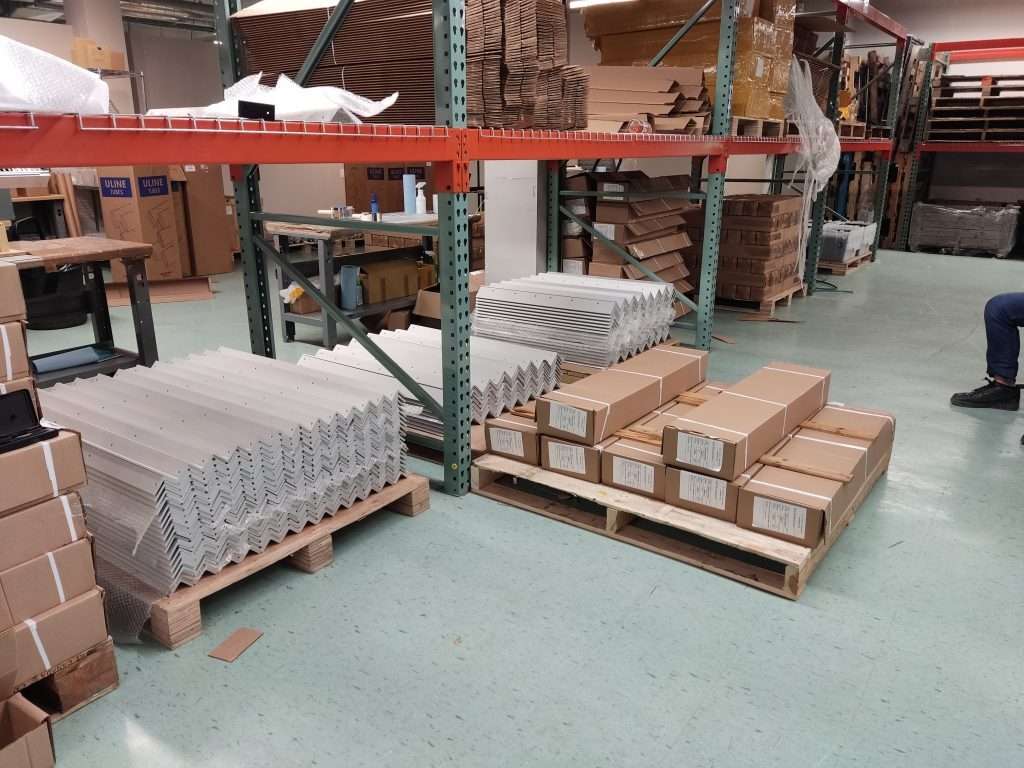
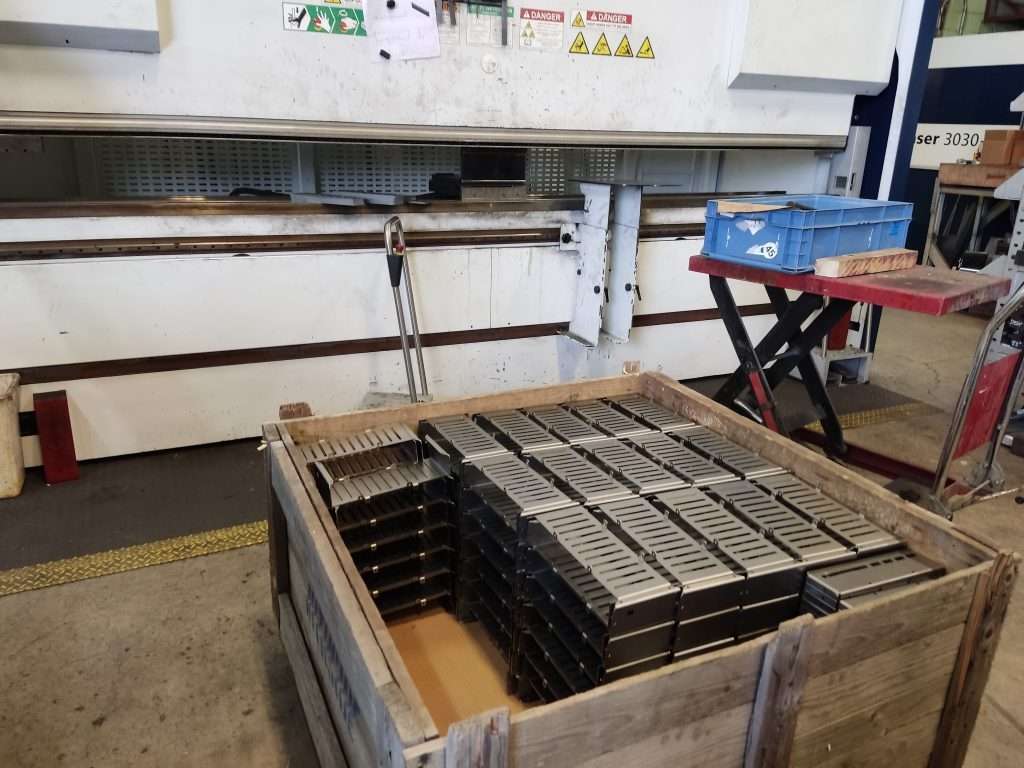
Due to the uptick in sales, we’re running out of parts sooner than we expected, which may lead to shortages of parts. Currently, we are expecting to run out of gantries in the next few days. The laser cutting for the gantries is expected to be completed on Monday, with painting and finishing of the gantries to take about 2 weeks to complete. We will be working with our manufacturers to coat the parts that we are lowest first so that we can keep production going, but regardless, you should expect the lead time to increase until the rest of the gantries are completed.

Other parts that are still in production, but are expected to arrive before we run out include:

  • Rails
  • Control boards
  • Control box parts
  • Drivers
  • Flange bearings

Expected lead times

With the gantries expected to be our bottleneck, we expect machines, once they are out of stock, to start shipping LongMills again around the third week of October.

If you are planning to order a LongMill, please check the estimated shipping date on the LongMill order page for the most accurate information.

Surging ocean freight prices and continued instability in the shipping industry

Increased consumer spending and pandemic woes have continued to cause instability in the shipping industry. Recent surges in ocean freight prices now mean that shipping products between China and North America have roughly quadrupled in price compared to the start of this year. The chart below represents a pricing index to compare shipping rates.

This of course impacts us. A reasonable percentage of parts that we use for the LongMill comes from China, so we are also at the mercy of ever-changing shipping prices.

Luckily, the LongMill is a non-commodity product with a reasonably large profit margin, allowing us to adjust to changes in fluctuation prices more easily than commodity items that have low margins, such as general household items. We have kept the price of the LongMill the same for the past two years, but inflation and current events may eventually warrant increasing our prices as well.

In the longer term, I hope that shipping prices do stabilize. Realistically though, I expect that shipping prices will stay high in the near future, and other unexpected factors may come up, so we will have to keep our eyes peeled for that.

Batch 6 is now currently in production as well, with this batch being 1500 LongMills. By increasing our batch sizes, I hope to smooth out the supply chain and give ourselves more time and flexibility between batches.

LaserBeam: First Working Laser Driver


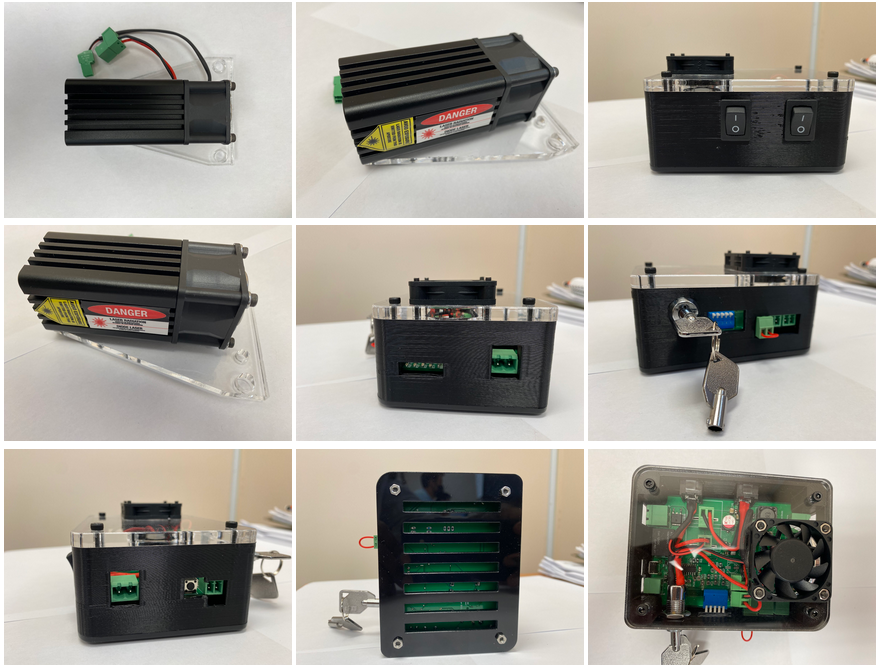
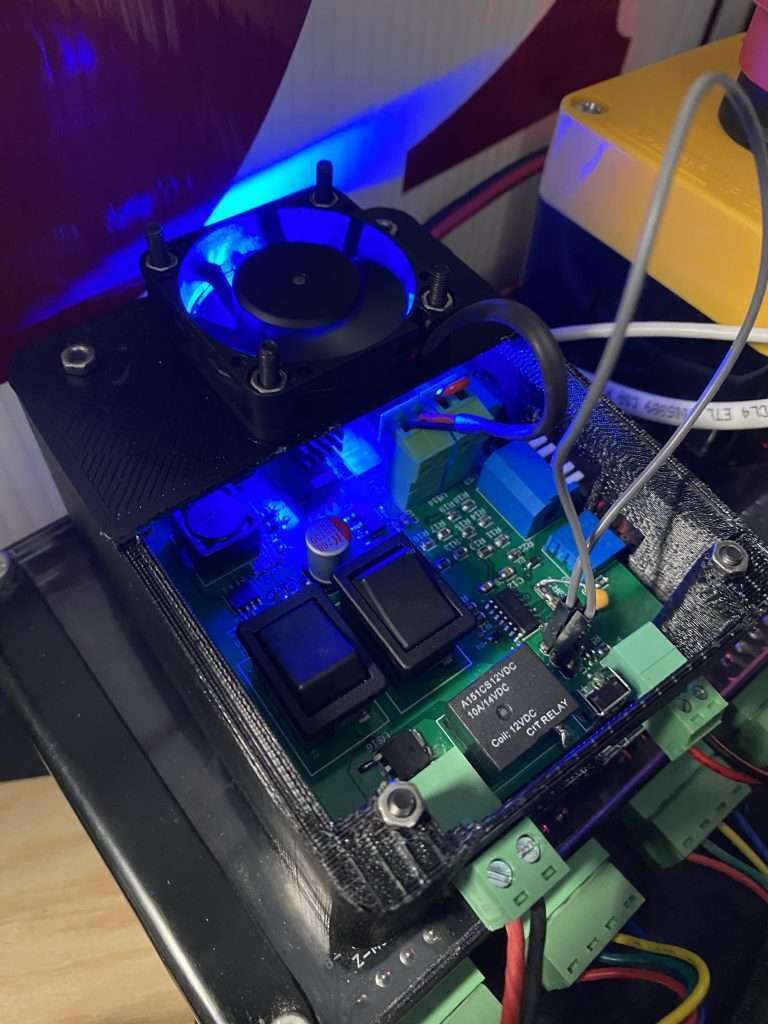
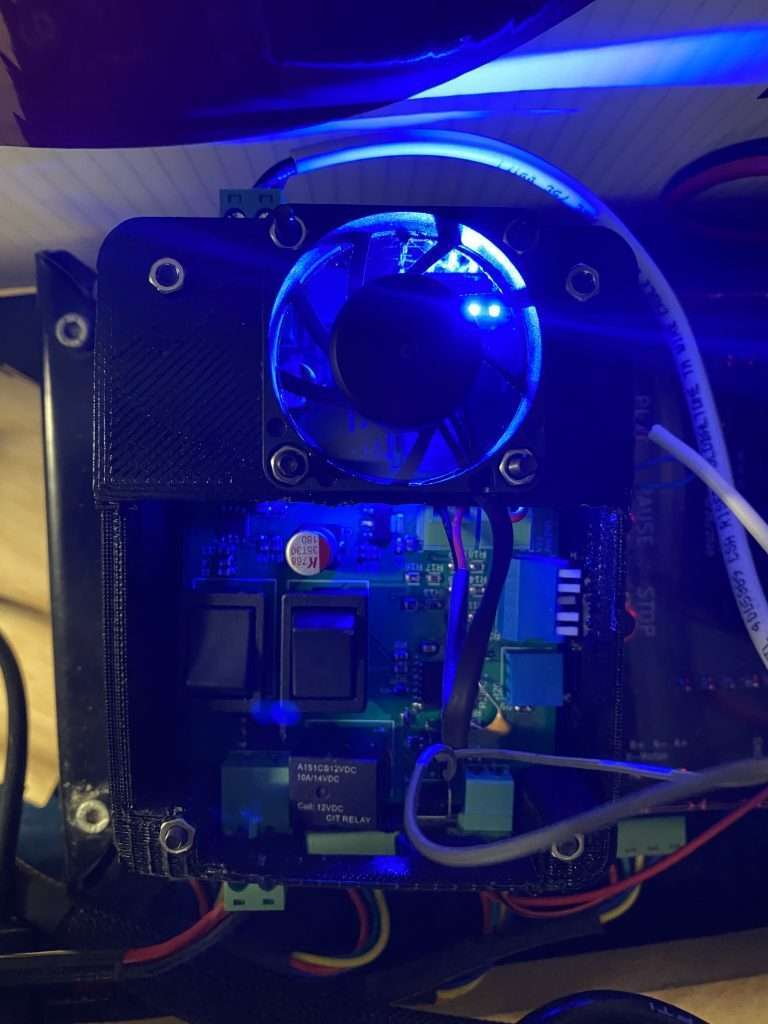
3A Working Laser Driver

I would like to share with the LaserBeam community that v6 of our driver design was our first operating Laser Driver. There’s good and there’s bad but this is a huge milestone, giving us a lot of confidence in continuing to improve and get the design where it needs to be.

Positive Driver News

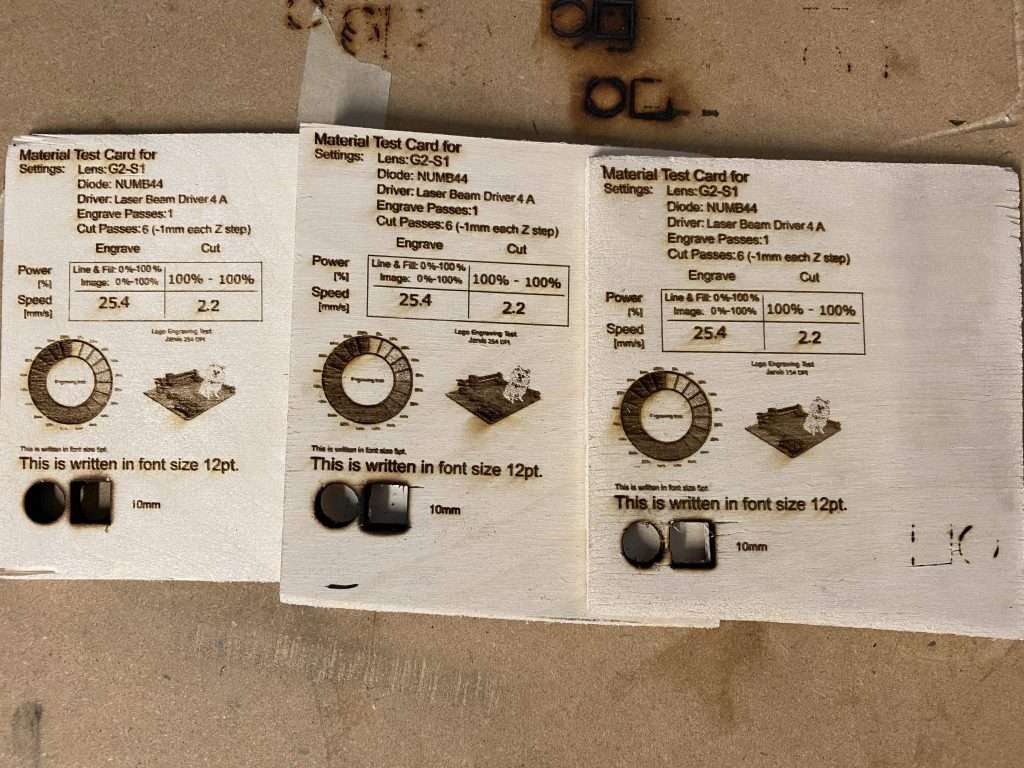
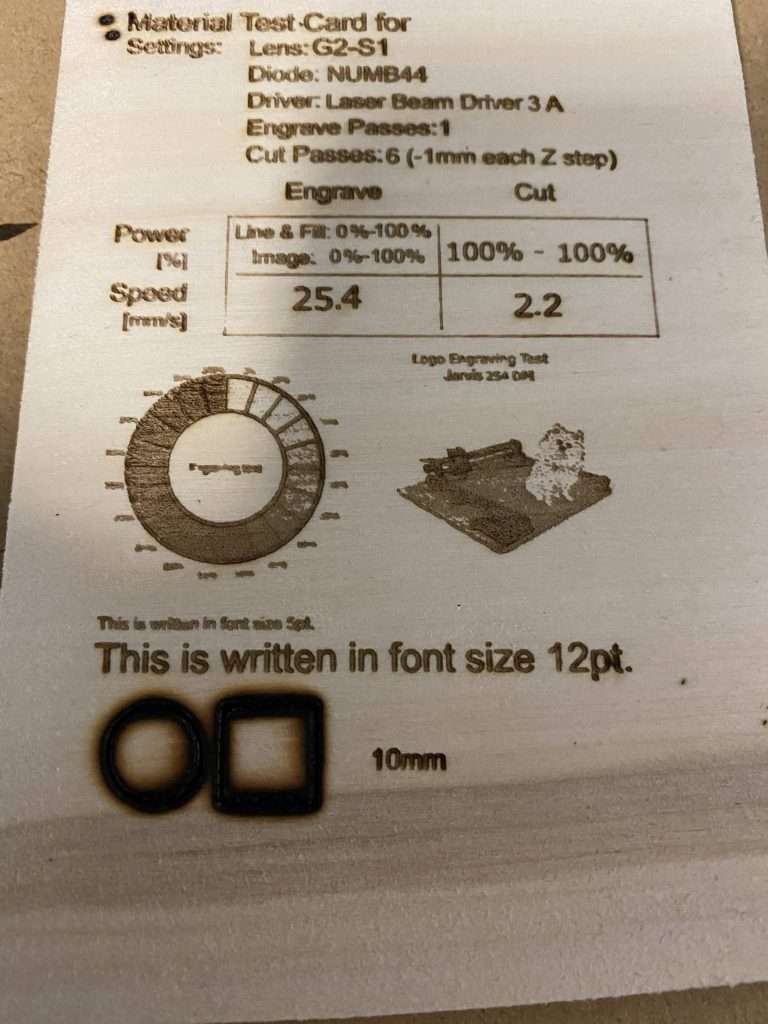
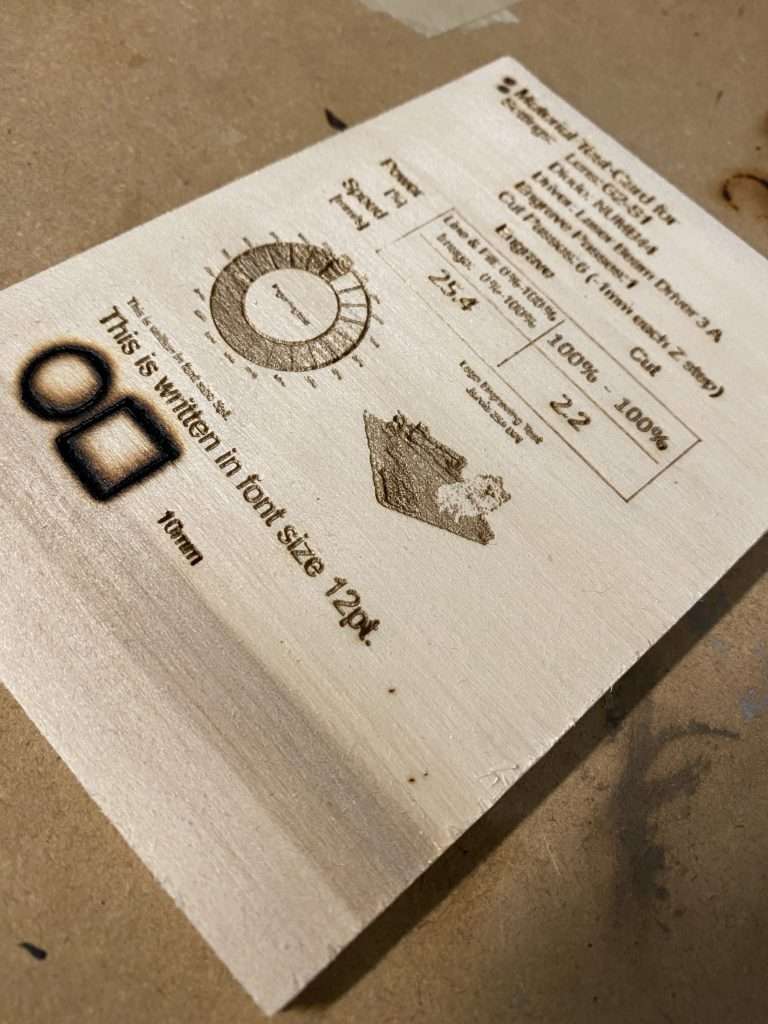
  • We currently have a working 3A Laser driver that can operate with the Longmill controller & gSender to produce high quality engraving and cutting results 
  • All safety features operate as intended (Key switch, interlock, power failure reset button, led status)
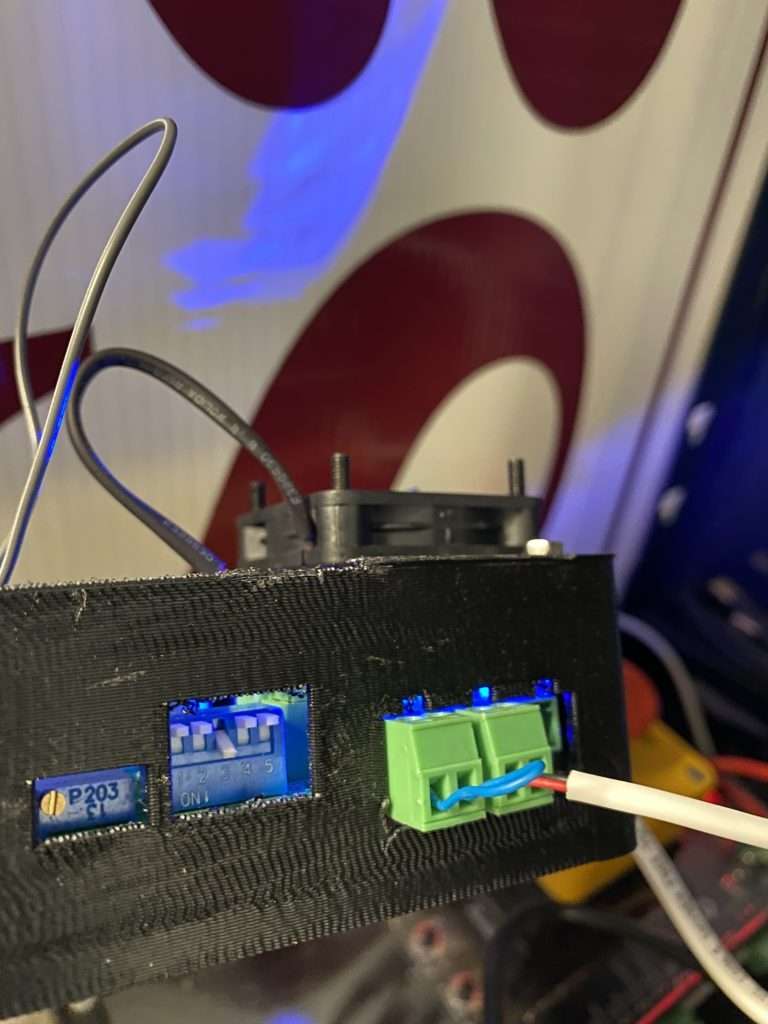
  • Control max current output with dip switches (up to 3A reliably right now)
  • Switch between full power continuous mode and PWM input mode working
  • Power your Laser cooling fan, driver cooling fan and air assist fan working

Negative Driver News 

  • We currently are not able to provide a stable 5A current to the diode (3A is the max right now)
  • Holding down the reset button turns the driver on (small error)
  • There is a small amount of power leakage; when in continuous or pwm mode there is a small amount of current running into the laser diode. This is an issue because unless a current is selected in continuous or a pwm signal is being sent to the driver there should be no amount of current available

v7 Driver Improvements 

  • Upgrade passive components and double copper layer amount in order to achieve a stable 5A 
  • Power and function switch changed to panel mount for more flexibility for driver design
  • Get rid of signal inversion mode and potentiometer in order to solve low power leakage and simplify design

v6 Driver Results 

Next Steps

  1. Test v7 Laser Driver
  2. Working on Laser Resources
  3. We are currently finalizing our air assist design and I’m very happy with the results
  4. New Update October 7th 2021

Ordering Additional Safety Glasses & Lenses: 

Check out the link above if you need to order additional LaserBeam accessories that you didn’t order in your original LaserBeam preorder. You won’t be charged any additional shipping and your order will be combined with your LaserBeam Pre-order! 

Sienci LaserBeam Pre Order:

Place your Sienci LaserBeam Pre order here:  https://sienci.com/product/laser/

Answering your FAQ: 

Send your Laser Questions Here: https://sienci.com/contact-us/technical-help/

Check out our LaserBeam FAQ video, I take all your unanswered questions from the LaserBeam livestream and try to give you guys more clarity on the LaserBeam add on. 

Stay up to date by signing up for

Subscribe

* indicates required

If you missed the last update, check it out here: https://sienci.com/2021/08/30/laserbeam-driver-development-shipping-update/

Vectric VCarve Pro now available on our store

Hey everyone, Andy here. I’m here to announce that Vectric VCarve Pro is now available for sale on our store.

We first offered Vectric VCarve Desktop for purchase through our store after many LongMill users praised its ease of use, a wide array of resources, and powerful features that made it worth the price. Over the past year it has become one of my go-to programs for creating gcode, as it has been proven to be easy to use and come with many presets and features that I have found useful.

One very significant downside to using VCarve Desktop is its size limitation. The software limits you to projects to up to 25″x25″. This of course leaves several inches of wasted potential for LongMill users that have a 30″x30″ work area or requires users to split or tile projects. Here’s an example of one of my personal projects making a trim piece for my old Volvo out of plywood that required splitting the project into several pieces.

Vectric Pro does not have a size limitation. This, of course, comes at a price. While Desktop is priced at around $460CAD, Pro is priced at $896, a +$400 difference for the convenience of having a little extra working area and a couple of other extra features.

I still firmly believe that all new users should try out free software, as discussed in my previous article. But for advanced users who are making their bread and butter with their machines, it is easier to justify paying for software if it can save time and improve productivity. Initially, when the LongMill first was released, all of our users were new to CNC, which meant that we were focused mostly on helping beginners by focusing on supporting and recommending free and low cost software options. Now, with many users having had used the LongMill for a long time, we now have a growing community of advanced users who demand more functionality from their machines, some of which already have VCarve Pro and other paid software. So to cater to this growing community, as well as prepare for future machines such as the AltMill, which will focus on production and larger scale CNCing, VCarve Pro is now available for purchase on our website.

Just as a side note, we’ve updated the license distribution process so that all licenses get sent out automatically. This means that if you place an order for any Vectric software on our store, you will get an email with the license details right away.

Going Bigger – Announcing the Development of the AltMill and Extended Versions of the LongMill

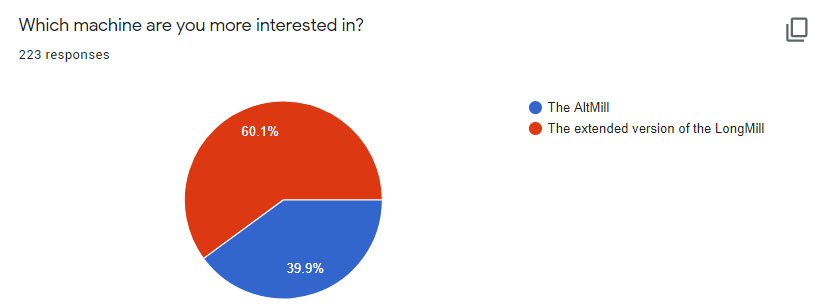
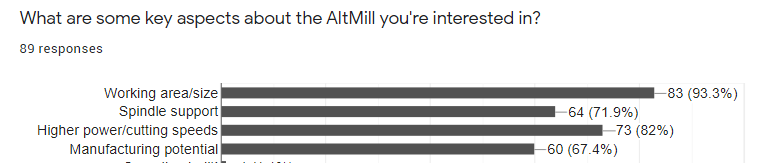
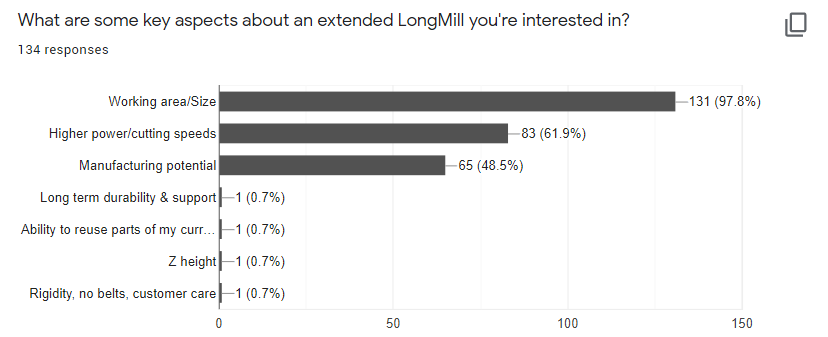
One of the most frequently asked questions at Sienci Labs is “Can you build a bigger version of the LongMill?”. Well, I just want to assure everyone we have been actively working on the development of 1) an extended version of the LongMill and 2) the Altmill! Although we’ve been working on these projects for a couple of months now, these projects are still quite early in their development and we don’t have a ton of details to share. The purpose of this announcement is to start getting our community involved by learning what sort of machines and features folks are looking for. If you’re interested in being involved in this process, please make sure to fill out the survey.

What is the extended version of the LongMill?

Well, I guess it’s in the name. We’re working on a version of the LongMill that uses the core components of the original machine, but extends the rails and leadscrews to add more working area to the machine. The goal is to have a LongMill 30×48 or LongMill 48×48 machine. We expect to be working in a price point of around $2000-$2500 for a full extended version of the LongMill, with kits available for adapting pre-existing models of the LongMill to the larger size as well around $800 to $1000. Please note that pricing is an estimate at this point and may change.

What is the AltMill?

The AltMill is a new machine that we’ve been working on that focuses more on the more industrial/production end of the spectrum of hobby CNCing. This means linear rails and ball screws, more powerful motors, and other features that are designed for more intense CNCing. We expect to be working in a price point of around $3000-4000 for a 48×48 inch working area.

Timeline

Extended version of the LongMill

We are currently in the early stages of manufacturing prototypes of the rails for the extended version of the LongMill. We will be conducting testing between October and November, to push for a December or early 2022 launch.

AltMill

We are currently building to scale prototypes with wood, with plans to start producing prototypes from aluminum in the coming months. Due to the scale and complexity of the project, we expect to have working versions of the AltMill at the start of 2022 with a launch for the AltMill in mid-2022.

Beta testing

If you wish to be part of our beta testing program, please fill out the survey. You will be able to provide your information at the end of the survey.

General challenges of the project

Building larger machines also prevents new challenges. Here are some things that we’re working on addressing. We also discuss this topic specifically about the LongMill here: https://sienci.com/2020/06/05/things-to-consider-when-making-a-longer-longmill/

Rigidity

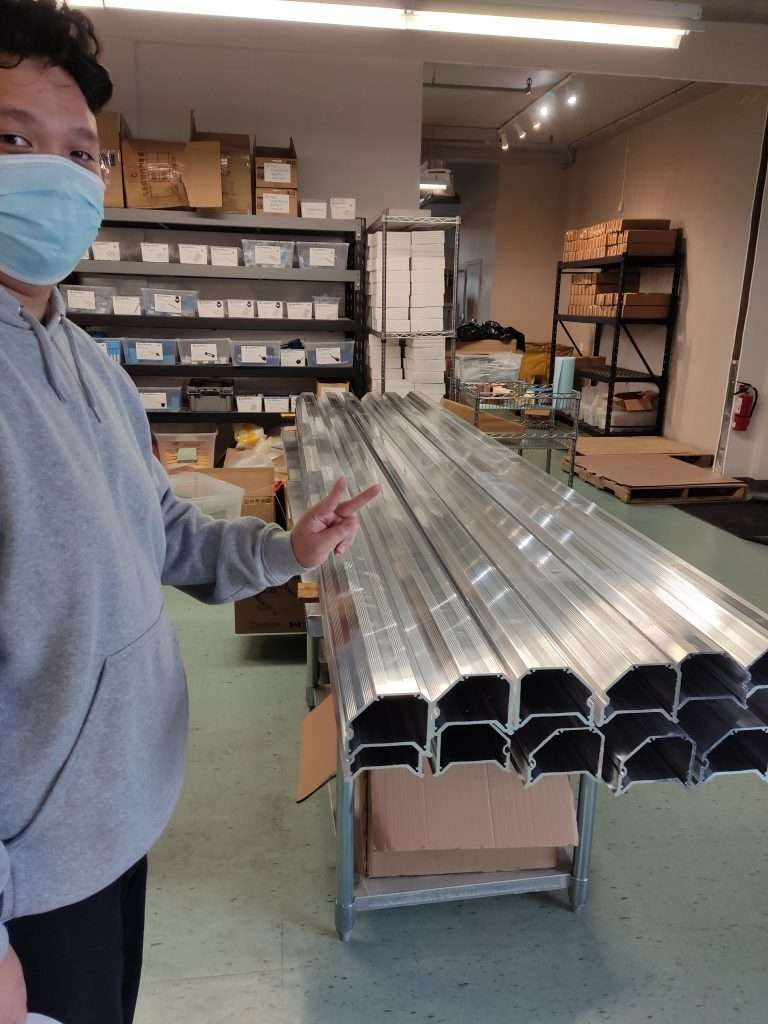
Longer rails have more flex, which means that we need stronger rails to compensate. For the LongMill, we are currently working on a new rail design that improves rail rigidity while keeping overall weight down. This should help keep similar levels of overall rigidity in the machine and allow users to run their machines with the same speeds and feeds as any smaller LongMill.

The AltMill on the other hand will use stronger linear rails and bearings, as well as a solid aluminum structure to ensure a high degree of rigidity.

Squaring

Our machines rely on both Y rails to be parallel with each other and perpendicular to the X rail to ensure that the machine doesn’t rack or cut out of square. With the LongMill, we can generally rely on our table mounting procedure to ensure that the machine is square, but the larger and heavier the machines become, the harder it becomes to square the machine properly.

Squaring and calibration tool for the LongMill

To account for this, there are a couple of options:

  • A table which uses precision cut parts to help square the machine
  • A tool or measuring device included in with the machine
  • Making the machine smaller

A table, in my opinion, offers the most precise way of keeping the machine square, which is why we are developing additional structures to support the machine that can use similar or same designs between both the larger LongMill or AltMill.

Beyond this, gSender also offers a calibration tool that will play a more integral role in working with larger machines.

Mounting

Although a LongMill 30×30 fits perfectly on a 4×4 ft sheet of MDF, it is generally difficult to find sheets larger than this for mounting larger machines. One option is to cut and join multiple smaller sheets into a 5ft or 6ft square base to mount a machine on or have a pre-built bench or table that the machine mounts to, with space in the middle to put a larger wasteboard.

In terms of a 30×48 LongMill size, customers could purchase a 4×8 ft sheet and cut it down to 4×6 ft size to mount the machine to. However, 48×48 machines and the AltMill would need to use an alternative method.

In this case, having a table would also offer a good solution to this issue.

Power

The larger a machine gets, the more power it needs. This means larger motors and drivers. This is because:

  • The parts that make up the machine that need to move are larger and heavier
  • We want to cut faster so that larger projects don’t take forever

I generally use the rule of thumb that no matter how large or small the machine is, you want the machine to be able to travel between the lowest left corner to the highest right corner in the same amount of time. So this means that the machine needs to travel faster the larger it is.

We are currently working on either using larger motors as well as optimizing the power from the stock LongMill NEMA 23 motors.

Spindle and router choices

The bigger and more powerful the machine becomes, the router or spindle power becomes a limiting factor. Although I believe that the Makita router we recommend for our LongMills should be able to handle anything for the extended versions of the LongMill, a spindle may be necessary on an AltMill. Here are some hurdles to get over with spindles:

  • They are larger and weigh more, thus needing more hardware to support on a machine
  • Have higher power requirements, which means that users will also need to make sure their workplace can support it
  • Require additional wiring, which adds additional complexity
  • Generally not available in retail, which means that we have to source a spindle manufacturer and ensure we do proper QA and testing

Seeing as spindles could be used interchangeably between the AltMill and LongMill, this opens up the opportunity to offer spindles for both machines as well.

Shipping

Larger machines are larger and heavier, making it harder and more challenging to ship. The current shipping weight of the LongMill 30×30 is around 60lbs. Although fairly manageable, any heavier and larger than this, I feel would be unwieldy for the average user. Not only that, larger, heavier packages are more prone to being damaged during shipping, which is something we definitely want to avoid.

I expect our larger machines to be way bigger and heavier than this, and I estimate that weights will start to exceed 100lbs. This means either shipping the machine in several separate boxes, as well as figuring out the best way to handle the tracking and logistics on this.

Our goal is to continue to make it possible for us to ship by courier (UPS/Canada Post) to ensure that customers don’t need to worry about freighting. This should make our machines more accessible for the general public.

Pricing

Because of all of the factors discussed above, larger machines cost more. As with the current LongMill, our primary goal is to provide the best possible value by lowering manufacturing costs with the most optimal designs. We do make certain decisions, some good and some tradeoffs to achieve competitive prices. Here are some examples:

  • Using standard extrusions for building tables – easy to source and build with
  • Reducing the number of variations of the machine to take advantage of economies of scale (no custom sizes) – reduces the amount of different types of support and resources we need to create as well as reduces machine complexity by not needing to design high customizability, but means customers have less choice in the size of their machine.
  • Assembly required by the customer – better understanding on how the machine works and saves costs on in house assembly labour, but would take longer for customers to get up and running

On the other hand, there are some changes that will add costs that we feel are worthwhile to spend money on:

  • Partial assembly of the AltMill to ensure proper assembly of linear motion components – we are able to create jigs and tooling to make in house assembly and calibration easier than most customers
  • Tables and other mounting options for larger wasteboards and machines – ensure proper squaring and make it easier for the user to set up their machines
  • Larger lead screws and ball screws – Although more expensive, larger screw drives are needed to prevent whip which are more apparent in larger machines

LaserBeam: Driver Development & Shipping Update


When will the LaserBeam ship?

During my time at Sienci Labs, I have learned a lot about rapid prototyping, quality control, and listening and working with our amazing community. Andy & Chris our Founders have always advised me to always give myself more time than needed. It’s a lesson I have not fully taken in until now, I feel like I have learned to set more realistic expectations on the timelines it takes to develop a new product. I do believe for the price, we are developing the best laser diode attachment on the market. The last piece of the puzzle is a 5A laser driver that meets the standards of the company and my own. I have no doubt that we will get there but we need time. The driver needs to work well, be tested independently and then ordered in bulk. That’s all that is left with development. We are currently at version 5 of the driver prototyping, we may need 1-2 more before I am confident enough to send off for independent lab testing and bulk ordering. The original ship date I picked was the first week of July, then first week of August then end of August. Instead of telling you we can ship early  October. I need to take Andy & Chris’ advice and give myself and those I’m working with enough time to do this right and to not continuously push the date by small increments. Your support on this new product and journey to developing it really does mean the world to me. Thank you Sienci Labs community!  We do hope to ship earlier than the new listed date but I think it’s best to allow more time than I believe we need. 

*Final shipping update is December 2021 (absolute latest)*

What caused this delay?

  • I hired 2 international electronics designers, I misjudged their experience with laser diodes and constant current drivers. 
  • Neither designer was able to develop something that could perform the tasks we needed v1-v4.
  • The best design we received was v4, it had working safety features and delivered current to the diode, only issue was that is was not constant current and was not a high quality design
  • Slow design work pace: I hired these designers in April 2021 and only had received designs that could be tested in July. This is the root cause of our 3-4 month delay
  • I am now disputing the payments we made to them and working with a new local designer full time and he is working night and day prototyping the new laser driver design. 
  • I am working between the Sienci office and our new designers office in order to keep the project moving forward and continuously test and debug designs at a much faster pace
  • This ultimately stems from my own inexperience hiring electronics engineers and designers. This did teach me a lot

5A Laser Driver Update

  • With all that said, version 5 of the driver was tested last night and had some issues
  • To much inductance/resistance in the traces leading to the voltage regulator 
  • Reverse polarity protection was not included
  • The way feedback was provided to the mosfet was causing issues with the constant current
  •  Version 6 is being worked on as we speak and we’ll be placing a new PCB order tomorrow to fix all the issues listed above. 

Production News

  • We have finalized the LaserBeam Logo 
  • Both aluminum & copper heatsinks have been tested with great results 
  • Focus ring & springs have been tested and packaged with great results 
  • We have a stock of 200 7w Diodes
  • Fans have arrived and will be tested next week
  • New batch of power supplies have arrived and will be tested next week 
  • Extension cables are being prepped for packaging 

Timeline (8-16 weeks): What needs to be done?

  1. Driver Development: currently working on v6 of the prototype (1-2 Weeks)
  2. Testing: send a driver off for testing  (1-2 Weeks)
  3. FDA Compliance: file our test reports with the FDA (1-2 Weeks)
  4. Order Drivers: order the drivers in bulk (4-8 Weeks)
  5. Ship: Package and ship LaserBeam Pre-orders (1-2 Weeks)

What If I can’t wait that long?

Please send us an email or give us a call and we will process your refund. I never want to disappoint community members and customers but at Sienci Labs we value transparency over everything. Some of you run your businesses with the Longmill and you anticipated having a Laser for certain projects/jobs, we understand if you need to make different plans and explore other options. 

For those of you who still want to  wait, first of all thank you. It’s because you guys have supported this project from day one that I get to develop a product that the community will use and hopefully enjoy in the very near future.  

Ordering Additional Safety Glasses & Lenses: 

Check out the link above if you need to order additional LaserBeam accessories that you didn’t order in your original LaserBeam preorder. You won’t be charged any additional shipping and your order will be combined with your LaserBeam Pre-order! 

Sienci LaserBeam Pre Order:

Place your Sienci LaserBeam Pre order here:  https://sienci.com/product/laser/

Answering your FAQ: 

Send your Laser Questions Here: https://sienci.com/contact-us/technical-help/

Check out our LaserBeam FAQ video, I take all your unanswered questions from the LaserBeam livestream and try to give you guys more clarity on the LaserBeam add on. 

Stay up to date by signing up for

Subscribe

* indicates required

If you missed the last update, check it out here: https://sienci.com/2021/07/26/laserbeam-driver-complications/

Inductive Limit Switches – Production Update

Hey everyone here’s an update on the development of the inductive limit switches for the LongMill! If you haven’t read the last post, you can read it here: https://sienci.com/2021/07/30/longmill-limit-switches-coming-soon/

I know a lot of people are excited about this kit, and I assure everyone we’re working really hard on this. Over the last couple of weeks, we’ve been working on a couple of different things, including video and written info and content, continual testing, assembly instructions, packaging, and the supply chain for the kit. We are now waiting on our first batch of sensors and a couple of other parts to arrive from our manufacturers, and we will be starting packing and assembling the kits as soon as parts start to trickle in. All of the parts for the kit have been ordered and are expected to arrive in mid-September. We expect to start shipping kits a couple days after we’ve received all of the parts. Kits will be $60CAD or around $48USD each.

Our initial timeline for this project was to have a product released at the end of August. However, we had a minor setback due to some changes in part price and availability from one of the sensor suppliers that we initially ordered and tested samples from, so we have acquired samples from two additional suppliers, one of which we’ve fully tested and have decided to move forward with to use for production.

Some a bit more specifics that we’re working on to provide users include information about using different workspace coordinates, returning to a certain part of your job after a power outage or shutoff, and using jigs, which should add some extra tricks and functionality users can add to their machines.

Making your own

As promised in the last post, here are some instructions on making and assembling your own mounts and sensors if you prefer making your own over buying the kit from us.

Please note that these instructions are still in development, and additional resources and videos will be available for users soon. These instructions should help the general user population if they wish to make their own mounts and sensors.

Choosing sensors

The sensors we recommend using are:

Model: LJ12A3-4-Z/BX

NPN Detection

Detection distance: 2mm-4mm

Normally open

Supply Voltage: 5V* 

Choosing the correct voltage option is very important, as this particular type of sensor is more commonly available in a working voltage of 6-36V, which requires additional wiring to make work with the LongBoard. For using higher voltage sensors, you may need to use either the 12V auxiliary power from the board, 24V from the power supply, or from an external power source. That being said, I highly recommend sourcing the 5V variant of the sensor as this will make installation much more simple.

There are many variations of the LJ12A3-4-Z/BX, as well as other M12 sized barrel sensors that come in different lengths. In my experience, most seem to be more than accurate enough for this application, with a repeatability of 1 thou or better.

Most sensors also come with a set of nuts and washers, which can be used for mounting.

Making the mounts

All mounts can be 3D printed. The models can be found on our public Onshape document for the LongMill. The models can be found under Electronics -> Limit/Homing Switches. Right click on the model to export as an STL or your preferred 3D model file format.

These parts can be printed with most FDM printers. If you’re interested in reading about our 3D printing process, please check out this post. I would recommend using a higher infill for these parts since a more rigid part generally helps mounting.

All of the mounts use a pair of M3 heatset inserts. CNC Kitchen has a couple of videos on using threaded inserts on 3D printing that are awesome which talk about them in general as well as how to install them.

For our application, we found a fairly inexpensive and commonly available insert that works great. A drawing of the insert can be found below.

Here is an exploded view of the inserts.

Assembling the mounts

Here is a view of everything assembled before mounting to the machine.

And here is the exploded view:

Attaching to the machine

The mounts slide onto different areas of the machine as shown in the images below. Use the M3 screws to secure them. You will need to position the sensor to a position that lines up the tip (usually blue or orange) with the gantry you are sensing for. Loosen and adjust the mounts as necessary.

Wiring

Although the sensors for our kit will come with pre-wired JST connectors with a 2.5m wire for running through the drag chain, it’s likely that off-the-shelf options will not. You will likely need to extend the wires to be able to run the wires through the drag chains.

The LongBoard comes with ports to connect limit switches via JST4 connectors or with the detachable screw terminal block. Here is a diagram of wiring the inductive sensor using the screw terminal. Note that the 5V and ground lines are shared between all of the sensors, and each black signal wire is connected to their separate axis.

More info on wiring can be found on our resources for limit switches.

Firmware settings

Once your sensors are installed you may need to update your firmware settings to enable the limit and homing functionality. A full outline of all of the related firmware settings can also be found in our resources.

Conclusion

I hope that this information helps some of our more ambition users who don’t want to wait to get a kit from us set up limit switches on their machine. I also hope that this will give you guys a head start in exploring all of the functionality in adding limit switches to your design. Over the next couple weeks, our team will continue developing the resources for the installation of the switches, so I highly recommend staying in tune on our social media and our blog, and check back on our resources page to check for updated resources!

LongMill limit switches coming soon

Hey everyone. One highly requested add-on for the LongMill has been limit switches. For the uninitiated, limit switches are often used on CNC machines for 1) homing the machine 2) preventing the machine from reaching the limits of its travel. If you’re interested in reading more about what limit switches are and what they can do, I recommend reading the article in the Resources.

Please note that in this post, we are using the term “limit switches” and “homing switches” interchangeably. I do understand that there is a small distinction for both, but for this application, they are basically the same.

At the beginning of LongMill development, limit switches were not a priority as a feature when focusing on beginner hobby CNCers. This primarily came down to a few factors. First was the added complexity of having limit switches, which means additional setup and assembly for the user, as well as adding to the learning curve of learning how to use limit switches. Secondly, with the LongMill set up so that crashing the machine will not damage itself, limit switches are not necessary to protect itself. For customers still adamant about having limit switches, we still provided full hardware support to plugin or wire in switches directly into the controller, which would take care of a small population of more advanced users.

For those who want to read more about community made limit switch solutions, this is a great thread to read: https://forum.sienci.com/t/homing-limit-switches/99/41

We still hold our opinion that beginner users do not need limit switches with their machine to get the full functionality of the machine, and we recommend starting out without them until a better understanding of the machine and its use is achieved. However, as our community has grown and along with that their experience, more and more users are now exploring new ways to bring advanced features to their machines. Not only that, the development of our very own gSender now allows us to integrate software and hardware more closely than ever before. With these things in mind, we’ve spent some time creating our own plug-and-play solution for the LongMill.

Creating a limit switch solution specific to the LongMill came with several challenges.

First was the lack of foresight on providing mounting points for limit switches. This simply came down to the fact that we did not integrate mounting points on the LongMill for adding limit switches. Later versions of the LongMill did come with holes and other features that could mount sensors, however, with so many different versions of the LongMill, it would be difficult to document and provide resources for installing limit switches for every single version of our machine.

Second was the voltage support of the sensors we need to use for the limit switches. We are using a variant of the LJ12A3-4-Z sensor as our limit switches, a very common and widely used sensor. However, almost all variants of this sensor are designed for a 6-36V input voltage. Although it is possible to pull 12V power from the LongBoard, the JST 4 pin connectors already integrated into the board which was designed to be used for a plug and play solution were designed for 5V only. In hindsight, it may have been a better idea to route the 12V power to the JST connectors, but this meant that we would need to purchase 5V compatible sensors, which do exist but are more difficult to source, to be compatible with the LongBoard. Our first supplier for the sensors created the proper wiring and plug set up for the LongBoard, but unfortunately, they were only able to provide 6-36V sensors which meant that we had to start looking for a new supplier.

The new design overcomes these two challenges. First of all, the mounting hardware for the limit switches will allow users to install their sensors to any version of the LongMill, as well as allowing the flexibility to choose which side of their axis they want to mount to. For example, some users may want to home from the bottom left corner of their machine and some may want to home from the upper left corner of their machine. Users only need to move their sensor from the front of the machine and remount it to the back and specify the change in the software to make the change. Second, we have re-sourced and tested a 5V variant of the LJ12A3-4-Z sensor, which will provide proper voltage compatibility with the LongBoard. This supplier will also be providing us with the proper wiring for a plug-and-play installation of the limit switches.

We expect the kit to be ready for sale and shipping around the end of August. Each kit will come with three sensors with a plug and play wiring harness which should have an installation time of around 15-20 minutes. The price for each kit will be around $60CAD or $48USD. Additional resources and software setup support will also be provided with the kit. We’ll also be publicly releasing the designs and specs for the kit for users that want to make their own setups. Please check our blog, email, and social media for further announcements.

Today’s testing of the sensors have shown repeatably of over 1 thou which should offer a very precise way to home the LongMill.

I’m excited to see the limit switch kit in the hands of LongMill users soon and look forward to seeing the rest of the development team and the community come up with ways to utilize homing on the LongMill!

July and August 2021 Production Update

Hi everyone, this is a production update for July and August. I’m happy to announce that we are expecting the lead times for the next 400 machines to be 1 to 2 weeks (update, as of August 10, lead times for LongMills is under 1 week). For the most part, we expect most machines to ship within a few days. Any orders that are still pending shipment at the time of writing should be shipped by Tuesday of next week.

All of the parts that we were waiting on for this part of the batch have now arrived and we should not be seeing any major delays in shipping for roughly the next 8 weeks.

During part of July, we ran into some part shortages, such as with our control boards, Delrin anti-backlash nuts, and drivers. We also had a short period of time where our print farm was also shut down due to a shortage of filament. These shortages were caused primarily due to shipping delays. We’ve finally have gotten all of our parts without much issue, and can continue production.

At this point, we will be able to produce another 400 units without running into supply shortages. There are still a number of components we expect to start running out of once we ship the 400 units, including:

  • Rails
  • Gantries and other steel components
  • Control boards

We have placed orders for these items at the time or writing or are in the process of ordering these parts.

In any case, that’s our update for this month (and August). Happy making!

LaserBeam: Driver Complications

Hey everyone, Ikenna here with another LaserBeam update. I’m excited to see parts continue to arrive, with little to no QA issues. At this moment the majority of my time is focused on the 5A Driver development, our first prototype did not work as intended. Fortunately we have 2 separate designs and will be testing the second design late next week when the PCB arrives. At the same time we are reworking the schematic for the first design so we have more options and will give us the best opportunity to provide the best driver for the 7W LaserBeam. 

We expect to begin shipping Monday August 30th at a pace of about 25-50/week. We should be able to clear the order queue within 4-6 weeks from when we begin shipping. The challenges are completing a working driver, receiving acknowledgement from the FDA of test report submission, and receiving a large order of driver pcbs from our overseas supplier.

Driver Development:

Driver A-v1.1:

  • Unfortunately this design was not able to interpret the 5V PWM signal that comes from the Longboard
  • Mandatory Safety features did not work as designed; Key switch, interlock and power off reset

Driver A-v1.2:

  • We broke down each function that wasn’t working with Driver A-v1.0 and I’m more confident that this new design fix the initial issues we saw
  • DriverA- v1.2 Is being troubleshooted, then pre-tested before a new PCB prototype is made, assembled and tested against all functions that we need for the ideal driver

Driver B-v1.1:

  • Assembly has been completed and shipped
  • We had the manufacturer send the PCB early because we can finish soldering components very quick and that should save us a day or two
  • Will arrive July 29th 2021 and the goal is to  be fully tested by July 31st
  • If we find any functionality issues during testing we will begin to troubleshoot and rework this design

Local Designer:

  • To help speed up the prototyping process, we have begun working with a local electronics designer that already has experience working with Sienci Labs
  • His main objective will be to work with our current designers and help change designs at a quicker pace
  • He will also be able to populate and solder components onto new PCBs for prototyping faster than our overseas manufacturer can. Allowing us to test new designs within 7 days

Driver Design Compliance:

We are working with TÜV SÜD in order to independently test our LaserBeam to make sure we are in compliance with Health Canada, FDA and International Laser Standards. Testing can only begin once a 5A Driver design passes our tests so it acts as our bottleneck. TÜV SÜD testing procedure will ensure all safety functions work correctly, and our user/safety manual has all the information needed for safe operation. Until then we will continue working on our user/safety manual so it is as detailed as possible. We have also been completing the necessary FDA registrations so we can submit our reports in a timely fashion.

Production Heatsinks and Lens Focus Ring:

The manufacturing of the aluminum heatsink, copper heatsink and lens focus ring has been completed. The aluminum heatsink and lens focus ring has been anodized (black) and is being shipped now. This updated design should allow the G2 lens to be easily focused and solve the issue we had with the prototype heatsinks. As soon as they arrive we will begin quality assurance then assembly of the 7w diode, heatsinks and exhaust fan. The diode/heatsink/fan assembly is 50% of the 7W LaserBeam and the 5A driver, enclosure and air assist  is the other 50%.

Power Supplies:

Power Supplies have arrived and passed QA tests, connectors have been attached. We will have to repackage them with the AC cables as the box they came in does not fit both the power supply and the AC cable. 

Safety Glasses:

Safety Glasses have arrived and look great with the Sienci Labs branding.  

Designs:

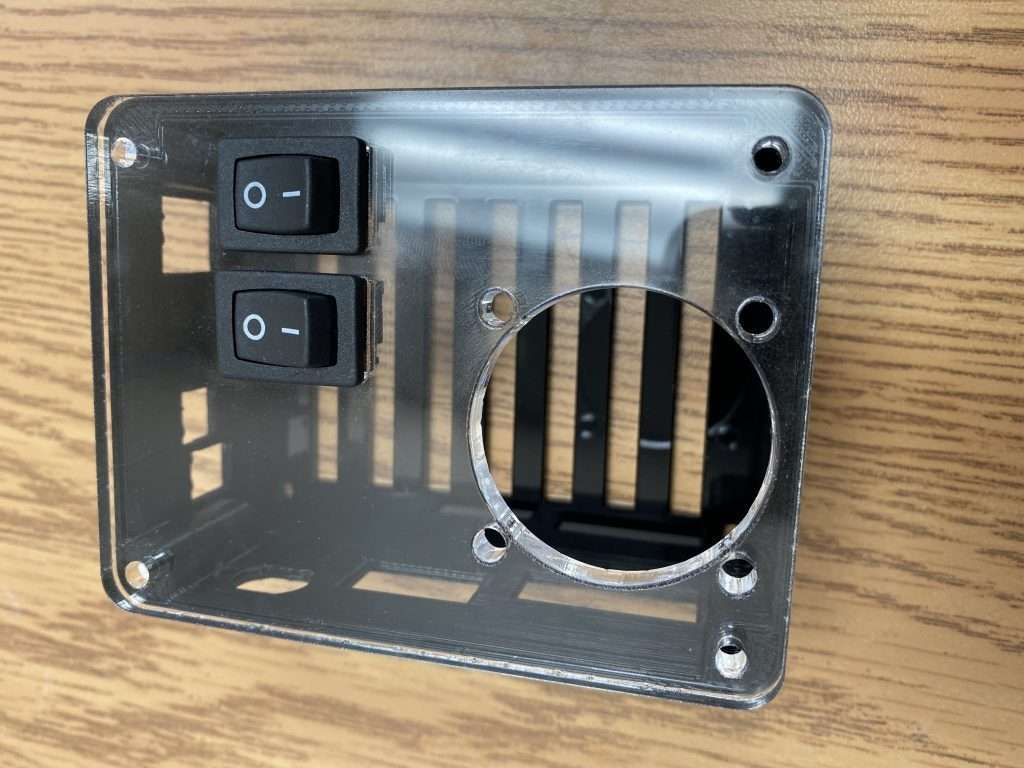
  • Laser Driver Enclosure: We have a rough design set, small changes once the driver is completed to accommodate all connectors, switches etc. 
  • Air Assist: We have improved the design with a sliding pressure fit and an articulating nozzle instead of a funnel design. But we are reworking new designs until we are satisfied 
  • Packaging: I will start playing with packaging ideas, nothing concrete until more production parts begin to arrive.

Testing:

  • PCB Design A: 5A Driver A-v1.1 failed testing, currently working on 5A Driver A-v1.2 (schematics look promising)
  • PCB Design B:  5A Driver B-v1.1 will arrive Thursday for testing. I had the manufacturer ship with a few parts unsoldered in order to save a few days and test earlier. We are comfortable soldering the remaining parts inhouse
  • Laser Diodes: Testing a new 7w diode supplier this week

Supply Chain:

  • Thermal Paste: Samples will be ordered Monday
  • Extension Cables: Connectors have been ordered, we ordered a small batch of wire to test
  • Lens Focus Rings: Completed and are being shipped
  • Aluminum Heatsinks: Completed and are being shipped 
  • Copper Heatsinks: Completed and are shipped
  • Laser Diodes: Currently have 150pcs 7w Diodes in stock another 50pcs were shipped last week

 Ordering Additional Safety Glasses & Lenses: 

Check out the link above if you need to order additional LaserBeam accessories that you didn’t order in your original LaserBeam preorder. You won’t be charged any additional shipping and your order will be combined with your LaserBeam Pre-order! 

Sienci LaserBeam Pre Order:

Place your Sienci LaserBeam Pre order here:  https://sienci.com/product/laser/

Answering your FAQ: 

Send your Laser Questions Here: https://sienci.com/contact-us/technical-help/

Check out our LaserBeam FAQ video, I take all your unanswered questions from the LaserBeam livestream and try to give you guys more clarity on the LaserBeam add on. 

Stay up to date by signing up for

Subscribe

* indicates required

If you missed the last update, check it out here: https://sienci.com/2021/06/23/laserbeam-moving-along/

LaserBeam: Moving Along

Hey everyone, Ikenna here with another LaserBeam update. We have made a lot of good progress since the last update. Most significantly we’ve tested our sample production heatsinks with great results, and our prototype LaserBeam drivers will be arriving from the manufacturer in the next week or two. 

5W Generic Banggood Laser Power Test:

When testing the 5W Generic Banggood laser we were able to confirm that the real continuous optical power of 1.9W-2.2W which is far below the promised 5W continuous power rating. These lasers have their place in the market but if you are looking for high quality at a reasonable price I believe the Sienci LaserBeam is the best offering on the market. In the pictures below the top mW reading is the true optical power reading for this specific laser system. (1.95W, 2.13W)

7W LaserBeam Laser Power Test:

When testing our 7W laser diode we were able to confirm real continuous optical power of between 7.1W-7.2W @ 4.5A (recommended current limit for longevity) which will keep both the diode and driver running for a long time as well as producing the exact power we are promising you, which cannot be said about lower quality laser systems like the one in the previous section. In the picture below the top mW reading is the true optical power reading for this specific laser system. (7.17W, 7.18W)

Sample Production Heatsinks and Lens Focus Ring:

Last week we received some sample production heatsinks and lens focus rings. Good news, the heat dissipation is great and was able to keep the laser system 6 degrees celsius cooler than the generic heatsink when running our max power test file. Everything fits well and was assembled with relative ease. The bad news is that the top of the copper heatsink was just 2.5mm too long for the G2 lens to properly focus, using a very thin 3d printed lens focus ring I was able to get the G2 lens in focus. This  confirmed that I needed to reduce the size of the top copper heatsink by 3mm to make everything work, as well as sliding the set screw location down 3mm on the Aluminum heatsink. These changes have been sent to our manufacturer and they have begun production again. 

5A Driver Prototype: 

I have been working very hard with our PCB designers and our PCB manufacturer to find any potential issues and solve them before we receive the prototypes and begin testing and designing our enclosure. Over the next 2 weeks we will be working with experienced testing labs to produce a comprehensive testing procedure for all LaserBeam 5A drivers. We will also use the prototypes to start creating our safety and assembly manuals.

Safety Glasses:

Our safety glasses are ready and being shipped now. I have been using a these exact glasses to run all our LaserBeam testing and can confirm with my own experience as well as laser power testing that these are great safety glasses and your eyes will be well protected. 

Designs:

  • Laser Driver Enclosure: I am waiting to receive and test our prototype LaserBeam Driver, I will continue to iterate designs until I can test them with the physical driver boards. 
  • Magnetic T-mount: The standard T-mount design is finished so I will begin looking into designing a magnetic mount.
  • Magnetic Air Assist: The main design is complete, I am now sourcing neodymium magnets to test
  • Packaging: I will start playing with packaging ideas, nothing concrete until more production parts begin to arrive.

Testing:

  • Power Supply: 12V 7A power supply has been tested successfully, I will continue to test 12V 7A to make sure we get the right power supply for the 5A driver and all the fans. 
  • PCB Design: Waiting to receive the driver prototypes, in the meantime devising a comprehensive testing procedure. 
  • Laser Diodes: I am currently testing a secondary supplier for the 7W Laser diodes to ensure that we have a backup if our initial supplier has a shortage.

Supply Chain:

  • Lenses: Tested production order successfully, in stock.
  • Lens Focus Rings: Tested product samples successfully, currently being manufactured.
  • Aluminum Heatsinks: Made one last small change to the copper heatsink set screw location, currently being manufactured. 
  • Copper Heatsinks: Made one last small change to the top copper heatsink size to make it easier to focus the G2 Lens, currently being manufactured  
  • Safety Glasses: Production is complete, and has shipped. 
  • Laser Diodes: Currently have 100pcs 7w Diodes in stock, currently testing a 6W diode to offer a secondary power option.

 Ordering Additional Safety Glasses & Lenses: 

Check out the link above if you need to order additional LaserBeam accessories that you didn’t order in your original LaserBeam preorder. You won’t be charged any additional shipping and your order will be combined with your LaserBeam Pre-order! 

Sienci LaserBeam Pre Order:

Place your Sienci LaserBeam Pre order here:  https://sienci.com/product/laser/

Answering your FAQ: 

Check out our LaserBeam FAQ video, I take all your unanswered questions from the LaserBeam livestream and try to give you guys more clarity on the LaserBeam add on. 

Stay up to date by signing up for

Subscribe

* indicates required

If you missed the last update, check it out here: https://sienci.com/2021/04/12/laser-development-update/